I recently sat down with Annika O’Melia of Rock Island Line for a two hour conversation about trauma recovery, the congregation I am called to serve, St. John’s Lutheran church in Rock Island, Illinois, and our version of being firmly planted in our neighborhood. So take a listen.
Author: Jennifer Ohman-Rodriguez
Creation Clothing


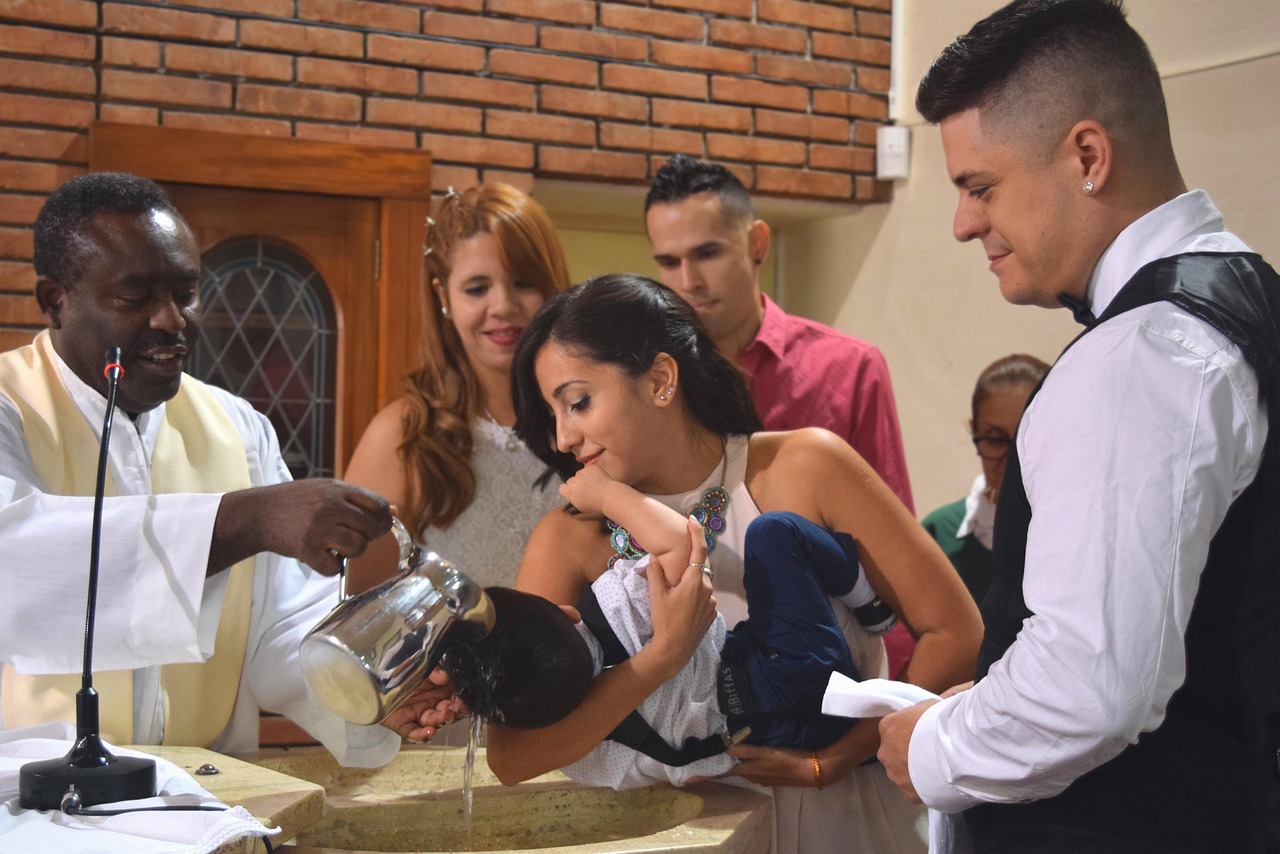
With each funeral or memorial service, I preside over as an ordained pastor, I speak about our role as the Church (the whole Body of Christ throughout the world). In this rite we give the recently deceased, the loved one, back to God having completed their earthly baptism. No longer needing to be clothed in the one for whom humans could not obliterate. The funeral, while also for the bereaved, is at its core a rite of the Church. And not only or merely the congregation’s or the gathered. But a rite of all of us, together as the Church throughout the world. Giving the recently deceased back to God going on around the world in all times and in all places. Praying without ceasing. As one immense Body of Christ.
How this giving back to God plays out after death, none of us fully know. The closest I get is when witnessing the transition between this life and death (or the next life). What I see when death is expected, is that there is a rhythm in this shift, one of slow peace. Creating an in between time (a space between full life and full death). And this space wears its own clothing. Even in the midst of tears, beeping machines, sterile walls, and suspended time, this space is cloaked in garments of so many human feelings as well as peace. I suspect this peace continues after death as well. I know the human feelings do here on earth.
I’d also like to believe, hope, and pray that in sudden, unpredicted death, there is also this peace. Even if the transition time is quick. Because it seems to me as a regular observer of the in-between, that this transition is part of the process. And as a sudden death griever my thinking here gives me comfort.
The other day I heard a story about someone who was baptized four times. Four times! As if the first one wasn’t good enough. But for whom? Not God so that leaves three sets of humans playing god. Reminding me of Job’s three famous friends–Eliphaz, Bildad, Zophar. The talkers who suck the air out of the ash pit.
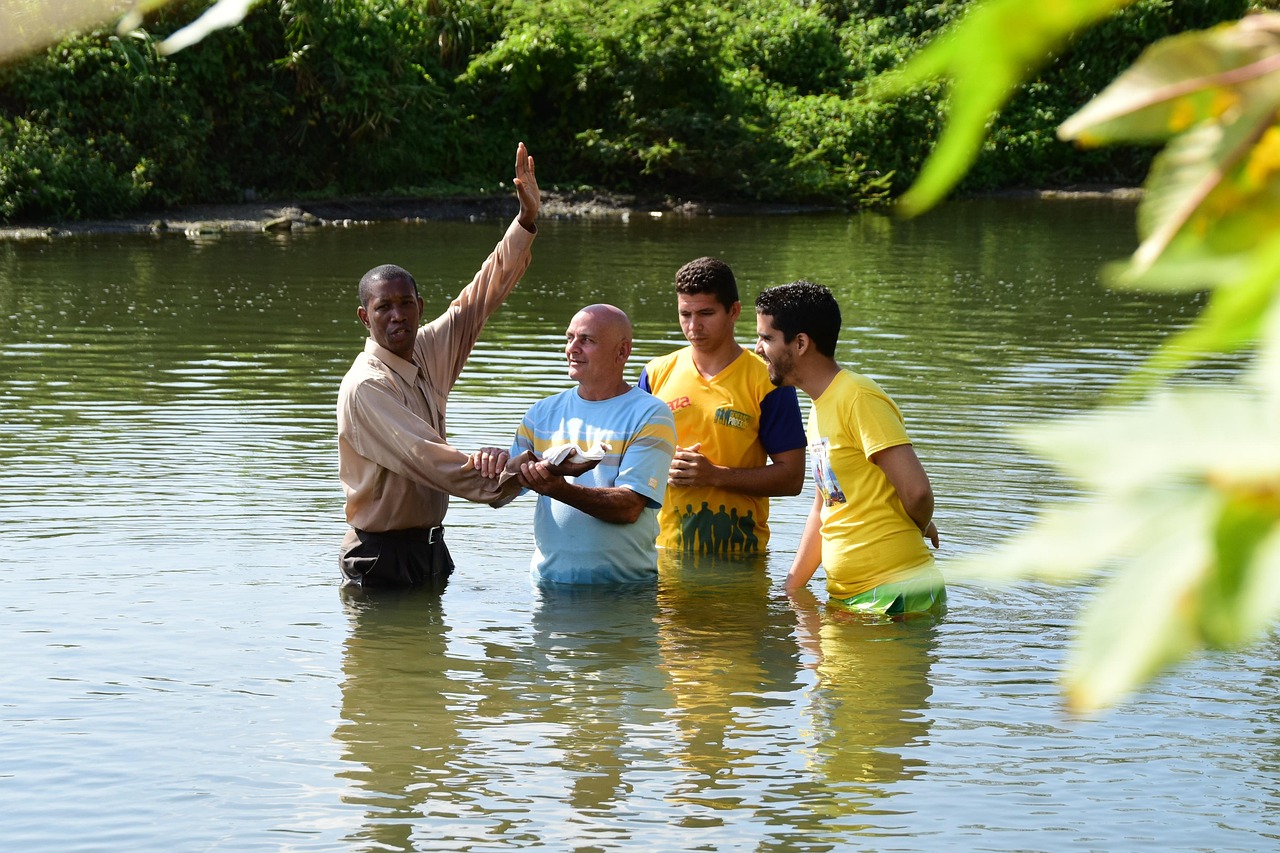
Once is all it takes to be given life in Christ on this earth. This life created out of God (Word) and the earthly element of water (unless there is no water and then another earthly element is used like dust or sand.). Something of the earth though as a reminder of both John the Baptist’s actions and words* and also that when God created the universe, God created human beings (our ancestors!) out of an earthly element, dust. Now in baptism, the water with the Word creates new clothing for us with the energy of the Holy Spirit. Creation happening again and again right in front of our eyes. And we are wrapped in Christ, Christ’s teachings, Christ’s healing, Christ’s ways. Christ in action on earth through us. Christ always.
Yet in wearing Christ, we bear a responsibility: To speak and act into what is not Christ while we are here. On earth. And there is a lot that is not Christ in this world that looks like not compassion. Not love. Not right relations with God and others or the earth. Not about the flourishing of all of creation, just a bit of it.
So, let us pray for our earthly Baptism. For feeling God’s lovingness enfolding us. Holding us so that we, each as a tiny bit of the Body of Christ, can be Christ in this imperfect world. An agent of God’s change like Jesus was and is and is to come. In this prayer, asking for what has been allowed to perpetuate that is not God and does not wear God’s garments to be diminished, eradicated. Forever.
God of each new day of your ongoing creation, bring us together, clothed in the saving grace of Jesus. Deliver this holy clothing on the Holy Spirit’s wind, wrapping us as on in you and with you. Reveal to us how to be your people without gender-based violence. Undo in us what humans have created in our name and not yours. Amen.
* “I baptize you with water for repentance, but the one who is coming after me is more powerful than I, and I am not worthy to carry his sandals. He will baptize you with the Holy Spirit and fire. (Matthew 3:11, NRSVUE)
Prayer from “Being Clothed With Christ: A meditation on Ending Gender-based Violence” by Jennifer Ohman-Rodriguez in Forgive Us and Transform Us for the Life of the World. ELCA, 2025. 57
IMAGES: Adult Baptism: Image by Ahstubbs from Pixabay. Infant Baptism: Image by Leonardo Espina from Pixabay. Font: Image by WikimediaImages from Pixabay
Resource Release Announcement!

I am excited to be one of the writers for “Forgive Us and Transform Us for the Life of the World,” a new resource from the ELCA. This resource contains stories, poetry, art, and explanations created by ELCA members to help people dig into what sexism and patriarchy are and how people experience them. “Forgive Us and Transform Us for the Life of the World” is free and can be accessed here.
The Unbelieved

Then the women remembered Jesus’ words, and returning from the tomb they told all this to the eleven and to all the rest. Now it was Mary Magdalene, Joanna, Mary the mother of James, and the other women with them who told this to the apostles. But these words seemed to the apostles an idle tale, and they did not believe them. But Peter got up and ran to the tomb; stooping and looking in, he saw the linen cloths by themselves; then he went home, amazed at what had happened. (Luke 24: 8-12)
As a pastor, I am often called into the complexities inherent within any family during times of crisis and deep change:
- The past present in the now,
- The unacknowledged pain and resentment buried within the family system,
- The addictions, secrets, and mental health issues,
- The hopes and dreams still alive, and
- The love ready to be given despite broken communication and relationships.
My role in caring for people’s spirits is to hold all that is shared, whether verbally or behaviorally, as sacred, even the pain.
My work is to also hold that God is active and acting in the midst of it all. Because of this holy work, I am heartened by a different translation of Psalm 118, verse 24, one we more commonly hear as:
“This is the day the LORD has made. Let us rejoice and be glad,”
The translation I embrace however is:
“This is the day the LORD has acted. Let us rejoice and be glad in the LORD.”
God is always acting! In the midst of busy hospital rooms full of beeping machines, staff flowing in and out, and worry. In the quiet hospice rooms as loved ones sit vigil listening for breath. In the middle of a family’s living room, over the phone or on a video call, in a stuffy prison visitation room. Even in the office hallway of the church I serve—God is always acting in the middle of human chaos gently and insistently steering us toward truths–truths of the past as well as truths of what can or will be next.
In the spiritual care of others, I do not hold truth in the form of diagnosis or treatment plans. My presence is to acknowledge the crap as well as the courage and energy it takes to transition from the known into the unknown. I and anyone providing spiritual care—rabbis, imans, priests, pastors, chaplains, deacons, and lay people—are called to acknowledge what is. Truth that a loved one is dying. Truth that we all will die. Truth that a marriage is asking to end. Truth that a pregnancy is not viable. Truth that an addiction has taken hold within a person impacting a family. Truth that there is pain wreaking havoc within a person that yes can be healed.
And like the women who bring truth to the disciples that Jesus is no longer dead but alive, we who provide spiritual care are not always believed. The truth we hold for all involved is not always welcomed.
We still live in a time in which our sharing of the Good News of Jesus Christ, the Good News that God cannot and will not die, and that justice for all people is still possible on earth if we listen and follow the ways of Jesus is received by many with disbelief, disdain, and contempt. This Good News seems unwelcome in the midst of this devastating race for human power over all else, even life—human and all of creation.
So then, aren’t we all like the women who run from the empty tomb to share the Good News? Our words named as idle. Easily diminished, cast aside, maligned as untruths, gossip, lies. Leaving us to wonder where hope lives? Where is the hope that so many of us find in the un-dying-ness of God! In God who will forever live with us. In God who wants all of humanity to thrive!
I suggest that our hope today is in the one person who couldn’t quite go back to what he was doing after hearing the Good News from the women. The one person who could not fully dismiss their words. The writer of Luke tells us this:
But Peter got up and ran to the tomb; stooping and looking in, he saw the linen cloths by themselves; then he went home, amazed at what had happened.
Perhaps the majority of those who believe that this new way in which we now live in this country, this malicious and contemptuous way of treating others, this way in which human rights and constitutional rights are just for a few and not for the many, will not hear us proclaiming the Good News this day or any day. But we hope and pray and keep watch for the Peters. Those people for whom something we say stirs them into exploratory action. Action leading to truth, God’s truth, and from God’s truth into an experience of amazement. Amazement at their own disbelief! Amazement in their willingness to be swayed by the evils of this world. Yet also amazement in the glory of God’s truth and grace. God always offering new life. God always with us.
The Good News delivered by us, despite the reaction. Delivered by those of us who are willing to still speak the Good News in our words. Wear the Good News on our faces. And bring the Good News into the midst of those who have surrendered to this new reality. To those who have quit believing in truth in order to hide behind lies.
We share the Good News of God, the Good News of Jesus the Christ now in this country with the courage of the women- Mary Magdalene, Joanna, Mary, and the other women knowing our truth will be diminished and unbelieved but we share because there is always a Peter in the room—someone for whom our words send them toward discovery and truth! Amen.
Let us pray:
We thank you this day O God for being good. For being goodness and mercy. For being love. And for being all these things and more which never, ever die but always live and breathe and ask for us to live and breathe with them and you. Amen.
A version of this piece was first preached at St. Johns Lutheran Church (Rock Island, Illinois) on Easter Sunday, 2025.
Attribution: Micheletb, CC BY-SA 4.0 https://creativecommons.org/licenses/by-sa/4.0, via Wikimedia Commons. West rose windows of Cathédrale Notre-Dame de Chartres baie 051
Vulnerability Creates Love: Thoughts from Maundy Thursday

I give you a new commandment, that you love one another. Just as I have loved you, you also should love one another. By this everyone will know that you are my disciples, if you have love for one another.” John 13: 34-35*
In a chapter entitled, “Places We Go When the Heart is Open,” author and professor Brené Brown writes “there is a debate among researchers about whether love is an emotion.” [1]
Some researchers lean toward love being an action or an intention more than emotion. And some, like Dr. Brown seem to think love is a bit of both—a descriptive word for an emotion and its accompanying feelings as well as a verb full of actions.
Yet love, whether an emotion or action or both remains elusive. Author and social critic, bell hooks, writes in her book All About Love that:
“Everywhere we learn that love is important, and yet we are bombarded by its failure. In the realm of the political, among the religious, in our families, and in our romantic lives, we see little indication that love informs decisions, strengthens our understanding of community, or keeps us together. This bleak picture in no way alters the nature of our longing. We still hope that love will prevail. We still believe in love’s promise.” [2]
Today, as we begin the service of the three days, we hear once again the story of Jesus giving the disciples a new commandment, not an additional commandment added to the other ten, but a new commandment.
34 I give you a new commandment, that you love one another. Just as I have loved you, you also should love one another. 35 By this everyone will know that you are my disciples, if you have love for one another.”
Yet in order to know who to love as Jesus commands, we must return to what Jesus has been showing us throughout the story of his life here, the story of his ministry on earth.
We know Jesus ate with sinners and tax collectors. Extortionists and soldiers.
We know Jesus healed people considered the “throw-aways.” The ones banished to the edges of their communities. Forced to beg or worse in order to survive.
We know that Jesus also healed the un-seen. People who did not count as much. Whose humanity was somehow lesser than others, children and women.
We know that Jesus taught all people—regardless—about what it means to be human and in relationship with one another and with God.
And we know that Jesus taught and lived a form of unheard-of-equality. He himself was no greater than his followers. Jesus was no greater than the servants serving him. No greater than human beings suffering enslavement.
Brené Brown writes “We cultivate love when we allow our most vulnerable and powerful selves to be deeply seen and known, and when we honor the spiritual connection that grows from that offering with trust, respect, kindness, and affection.”
Jesus shows himself often to be vulnerable. In our text this evening, Jesus kneels as the servants and enslaved do. He disrobes. And while he is not fully naked, without his robe he is less protected, more vulnerable. Then he makes an offering to his disciples, his beloved disciples. And the offering is one of trust, respect, kindness, and affection.
In this action of love Jesus moves the disciples (all but one disciple that is) away from all that damages the tender roots of love: “shame, blame, disrespect, betrayal, and the withholding of affection.”
And while Jesus does not say it in the Gospel of John, he does say something very important about love in Luke, chapter 10 in the parable of the Good Samaritan:
“‘Love the Lord your God with all your heart and with all your soul and with all your strength and with all your mind; and, ‘Love your neighbor as yourself.’”
Love your neighbor as yourself brings us back to Brene Brown’s work. She believes from her research that “we can love others only as much as we love ourselves.”
This love thing for others does not happen unless we are willing to be vulnerable with ourselves and others. And only if we are willing to heal the soil in which love cannot grow for ourselves and others. And only if we treat our own bodies with the tenderness that Jesus washed the feet of his friends, even the friend who betrayed him!
To love then is not easy. It is as layered as the gospel writers of Mark, Matthew, Luke, and John as well as the Deuteronomist say it is. Love takes our hearts, our souls, our minds, and our strength. Not so much as to love but as to heal the blame, shame, disrespect, betrayal and withholding of affection that dampens and even kills love. So yes, bell hooks, is correct. The picture of love is bleak in this world we live in. But it was also bleak when Jesus lived on this earth. And yet, he held hope for all creation that love was and is possible. And if Jesus showed us that love is still possible then I believe we too can remain hopeful and with open hearts for ourselves and others. Amen.
[1] Brown, Brené (2021) “Places We Go When the Heart is Open,” in Atlas of the Heart: Mapping Meaningful Connection and the Language of Human Experience.
[2] hooks, bell (2001) all about love: new visions.
Image by congerdesign from Pixabay
*The above post is based on John 13:1-17, 31b-35 and was originally heard as the Maundy Thursday sermon on April 17, 2025 in the midst of the congregation of St. Johns Lutheran Church, Rock Island, Illinois.