Like most people I have many identifiers. Currently I call myself writer, author, minister of Word and sacrament in the ELCA, and child development specialist. I am also a mother, widow, wife, sister, and daughter. My pronouns are she/hers.
Pray for compassion, for just mercy, for our culture prone to carry unhealed pain buried within its layers of lies and controversy until it explodes into others–so often and again our innocents. Then get off your knees advocating with every word, deed, action, courageous works of self-healing, and posture for God’s love, compassion, and justice to rule our world. Not those humans whose pain permeates their stolen power. Prayer is like empathy, only the beginning. The first step. Stagnant unless it leads to compassionate action.
Infused in the words we speak, imbued in the words we write, dripping in the words we think is something pulsating with direction and meaning. Writers call this something many names, none right or wrong. Just ways of describing our unique urge to use words when making sense of self, other, world, and God.
Writer Elizabeth Jarrett Andrew calls this something, “heartbeat.” Without a heartbeat, without this “internal engine” moving our words in all forms–spoken, written, and thought–into truth, our work falls from”mattering” in this world. (58)
This same author suggests ways of unearthing the heartbeats of our pieces. Exercises and practices designed to discover the emotions and subsequent behaviors brooding and bubbling beneath words’ surfaces. Last September I did many of these exercises for three articles and a book manuscript I was writing. In my journal on September 4, 2021, I wrote the following:
Heartbeat
Hope in healing’s many ways.Hope gifted to us through the ancestors of faith.Hope in healing–God’s and humans. Hope in ourselves.Hope in our bodies.Hope in each other. Hope in God. Living, active hope is the heartbeat…
Yet left to wonder how and what defines hope. Various online dictionaries instruct me that hope permeates our lives as both a noun and verb. Linked (in either grammatical form) to trust, belief, and desire in what’s possible for the future.
Definitions lead me to scripture’s many versus speaking directly of hope while linking it to faith. Here are just three of so many.
I wait for the Lord; my soul waits, and in God’s word I hope; Psalm 130: 5
Hope deferred makes the heart sick, but a desire fulfilled is a tree of life. Proverbs 13:12
Now faith is the assurance of things hoped for, the conviction of things not seen. Hebrews 11:1
Theologian Andrew Purves connects hope with compassion especially in “the feeding stories” found in the Gospel of Mark. “Compassion,” he writes, is associated with “…the most profound human need for hope…” (25-27)
Again and again the Gospels show hope through the behavior of those needing feeding and healing. Hope meets or even at time collides with the compassion of Jesus. Think about the profound hope of the man with a skin disease in Mark 1: 40-42. Or the hemorrhaging woman willing to risk touching Jesus in Mark 5:25-34. Or the father in Mark 9: 14-29 bringing his non-verbal son through an argumentative crowd to see Jesus. In each story Jesus is willing to see the hope of people whom others deem invisible and undeserving. In doing so Jesus aligns willingness with keeping awake and aware of others’ needs. (Mark 13:35) Jesus understands these needs in empathy and does something about them in compassion.
This hope in Jesus leads me to what mental health clinicians and researchers think. Many consider hope a skill, a good one to have. In other words, hope can be learned, practiced, and strengthened.
For Dr. Daniel Goleman, hope is more than “solace amid affliction.” Hope changes outcomes. He writes, “From the perspective of emotional intelligence, having hope means that one will not give in to overwhelming anxiety, a defeatist attitude, or depression in the face of difficult challenges or setbacks.” (86-87)
Based on some of the same research Goleman uses, Brené Brown writes, “…Hope is a combination of setting goals, having the tenacity and perseverance to pursue them, and believing in our own abilities…Hope is learned!” (240)
We often categorize hope as an emotion. But really hope is a cognitive function. Something we can acquire and grow through observing others who are hopeful as well as practicing hopefulness. I also wonder if we are genetically primed to learn hope as a way of survival. Practicing hope then can be thought of as a life giving and sustaining spiritual practice.
Back to exploring my heart’s beat. About a month after the first heartbeat entry I again write about hope. “…Even in the depth of despair, I reach for hope eventually found in God through scripture, through those who help, and through healers…[my writing projects] begin in the depths searching for hope.”
Scripture, dictionaries, mental health research, and writing exercises lead me to embrace the rhythm of hope as my heart’s beat. Hope in my own innate abilities to heal, hope in healers, hope in God, hope in my growing compassion for self, others, and the earth, hope in both the emotion and action of love, and hope in believing in what is possible despite all that surrounds me.
It’s April. My youngest son left to explore Europe. My oldest son winds his way toward home for work, doctors’ appointments, and visa renewal. Forrest and I passed the first round of applications to adopt a doodle dog. The house is up for sale. I’m interviewing for congregational ministry, wondering and worrying about finances, marketing the book, writing an article, and working on a second book. Oh! And it’s Easter. Still. For the next 40 plus days.
Yet I breathe in all the goodness this whirlwind of words embraces. Because without all the healing work we as a family did and continue to do the list of our lives would read very differently. This possible reality, of what could have been, always lives in my heart and mind. Not as pain but as truth laced with gratitude. Thankful I pushed us to do the work, the healing work, as an act of love. Healing giving us balm and leading us to live fully in love, purpose, and joy each hour of each night and day now and in all the days to come.
If your organization, church, podcast, conference, library, or literary festival is interested in inviting me to speak, preach, or lead a workshop, please click here: Invite Jennifer to Speak.
BONUS SECTION
Each month I share part of my process of writing A Time to Dance & A Time to Mourn. This month’s offering is a blog post from May 4, 2018 that did not find a home in my memoir.
Easter Understanding
Sitting in a church pew Easter Sunday. Seats at a premium this morning. Finding space third row from the Baptismal font. On the right almost under the organ pipes.
Swarms surround us. Decked out in Spring’s cold glory. Small limbs buzzing from early morning chocolate bunnies. Syrupy smells poured over church-basement pancakes wafting up sanctuary stairwell. Scents floating off potted lilies celebrating this day, distracting our noses.
Me, quietly book-ended by sons. Lanky height towering over shrinking self. Our hearts cradling family variants. Arriving on time for once. Not participating in today’s service. Missing one person in body, spirit, love. Forced imbalances creating new holiday traditions. Because of loss. Because of illness. Because human essence demands continual, dynamic change. Life ever flowing somewhere. Living in all directions. Forward, one of many routes. Options include straight back, down, and up above. Existence also following verticals and sub-verticals like feeds and streams.
During Lent this year understanding the movement of Lot’s wife. Looking back froze her future. Into crumbling salt. Comprehending this can happen to us. So far doesn’t. Ongoing therapy eradicates salt. Revisiting the past orients us into living. Discovering alternatives. Lot’s wife perhaps wanting choice too. Beginning with resisting orders. Ones requiring forced obligation in ancient womanhood. A constricted soul experiencing momentary freedom. Salt worth its weight. Me, not so interested in salt. Embracing all directions.
WHAT I’M READING
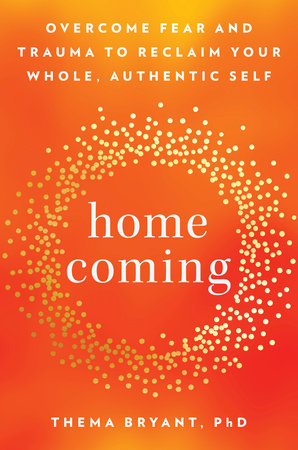
My latest? Homecoming by Thema Bryant, PhD. Also check out her podcast by the same name.
THE VALUE OF REVIEWS
Whether we like it or not, there is a business side to writing. Every author relies on readers to write online reviews. Please, please, please consider reviewing my book on Goodreads and at my Amazon author’s page. You have my gratitude!
BUY MY BOOK
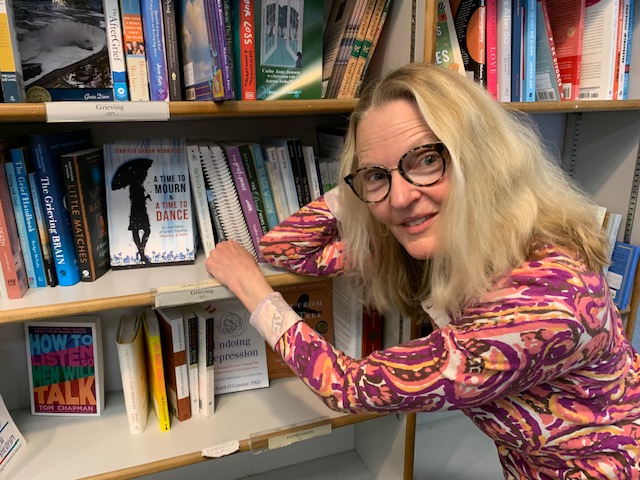
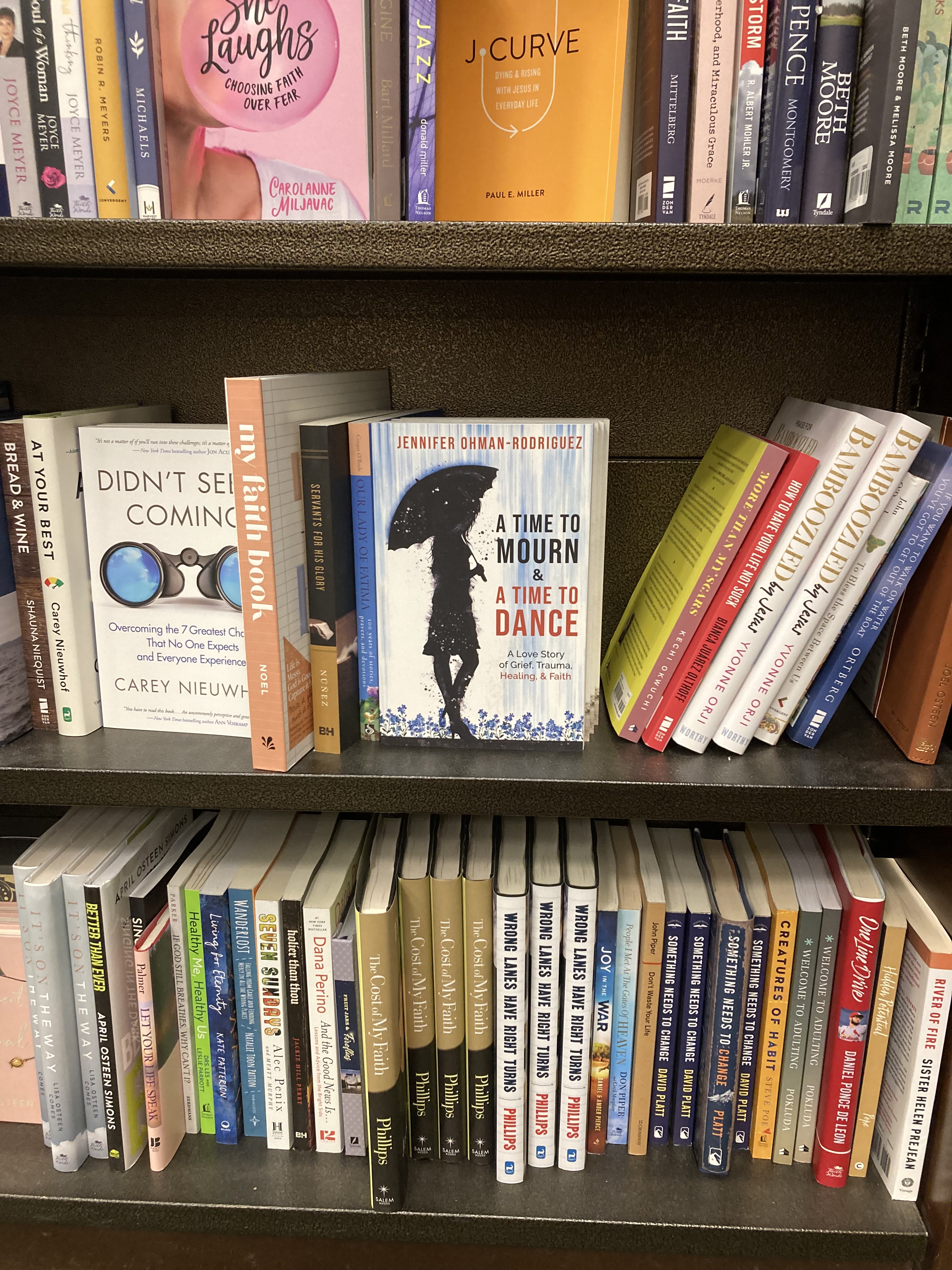
Put A Time to Mourn & a Time to Dance on your bookshelf! My book is currently available (on sale!) at Chalice Press. Or support your local, independent bookstore.
April Newsletter, 2022: All rights reserved by the author.
Every Lent a simple wreath hangs on our door. It’s a peace sign woven from vines by a third world woman. Someone trying to better her life and therefore the lives of her family by fingers practicing hope.
This sign also hung on our door from the first August morning of our grief. I took down our summer garland of blue and yellow flowers and hung this one up instead. Attempting to mark us as a home experiencing a different time than everyone else’s. Wanting to wrap the wreath in black ribbon but could not find the energy for it. So the peace sign hung as is for months, actually until Thanksgiving or Advent, I don’t remember which. Longer however than I lasted in my all black widow’s wardrobe hanging heavy on my shoulders.
This morning checking the mailbox I looked at our wreath of peace, the same color as the dead foliage falling against our home. Realized I was done with long dreary Iowa springs, grief, and Lent. Decided to find our flowered Eastertide wreath waiting for its turn on the door. It’s blooms signaling something good, something looked forward to and now here. Thinking its flowers, bouncing off the budding daffodils along our front walk, create a cacophony of color celebrating the return of something deemed beautiful.
So days before Palm Sunday, the day marking the beginning of what comes next in the Christian story, I took down our peace wreath. Not because I have fully found peace, but maybe because I haven’t. Not yet. Not quite yet. Maybe I trust, because Tony taught me this and Aunt Linda keeps reminding me, that I can and will heal and will come to some sort of peace with what happened. Knowing a one time trauma is not comparable to perpetuated trauma, not as complicated. More of a clean break in trauma speak, no emotional pins or surgery escalating matters even more. Yet still full of sorrow. Occasional panic attacks creeping in from out of nowhere except now I know how to appease this pain.
Breath in for five. No hold. Breath out for five.Repeat.
Breath in for five. No hold. Breath out for five. Repeat.
On and on in a circle of breath, maybe five minutes or so, until the agitated sensations running through my body pass away returning me to my now normal. Finding Easter in my breath. Life, resurrected from grief’s anguish. Again and again. Breath after breath. Blooming even in my muck.
A version of this piece was first posted on April 8, 2017.