
(This post also appears at https://compassionatechristianity.org/trauma-recover/)
July 2018. Time spent past 23 months attending two types of trauma healing therapy each week. In between sessions poring over my late husband’s professional books on healing trauma. Reading Bessel van der Kolk early evenings when all I could do was go back to bed. Now, one month before grief and trauma’s second anniversary, open Peter A. Levine’s Healing Trauma: A Pioneering Program for Restoring the Wisdom of Your Body.
Knew my insides still held vestiges of traumatic experience’s bodily chemicals. Better, yes. Stable-looking from the outside. Many days, more calm from within. But not protected from resurging cortisol and adrenaline making me crazy shaky on the inside. Also felt disconnected to others. As if I was an island of pain misunderstood by the world. Levine’s words made sense. “…Trauma is about loss of connections—to ourselves, to our bodies, to our families, to others, and to the world around us.” (p. 9)
Read further into Levine’s book. About discharging hormones causing fight, flight, or freeze. Through shaking. Like animals in the wild. Human tendency to stop this natural response. Deny surging chemicals release after traumatic experience. Risking instead trauma’s entrapment in our bodies. Causing life sentences leading to all sorts of internal and external havoc.
Knew all about captured chemicals. Arms throbbed in pain for months after Tony died. Still did in high stress situations. Mostly gone because of a combination of somatic movement therapy and Eye Movement Desensitization and Reprocessing (EMDR). Yet something remained. I could feel it.
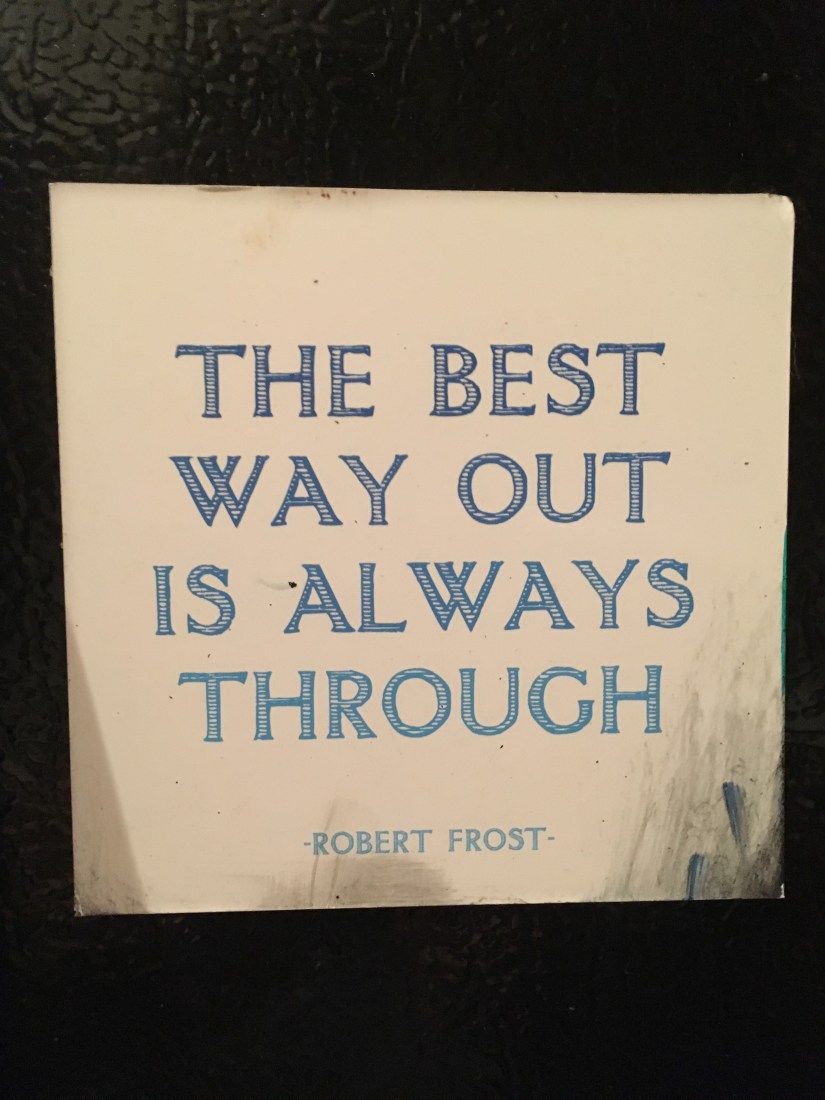
Our refrigerator magnet reminded me of something. Magnet found in Tony’s office. After he died. Amidst the chaos. In a space dedicated to healing trauma’s afterlife. Magnet bundled home. Stuck in place confronting me daily.
Decided it was the time to go through Levine’s twelve phases of healing exercises. Found in his book laying open on my bed. All phases providing a reunion of sorts between mind and body. Through gentle exercises reclaiming our innate healing powers. Beginning with “safety and containment.” (p. 38) Concluding with “settling and integrating.” (p. 68)
At twilight one night, snuggled in bed, I reread the “shower exercise” found in phase one. (p. 40) Asked the air, “How hard can this one be?”
But felt my stomach flutter in response. Causing me to pause before taking a big breath and throwing off the covers. Don’t remember walking into the bathroom. Or turning on the shower. Yet still feel the steam filling the room in fading light. And climbing in saying, “Here I go.”
Stood for a moment in water’s stream before placing both hands on my head. Tipped my head back. Felt my hair dampen. Brought it out repeating Levine’s suggested words. Tipped my head back again into the water. Took another deep breath. Moved on to face, neck, shoulders repeating actions, words, and breath. Each area filling with something different. Perhaps a new sense of lightness.
Right below my collar bones, after allowing water’s warmth to rain down, I again repeated Levine’s words. “This is my upper chest. I feel my upper chest. It belongs to me; it’s part of my body.” (p. 40)

Something released. Opened an internal door. Sending sensations up through my neck, face, and into my eyes. Forming tears falling hard. Showing me this part of my body contained held pain. Wounds still hurting. Suffering buried without my knowledge. I began to breathe hard. Shake. Tremble.
The shaking did not stop. It went on and on, warm water mixing with tears and trembling. For what seemed like suspended time. Until the tremors slowed, disappeared. My body, my whole body, breathed. And a sense of peace filled in the empty spaces formerly occupied by trauma’s leftovers. Well-being replaced fear. Goodness replaced evil.
With joy, shared my experience with both therapists. Thinking they would find it amazing and a little bit humorous as I did. But both women wore looks of something beyond concern. My EMDR therapist leaned in. “You need to tell me when you are thinking of doing trauma exercises on your own.”
“Oh my gosh, Jennifer! You can get stuck for hours in a tremor,” my somatic movement therapist said.
“Forever?”
“No, not forever. But it can be lengthy and scary.”
Point understood. Trauma recovery needs trained, certified, in-person clinicians walking with us. Knowing what we are up to in our own exploration of healing methods found outside the therapeutic office. My curiosity, part of life’s force waking up in me. Something to be celebrated. Yet shared with my healing team like writing down prescriptions and supplements for a new doctor.
Because healing is not a rogue endeavor. In trauma’s aftermath, the disconnectedness we feel and as Levine writes about, can tumble over into our therapeutic relationships. Trained healers are there to work with us and watch out for us. Every healing method, including help we find through books, podcasts, and social media, needs connection with our human healing team. In a “medical alert” found on his book’s copyright page, Levine urges readers to find professional healing. He also writes in chapter four, “this work is often best done in the presence of another person.” (p. 37)
Peter A. Levine’s work continues to impact me and all those involved in trauma healing. He is a courageous pioneer with an intense commitment to infusing new life into the evils of trauma’s aftermath. All his books are testaments to the possibility of living on and well. I continue to read, reread his books, listen to interviews with him, do his exercises, and some nights even wonder what it would be like to study with him. Mostly though, I just want to thank him.
“Thank you, Peter.”
 Once I wrote every morning. Upon waking. In dawn’s first light. Under cover’s warmth. Hidden. From world. Not long ago.
 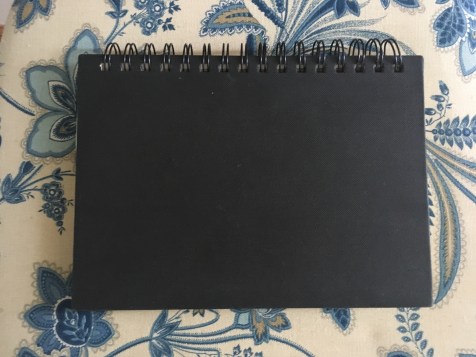 Write on drawing paper. Bound in books, not tablets. Large ones for home use. Small for travel. Not the blank books given at birthday or holiday. No glossy or smooth inspirational cover art or quote from famous author. No place inside front cover for printing name. Making words official if only to self. Instead simple black cover. Woven texture. Raised weave masking cardboard beneath. Square holes punched along left side. Two strands of black wire inserted and spiraling down. Holding innards together. Inside thick paper. Heartier than blank books. Strong enough for frequent erasure.
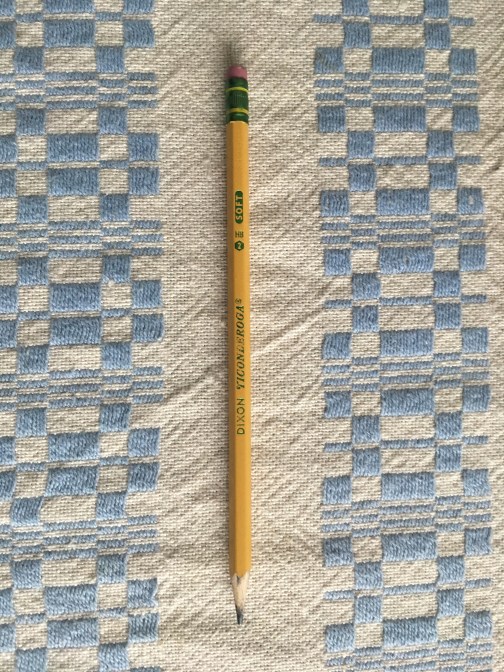 Write with pencil. Beginning long ago with a DIXON Ticonderoga 2 SOFT. Boxes left over from sons’ elementary school days. Specific request on school supply list each August. Boys calling them “sturdier.” Me, grumbling about extra expense. Left now with boxes of them. Many pre-sharpened. Popping out of clear plastic containers smelling of pencil. Wood wound around graphite. Odor lingering in our collective noses from early on. From beginnings of formal schooling.
 Electric sharpeners buzzing with own sounds, vibrations, issues. Too quick for the lingering, dreaming school child needing small break. Have one of these machines packed away somewhere. Lost in boxes of what was and is no longer. Instead rummage each morning in kitchen junk drawer. For small plastic, pastel colored pencil sharpeners with dulling blades. The kind put in zipped up pencil bags for school.
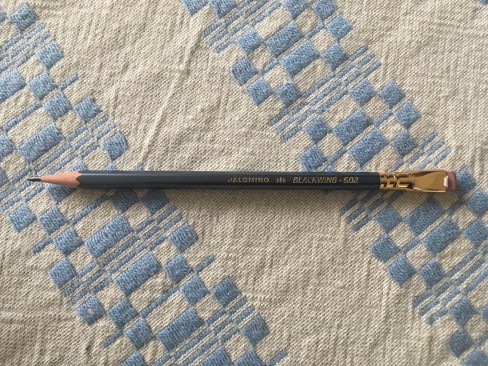 Topped with gold erasure cup. Not green. Holding flat, rectangular, pink erasure. For erasing on the horizontal instead of in a spiral. Gift accompanied by utilitarian sharpener. Small with two holes. One to sharpen. Another to fine tune the point. Small door for emptying shavings.
 A few weeks ago, a seminary friend gave me a pencil. Unsharpened. Along with a smile. Full of shared knowing. About life’s desire for tactile experiences. Our senses, in seminary, needing release from heavy frontal lobe exercising. Our emotional brains, the place where we feel God, crying out for attention, movement, freedom. My new pencil, a PALOMINO ForestChoice 2.







 Jennifer Ohman-Rodriguez