
From my journal, January 20, 2021
I think Jesus fished for people in need of compassion. Maybe he saw the disciples lacking in it. Heard this void in their words and actions. Knowing God wanted more for them.
Read an article by Nicholas Wolterstorff in The Christian Century magazine a couple of years ago, the January 16, 2019 edition. Struck once again how Christian doctrine often works against us in relationship to one another. Doctrine becoming a shield. Creating a wall of souls. Not allowing the other, the one holding up the shield, to step beyond entering into our pain. Embodying our experience. Creating compassion for and with us.
Wolterstorff was called heretical after writing honestly about suddenly losing his beloved son, Eric. A reviewer of Wolterstorff’s book, Lament for a Son , guarded something, maybe the vestiges of their own unresolved trauma with their words. Instead becoming a humanly righteous defender of the faith (as the reviewer saw it). But Wolterstorff needed a defender of his heart. From others. Especially Christians. I quote this man who endured profound loss here.
“I am not angry [at God] but baffled and hurt. My wound is an unanswered question. The wounds of all humanity are an unanswered question.” *
As Christians, we do not hold a doctrine of grief. Of how we believe, even trust, and then act upon our belief in times of grief. On how to love others through the most profoundly painful times in life. Perhaps we need such doctrines. Doctrines of grief, sorrow, trauma, anguish. Small frameworks reminding us of our human responsibility to ourselves and to one another. Not just to God in abstraction. In human configuration. But to the holy within us or in front of us who ask merely for a small bit of compassion. Love. Understanding. Claiming there is nothing heretical about any form of human love including grief for the loss of what we love. Loved. Of a beloved.
My mind winds through these thoughts on grief and compassion leading me to joy. Not that joy should be the end result of grief. Perhaps only because I want as a giver of compassion to hold joy for those who hurt until they may reclaim it for themselves. Some claiming it for the first time.
Joy often brings me to the verse from Psalm 30–words I discovered as a teenager full of feelings, hormones, insecurities, and fears.
“…Weeping may linger for the night, but joy comes with the morning.” Psalm 30:5 NRSV
I hope that the psalmist knows something I do not. Not that sorrow is an active ingredient of joy. Necessary to make joy rise. But that all feelings and especially intense feelings have an active lifespan which does not last in intensity and duration. Acute only for a period of time-an expanse we cannot predict yet must travel through. The longing never fully dissipating. Yet with the increase of self-compassion and compassion freely given by others, the longing has a sense of healing and a willingness to embrace other feelings, the ones supporting new life in the after time of sorrow.
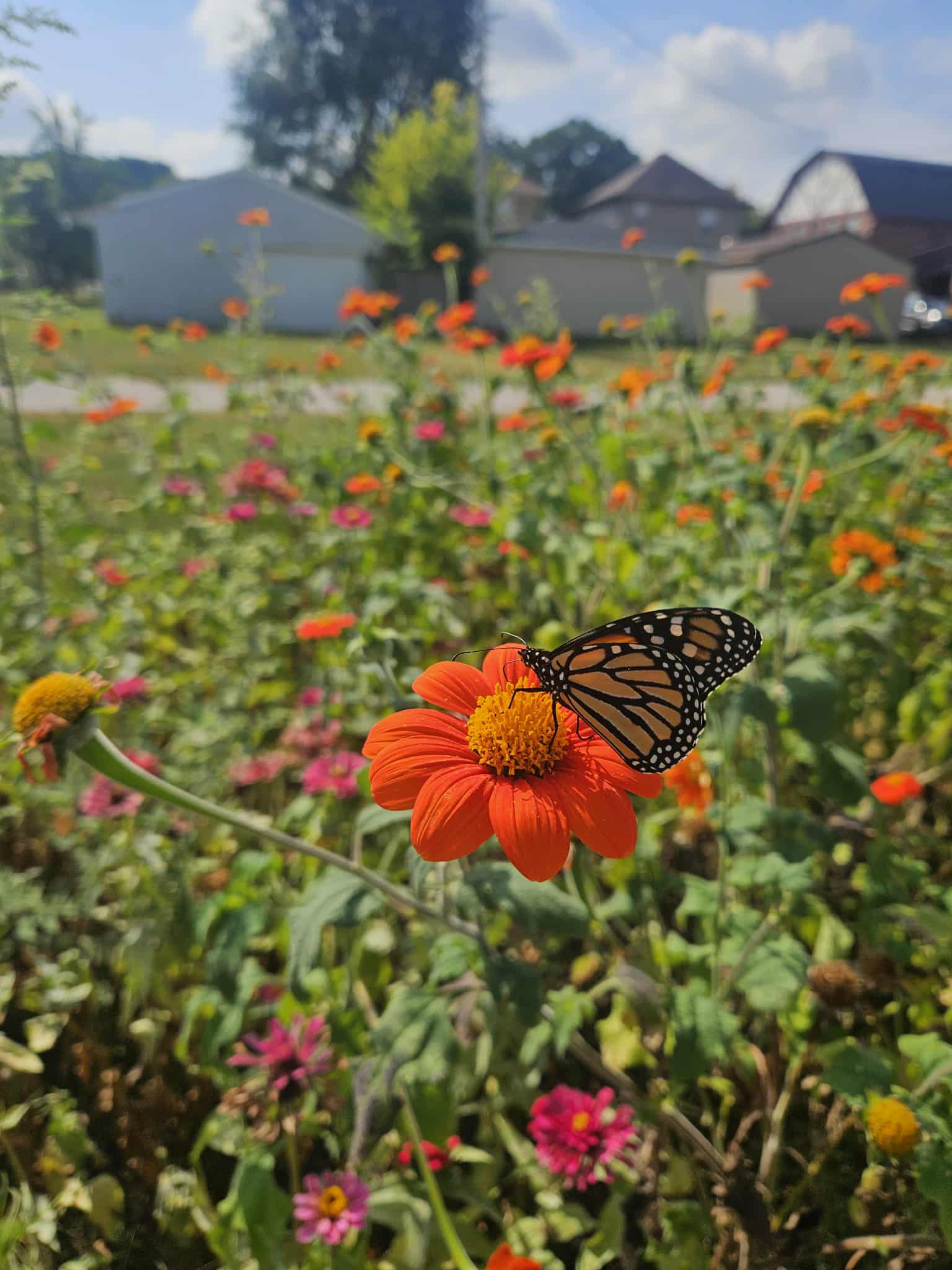
Perhaps joy doesn’t come the morning after waking on and off, weeping. Or even the next. Or the next. Perhaps joy comes in small glimmering ways. Like the fall afternoon light dancing on rippling water. The steadiness in night’s sky of a shining planet. A dewy bud opening at dawn. The busy butterfly on summer’s flower. A moment of silence shared with an understanding other. Slight moments reflected off bits and pieces of the world, the natural world and sometimes even its humans. Momentary brightness showing us, reminding us of something other than sorrow. Which feels good enough. Better than what was. A particle of joy amidst what we cannot change.
A prayer.
God of all emotions, We wait for joy found in small gestures of human compassion and glimmers of life within our view or on their way. Weaving in and out of obstacles, sadness, shock. We wait while you hold hope for us in its coming. Slowly, through minutes, hours, days, months, years. Waiting. You in joy. You in sorrow. Amen.
* Lament for a Son by Nicholas Wolterstorff.




 Jennifer Ohman-Rodriguez