Faith, Grief, Healing, Hope, Trauma

Thoughts on Grief, Compassion, & Joy

From my journal, January 20, 2021

I think Jesus fished for people in need of compassion. Maybe he saw the disciples lacking in it. Heard this void in their words and actions. Knowing God wanted more for them.

Read an article by Nicholas Wolterstorff in The Christian Century magazine a couple of years ago, the January 16, 2019 edition. Struck once again how Christian doctrine often works against us in relationship to one another. Doctrine becoming a shield. Creating a wall of souls. Not allowing the other, the one holding up the shield, to step beyond entering into our pain. Embodying our experience. Creating compassion for and with us.

Wolterstorff was called heretical after writing honestly about suddenly losing his beloved son, Eric. A reviewer of Wolterstorff’s book, Lament for a Son , guarded something, maybe the vestiges of their own unresolved trauma with their words. Instead becoming a humanly righteous defender of the faith (as the reviewer saw it). But Wolterstorff needed a defender of his heart. From others. Especially Christians. I quote this man who endured profound loss here.

“I am not angry [at God] but baffled and hurt. My wound is an unanswered question. The wounds of all humanity are an unanswered question.” *

As Christians, we do not hold a doctrine of grief. Of how we believe, even trust, and then act upon our belief in times of grief. On how to love others through the most profoundly painful times in life. Perhaps we need such doctrines. Doctrines of grief, sorrow, trauma, anguish. Small frameworks reminding us of our human responsibility to ourselves and to one another. Not just to God in abstraction. In human configuration. But to the holy within us or in front of us who ask merely for a small bit of compassion. Love. Understanding. Claiming there is nothing heretical about any form of human love including grief for the loss of what we love. Loved. Of a beloved.

My mind winds through these thoughts on grief and compassion leading me to joy. Not that joy should be the end result of grief. Perhaps only because I want as a giver of compassion to hold joy for those who hurt until they may reclaim it for themselves. Some claiming it for the first time.

Joy often brings me to the verse from Psalm 30–words I discovered as a teenager full of feelings, hormones, insecurities, and fears.

“…Weeping may linger for the night, but joy comes with the morning.” Psalm 30:5 NRSV

I hope that the psalmist knows something I do not. Not that sorrow is an active ingredient of joy. Necessary to make joy rise. But that all feelings and especially intense feelings have an active lifespan which does not last in intensity and duration. Acute only for a period of time-an expanse we cannot predict yet must travel through. The longing never fully dissipating. Yet with the increase of self-compassion and compassion freely given by others, the longing has a sense of healing and a willingness to embrace other feelings, the ones supporting new life in the after time of sorrow.

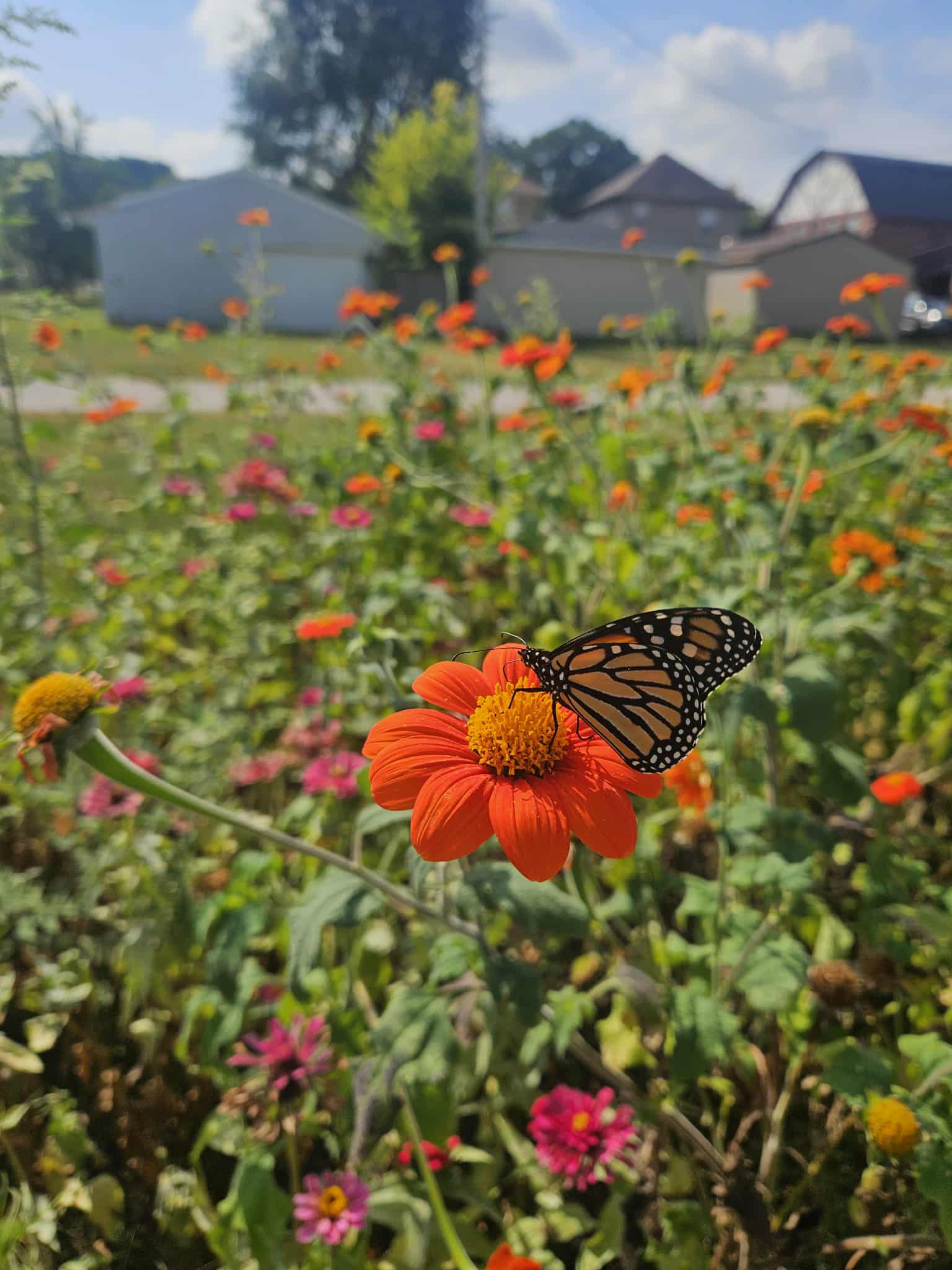
Perhaps joy doesn’t come the morning after waking on and off, weeping. Or even the next. Or the next. Perhaps joy comes in small glimmering ways. Like the fall afternoon light dancing on rippling water. The steadiness in night’s sky of a shining planet. A dewy bud opening at dawn. The busy butterfly on summer’s flower. A moment of silence shared with an understanding other. Slight moments reflected off bits and pieces of the world, the natural world and sometimes even its humans. Momentary brightness showing us, reminding us of something other than sorrow. Which feels good enough. Better than what was. A particle of joy amidst what we cannot change.

A prayer.

God of all emotions, We wait for joy found in small gestures of human compassion and glimmers of life within our view or on their way. Weaving in and out of obstacles, sadness, shock. We wait while you hold hope for us in its coming. Slowly, through minutes, hours, days, months, years. Waiting. You in joy. You in sorrow. Amen.

* Lament for a Son by Nicholas Wolterstorff.

Healing, Trauma, Trauma recovery

From Hurting to Healing

Life has a way of hurting. The unhealed pain of other people impacts our very existence. Nature, despite human taming and because it, will have its own way. No one lives then without wounds whether buried, forgotten, open, mending, or scars. Two truths:

Every human being hurts.

Every human being can heal.

If we all hurt, then why does the ongoing pain of others so often go unnoticed? And when we do notice why do we tend to stand, literally and metaphorically, an arm’s length away (if not more)? Distancing ourselves while also adding commentary as if their pain is an abstraction? Secretly relieved it is not us.

Because a distinct symptom of human unhealed pain from traumatic experiences of any size, duration, and intensity is disconnection. In disconnection, our relationship with ourselves, others, the world, and the Divine is disrupted. This chasm causes us to struggle with experiencing our own emotions, empathizing with and having compassion for others, and the Divine seems to vanish.

Disconnection, also called dissociation, is not a conscious choice. Often this separation from self and others is a lifesaving one. It is our wonderfully made bodies working to protect us from harm during an fear filled event. Yet if left unattended disconnection causes us and others further suffering.

Research tells us that the prevalence of unhealed pain from traumatic experiences in the United States is estimated to be 60 to 67% of the population.[1] In other words, more of us suffer from the unhealed pain of traumatic experiences than do not. The immensity and commonality of our suffering then demands that the act of ongoing healing be included in our thinking, meditations, prayers, and subsequent actions as a basic need for all humankind. That means you as well as me.

Let’s be clear: Healing takes courage, work, resources, healers, and time. The work of healing earns its worth however in the reconnection our minds to our bodies, hearts, and souls. Our true selves and our common humanity are uncovered and embraced so that we see once again or for the first time the pain of others. Reconnection then creates the space within us to accompany others–friend, family member, stranger–toward healing as our empathy grows and shifts into action. This action is called compassion.

Our healing then is the beginning. Our accompaniment of others, the mission we are called into as human beings on a spiritual journey with the Divine.


[1] https://www.cdc.gov/washington/testimony/2019/t20190711.htm

Image by Luda Kot from Pixabay

Healing, Trauma, Trauma recovery

Trauma’s Dance

The Dance Of Anger

On vacation rereading Harriet Lerner’s The Dance of Anger. First found on a bookstore shelf during college years. Title speaking to me. Enough to buy a copy then and again now.

Reflect on how we lose ourselves in crisis, grief, and trauma’s afterlife. Seized by the past with future ceasing not in reality but in imagination. It’s a trauma induced de-selfing. Inflicted on our beings. Impacting our relationships.

Causing overfunction in flight or fight. Underfunction in freeze. Our relationships controlled by the remains of our battered selves. Spinning with trauma’s ongoing truths feeding past’s patterns even if thought eradicated. A rising fueling internal and external turbulence. Stepping toward us with sorrow, sadness. Leaving a wondering of how to stop the incorrigible dance pointing toward destruction within and around. Anger’s waltz keeping pain’s memory fed and alive. Each step minimizing compassion for me.

Lerner writes of shifting anger’s you to I. Blame belonging to you. Shame to I. Mine to heal with love leading to a knowing of where I begin and also end. You existing only outside the boundary of me.

So what if I said, “I want different music, a different dance?”

A new step. A beginning. The first in finding myself again.

Healing, Liturgy, Prayer

Prayers for Pastors & Deacons

I wrote these prayers for pastors, deacons, and others who work for the Church. These petitions found communal life at the 2024 ELCA Northern Illinois Synod Assembly.

God of seed and soil, wind and rain, earth and all creatures,

We see ourselves in the seeds scattered on the path. Instead of birds, the work we do eats us up. Holy Wind blow us off this path and into soil that feeds us. God of good soil, hear our prayer.

We feel like we too fell on rocky ground. We quickly spring from task to task rooted only in our to-do lists with no protection from our own and others’ pain.  Holy energy help us find deep soil to grow extensive roots in your being. God of good soil, hear our prayer.

We seek to be surrounded by support and rest. Instead, life prickles with thorns of complaint, gossip, and demands. We cannot catch our breath. We choke. Holy weeder, release us from these tangles. Help us to breathe well again. God of good soil, hear our prayer.

We know we are not alone in our laments and pain. Holy Gospel, open our mouths to tell the truth. Keep us working for justice for all people. God of good soil, hear our prayer.

We send these prayers out into your full creation O, God through your anointed one and with Holy Breath. Amen.

Image by onehundredseventyfive from Pixabay