
I recently sat down with Annika O’Melia of Rock Island Line for a two hour conversation about trauma recovery, the congregation I am called to serve, St. John’s Lutheran church in Rock Island, Illinois, and our version of being firmly planted in our neighborhood. So take a listen.
Category: Trauma recovery
From Hurting to Healing

Life has a way of hurting. The unhealed pain of other people impacts our very existence. Nature, despite human taming and because it, will have its own way. No one lives then without wounds whether buried, forgotten, open, mending, or scars. Two truths:
Every human being hurts.
Every human being can heal.
If we all hurt, then why does the ongoing pain of others so often go unnoticed? And when we do notice why do we tend to stand, literally and metaphorically, an arm’s length away (if not more)? Distancing ourselves while also adding commentary as if their pain is an abstraction? Secretly relieved it is not us.
Because a distinct symptom of human unhealed pain from traumatic experiences of any size, duration, and intensity is disconnection. In disconnection, our relationship with ourselves, others, the world, and the Divine is disrupted. This chasm causes us to struggle with experiencing our own emotions, empathizing with and having compassion for others, and the Divine seems to vanish.
Disconnection, also called dissociation, is not a conscious choice. Often this separation from self and others is a lifesaving one. It is our wonderfully made bodies working to protect us from harm during an fear filled event. Yet if left unattended disconnection causes us and others further suffering.
Research tells us that the prevalence of unhealed pain from traumatic experiences in the United States is estimated to be 60 to 67% of the population.[1] In other words, more of us suffer from the unhealed pain of traumatic experiences than do not. The immensity and commonality of our suffering then demands that the act of ongoing healing be included in our thinking, meditations, prayers, and subsequent actions as a basic need for all humankind. That means you as well as me.
Let’s be clear: Healing takes courage, work, resources, healers, and time. The work of healing earns its worth however in the reconnection our minds to our bodies, hearts, and souls. Our true selves and our common humanity are uncovered and embraced so that we see once again or for the first time the pain of others. Reconnection then creates the space within us to accompany others–friend, family member, stranger–toward healing as our empathy grows and shifts into action. This action is called compassion.
Our healing then is the beginning. Our accompaniment of others, the mission we are called into as human beings on a spiritual journey with the Divine.
[1] https://www.cdc.gov/washington/testimony/2019/t20190711.htm
Trauma’s Dance
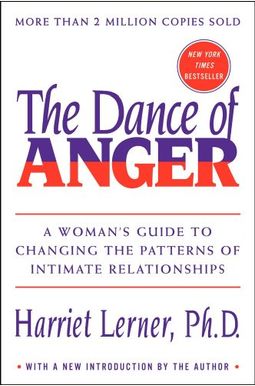
On vacation rereading Harriet Lerner’s The Dance of Anger. First found on a bookstore shelf during college years. Title speaking to me. Enough to buy a copy then and again now.
Reflect on how we lose ourselves in crisis, grief, and trauma’s afterlife. Seized by the past with future ceasing not in reality but in imagination. It’s a trauma induced de-selfing. Inflicted on our beings. Impacting our relationships.
Causing overfunction in flight or fight. Underfunction in freeze. Our relationships controlled by the remains of our battered selves. Spinning with trauma’s ongoing truths feeding past’s patterns even if thought eradicated. A rising fueling internal and external turbulence. Stepping toward us with sorrow, sadness. Leaving a wondering of how to stop the incorrigible dance pointing toward destruction within and around. Anger’s waltz keeping pain’s memory fed and alive. Each step minimizing compassion for me.
Lerner writes of shifting anger’s you to I. Blame belonging to you. Shame to I. Mine to heal with love leading to a knowing of where I begin and also end. You existing only outside the boundary of me.
So what if I said, “I want different music, a different dance?”
A new step. A beginning. The first in finding myself again.
Trembling: A Healing Practice

“Then the earth reeled and rocked; the foundations also of the mountains trembled
and quaked…” Psalm 18: 7
A Practice
Lie down. Pick a point within your body where you feel pain, discomfort, or crap. Close your eyes. Breathe in for five counts filling up your lungs from bottom to top. Send your breath into your pain. Surrounding it. Now breathe out for five counts. Sending some of your pain into God or the universe. Notice you may tremble on the exhale. Allow tremblings their say. Repeat for as long as you receive comfort in doing this kind of breathing. Then breathe in again. Breathe out. Speak these words (or words like it) to your pain:
Pain, agitation, anxiety, whatever your name is, I walk toward you. Because if I walk toward you, you cannot control me. If I walk away, you dominate my body. So I move toward you. With my breath. Breath receiving the emotions you hold captive. I walk toward you naming my emotions as holy.
A Prayer
God, creator of all human emotions, hold me. Assure me of healthy relief. Coming soon. Already traveling toward me. Send courage in my waiting, my trembling, my healing. Amen.
___________________________________________________________________________
A Note from Jennifer: You may opt in or opt out of any practice at any time. Not every practice is for every body.
Image by Laura Otýpková from Pixabay
Affliction

“My soul is bereft of peace; I have forgotten what happiness is; so I say, “Gone is my glory, and all that I had hoped for from God.” The thought of my affliction and my homelessness is wormwood and gall! My soul continually thinks of it and is bowed down within me. But this I call to mind, and therefore I have hope: The steadfast love of God never ceases…” Lamentations 3:17-22
Reflection
Bitter thoughts. Stewing from down below. Gurgling with stomach acids. Bubbling up. Burning the esophagus. Causing throat and breath to sour.
The writer of Lamentations uses strong metaphors. Wormwood, a plant smelling and tasting bitter. Gall, another name for bile. Words filling the air and us with pain’s felt presence in and out of our bodies.
But in the midst of severe affliction this writer dares to hope? What is it that this writer “call(s) to mind?” Surrounded by smells so intense, so permeating the writer curls. Caves in. What glimmers enough amidst affliction to speak of “steadfast love”?
Healing Practice: Glimmers
What gives you even a small glimmer of hope? A pin head of possibility? A fleeting thought of future?
What or who steadies you right now? Your therapist? The mail carrier showing up every day at the same time? The noon time factory whistle or downtown church bells?
Name these. Write them down. Even the smallest of the small. The writer of Lamentations puts hope in God. Maybe you do too. Maybe you don’t. Or maybe God is a glimmer of what can be.
Prayer
God of what can be, bring breezes filled with fresh air. Blow away bitterness’ smell. Settle my stomach. Give relief to my soured throat. Spark my imagination. Fill my thoughts with hope’s tiny glimmers. Amen.
 Jennifer Ohman-Rodriguez