Family, Food, Grief, Healing, Newsletter, Trauma recovery

NEWSLETTER November 2022

THIRD THANKSGIVING

Eleven pounds. Eighty-six ounces. Fresh. Organic. Not too heavy for me to lift into my grocery cart. Remember the brussel sprouts. Forget the cranberries. Because I burned my orange, cardamom, cranberry sauce in the crock pot yesterday. Making sauce no one will eat. Because really what we all want are good lingonberries with our feast. The hard-to-find ones costing seven dollars a jar. But I like the smell of simmering cranberries. Warms up our home with thoughts of holidays’ past. Until berries remind me of their fragility and burn. No longer evoking memories. Just another failed cooking attempt.

Earlier, when leaving for the store, gazed at sparkling crystals covering drive. Made mental note to sand upon return and remind sons to scrape mid-afternoon. Ensuring safety for myself, my mother, the delivery people. Before late November sun sets to soon.

Now arriving home, the back seat full for our upcoming feast. Sand our drive, pock-marked by your overuse of salt. Wanting once, a lifetime ago, to make sure I did not slip on this descending slope. Throwing grit down now. Missing you. Not because I do your chore. But because I simply miss you. Today. Yesterday. Tomorrow. Miss you on this sunny Sunday day.

Hours later sit with strangers in writing workshop. Flowing tears shift them in their seats. Like so many others blindsided by our pain. Spectators more comfortable with emotions on the page than in living truth. Curious voyeurs hoping against hope to keep covered their own pain while not empathizing with a slice of ours.

Tears emanate from truth told through poem written here and shared. Today, this Sunday before Thanksgiving, I bought my first Thanksgiving turkey since you died. We, no longer qualifying as refugees, welcomed at others’ Thanksgiving tables. Released this third Thanksgiving to celebrate on our own. The stuffing mine to overcook. The cranberries mine to burn. The gravy mine to whisk into lumps. The pumpkin pie mine to forget the sugar. Like the time my sons will not forget.

In following days leading up to event make another phone call asking to have your name removed from some bill, piece of mail. Like I have so many times these past twenty-seven months. Never ending, this removing you from our day-to-day business of living. Realize as this holiday approaches though that I must (once again) slow down. Be good to myself. Take care. Cease all dissassociations and denials. Just be in what was, what is not now, and what can be despite it all. A paradoxical trifecta of sorts. The holy trinity of living after trauma and death.

Third Thanksgiving. First turkey. Wonder what we will be thankful for this year. The brutality of what happened to us compounded by sons’ illnesses, mysterious and hard to treat? No. Will we be thankful for knowing and loving you? Will we be thankful for what we have accomplished in healing grief, trauma, illness? Will we be thankful for mercies still to come? Will we feel hope this day, our first alone. The first we trust ourselves to be alone just sons, me and my mother. Who will bring Norwegian lefse made with gluten free flour, thick instead of thin. Making us all remember when wheat lefse smeared with real butter rolled up easily. You wanting to sweeten yours with brown sugar. Me telling you this way is incorrect in purist lefse culture. You carving the turkey. Looking at me with silent words of, “I really do not know how to do this…”

Me believing you will figure it out. Like now I believe we will continue to figure out life without you as I dish up food. Light candles. Gather us into the grace of this day.

INVITE JENNIFER TO SPEAK

If your organization, church, podcast, conference, library, or literary festival is interested in inviting me to speak, preach, or lead a workshop, please click here: Invite Jennifer to Speak.

GOOD NEWS!

A Time to Mourn & A Time to Dance made the list of Best Christian Grief Books for 2022 at Choosing Therapy!

WHAT I AM READING

I love metaphor. I embrace metaphors for God in my own theological imagination, my own thinking about and encountering God. Rabbi Toba Spitzer’s new book is a welcome addition to my wonderings about God. Here is a small bit of her wisdom:

“There are two elements found in every spiritual and religious tradition that resonate with the power of Voice: music, and the sound of silence. Each of these modalities offer opportunities for transformative spiritual experience.” (109)

God Is Here

RECENT ARTICLES & UPCOMING EVENTS

Recognizing the Hidden Suffering of Addiction, Faith+Lead.

Devotional in Rise & Shine: 2022-2023 Devotion Book. ELCA School and Learning Centers. 

October 1: Tara Eastman and I talk on her podcast, Holy Shenanigans.

October 4: Book Club with St. Mark Lutheran Church in Davenport, Iowa

October 10: “Being a Spiritual Writer,” with author Lori Erickson at the Iowa City Book Festival. Our session is at 6:30 PM at the Coralville Library.

October 22: “Trauma-Informed Worship” with Faith+Lead. (10-12–Online Only)

November 1: “Spiritual Care for Trauma” with Faith+Lead. (10-11:30–Online only)

November 8: “Spiritual Care for Trauma” with Faith+Lead. 10-11:30–Online only)

November 15: “Spiritual Care for Trauma” with Faith+Lead. (10-11:30–Online only)

November 29: “Spiritual Care for Trauma” with Faith+Lead. (10-11:30–Online only)

December: Essay (print/online) in Sundays and Seasons: Guide to Worship Planning, Year A 2023 (Augsburg Fortress) 

WHAT’S UP IN 2023

There are a number of exciting possibilities incubating for 2023. Stay tuned!

THE VALUE OF REVIEWS

Being an author, especially a spiritual author, means also being my own marketing director. And I admit I have all sorts of feelings about being tied to the social media self-promotion cycle. Yet there has always been a business side to writing. So here’s what publishers, book sellers, and writers know about getting books into readers hands, eyes, and hearts:

NEWSLETTERS: The more people on an author’s newsletter email list, the more the author sells their books. You can be on my newsletter list by simply following my blog. To do so, press the SUBSCRIBE button on the upper left side of this page.

REVIEWS: The more online reviews a book receives, the more a book sells. Please consider reviewing my book on Goodreads and at my Amazon author’s page. 

TIKTOK: If you post on TikTok, say something about my book AND use the hashtag #BookTok.

Thank you!

© October/November Newsletter, 2022: All rights reserved by the author.

Image by Couleur from Pixabay

Food

AN ANCIENT ANCESTRAL GRAIN

Unhulled Barley Groats
Barley Groats

We are knee deep into the month of gluttony.  Since that second helping of stuffing on Thanksgiving Day to New Year’s Day nibbles, I along with most of my fellow citizens wage war with an onslaught of food.  I wait, bite after bite, for January to arrive with all its culinary dullness when I will have no reason to avoid the inevitable weeks of carbohydrate detoxification.  I may even look forward to the post-holiday withdrawal symptoms; napping at odd moments, frenetic sessions of closet clean out, and drinking copious amount of water (because for some odd reason I can still taste the overabundance of sage in the holiday dressing).  But right now, I just can’t get off the December eating mill.  Spritz, kringla, glögg, and bondost dominate my waking hours calling me back to my ancestral culinary lineage…or so I used to think.

These foods while a part of my heritage are foods of plenty, some from a time not so long ago. The common folk of the past who spent their lives beholden to the Lord of the Manor and the church could rarely if ever afford sugar, wheat flour, or caraway seed. So what did they eat?  The ones who eked out a life of sustenance?  The ones who packed up and sailed to a new land? Such thoughts, if for nothing else, give me pause, a brief respite, between bites.

It turns out my ancestors’ daily bread was not memorable or always appealing especially to our modern pallet.  The fare was simple and repetitious.  Maybe that’s the lure for me during this modern season when nothing, absolutely nothing, seems simple and the only repetition is the ease of frozen pizza.  Yet peasant provisions had to be simple.  These were poor, hard-working people with no time, access, or money for complicated ingredients.  Having enough to last the winter trumped variety and excess.

IMG_1146
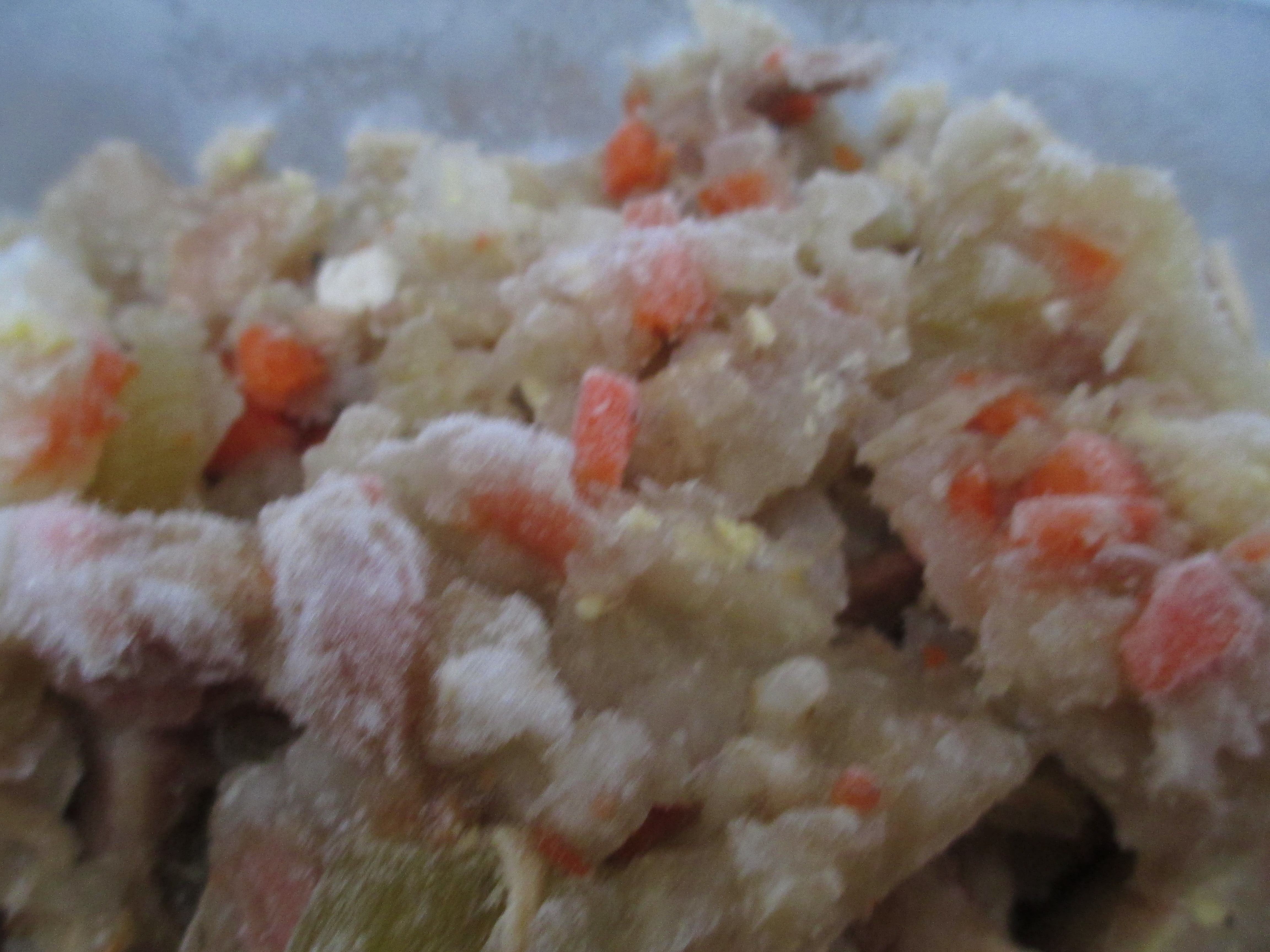
Frozen stew.

The nourishment norm, or so I’m told, for my ancestors was barley.  It seems so utterly uncomplicated for an ancient grain dating back 10,000 years or so. It doesn’t even have a name I cannot pronounce without being corrected or spell without a spell check.  But barley kept my ancestors alive so I figure they thought about this grain, which is so uncomplicated it seems boring, a lot.

Boring or not, I embarked on an ancestral homage to barley this fall beginning with a chicken barley stew which no one in my house ate without complaining.  Most of it is still in my freezer waiting for better days or for its time to come or for just a bit of love and acceptance from the male contingent in my family.  Whenever I see its frozen kernels of barley, carrot, and chicken I think of our dearly departed dog who loved my food with a certain joie de mange…

IMG_1089
Water and ground groats.

A traditional Swedish peasant porridge or gruel was my second barley endeavor. Now smart, I didn’t attempt to serve it up Oliver style to the masses.  Using ½ cup of barley groats I ground and ground and ground the blasted stuff in my food processor for what seemed like ages.  I then dumped the weird floury, steel cut-looking barley groat concoction into a pot and added only two cups of water, nothing else—no salt, no sugar, no nothing. Just water and the somewhat ground groats composed the ingredients.  It seemed a destitution recipe until I remembered adding ground tree bark constituted true deprivation for my ancestors.

IMG_1087
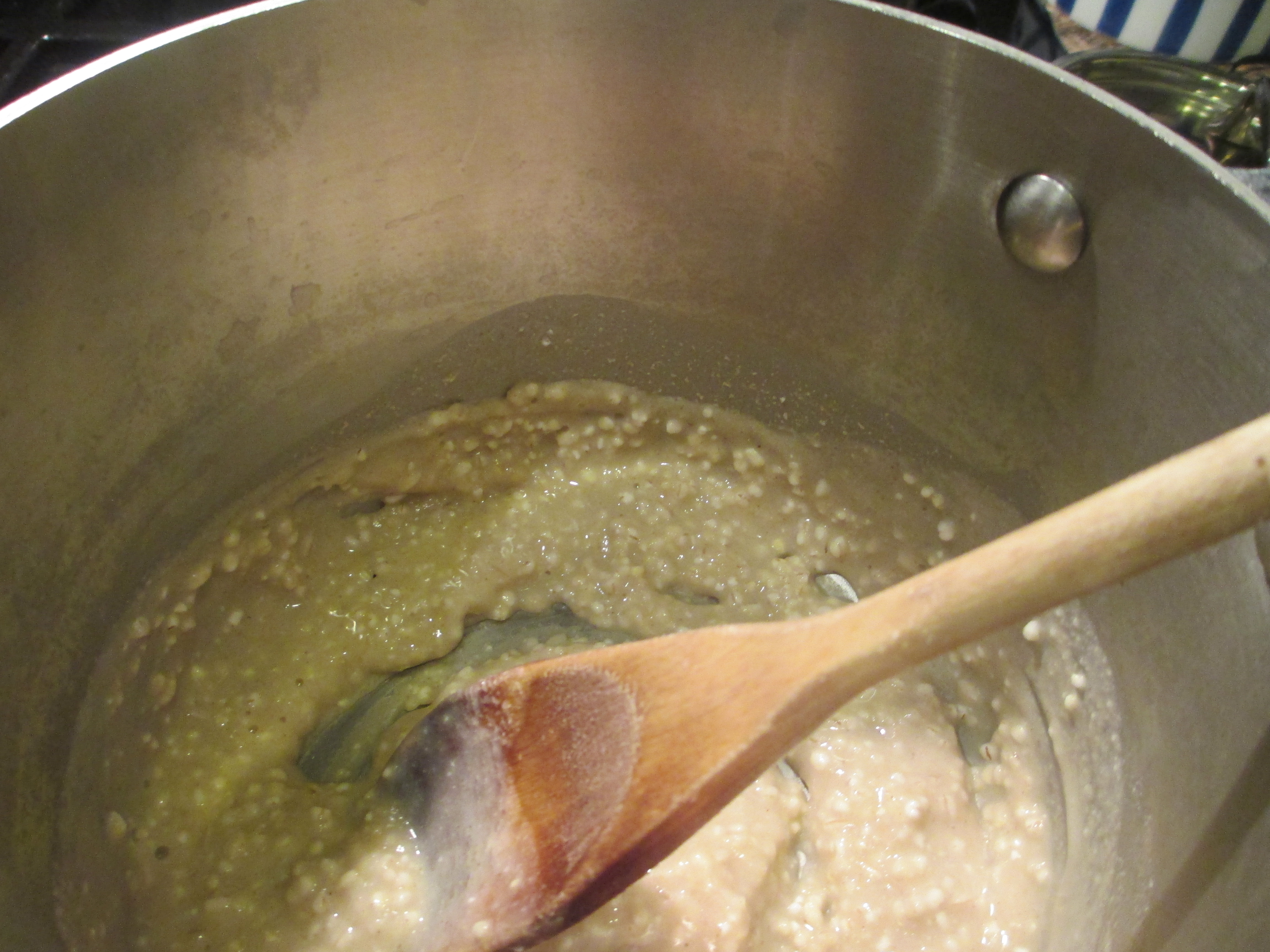
Pulling away from the sides of the pot.

Thirty minutes later and with some stirring the mixture came away from the pot sides and looked something like oatmeal but not really and had an unappetizing orange brownish tinge to it.  The groats crunched in my mouth however so in went another half cup of water followed by more stirring until my gruel boiled and simmered for another fifteen minutes or so. Still the groats required too much munching so in went another half cup of water and more stirring, boiling, and simmering for an additional fifteen minutes.

IMG_1092
Plain gruel.

IMG_1094
Gruel with butter and lingon.

Now one hour and three cups of water later, my porridge again failed the mushy test.  At this point I was way overdue for breaking my morning fast so I elected to eat the stuff because really the rest of life was reminding me that this folly into my DNA was taking way too much time.  I topped the porridge with a tablespoon each of butter and lingon and dug in.

What can I say?  The peasant gruel was filling while being not necessarily comforting.  It gave off a slightly sweet smell which is still stuck in my accumulated olfactory memory.  And it was still too crunchy so I threw the remaining dregs back on the stove with an additional ½ cup of water followed by more stirring, another bubbling boil until thirty minutes later voila!” mushy porridge was mine!  And now it can be yours as well…

IMG_1098
Barley gruel with lingon.

Jen’s Swedish Peasant Porridge Gruel

½ cup ground barley groats

3 ½ cups water

Combine ingredients stirring over medium heat for 1 ½ hours until smooth.  Salt, butter, and sweeten to taste.

A final foray into barley and peasant porridge occurred in early December.  The season was gearing up.  Packages from Cyber Monday arrived daily.  Thoughts of foraging the local farms for an Amish duck or turkey for Christmas dinner occupied my brain.  Finding a time to cut down a real Christmas tree with the entire family drove me to distraction. Painters, who took a year to schedule, painted an entire floor of our house, my paid writing deadlines loomed as I finished off the left-over dressing and lefse.

IMG_1103
Soaking the groats.

This time I began with whole barley groats pouring two cups worth into a big pot filled with water.  The groats soaked for about twenty hours plumping up and looking ready to cook.  Following an online recipe I then added 8 ½ cups of milk heating the mixture over medium heat while stirring.

One hour later I was still stirring.

IMG_1108
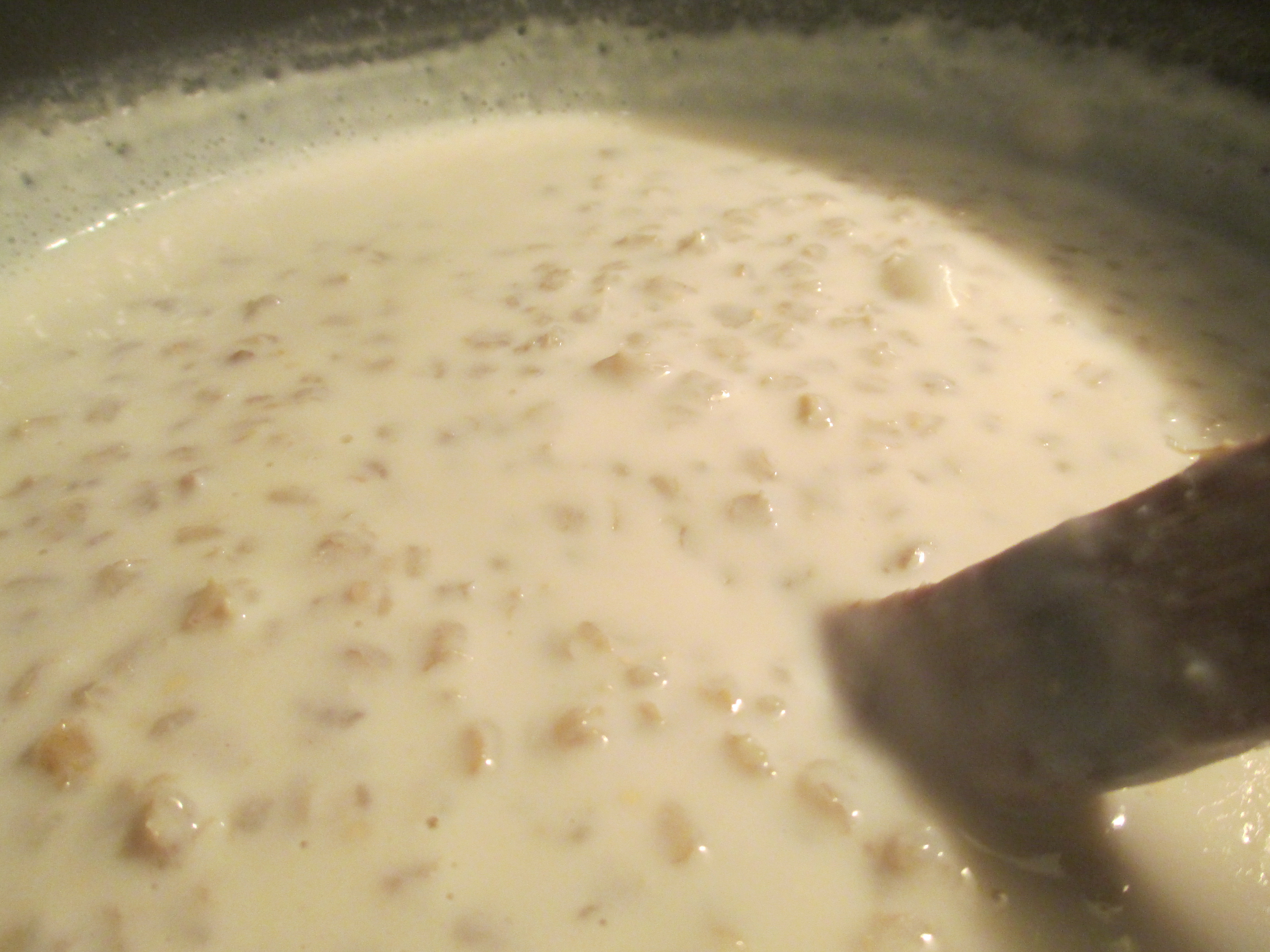
Creamy porridge.

Two hours later I was still stirring although I now was standing over the pot with wooden spoon in one hand while holding the pages down of my book with the other.

Three hours later I had porridge.

IMG_1116
Crust

IMG_1099
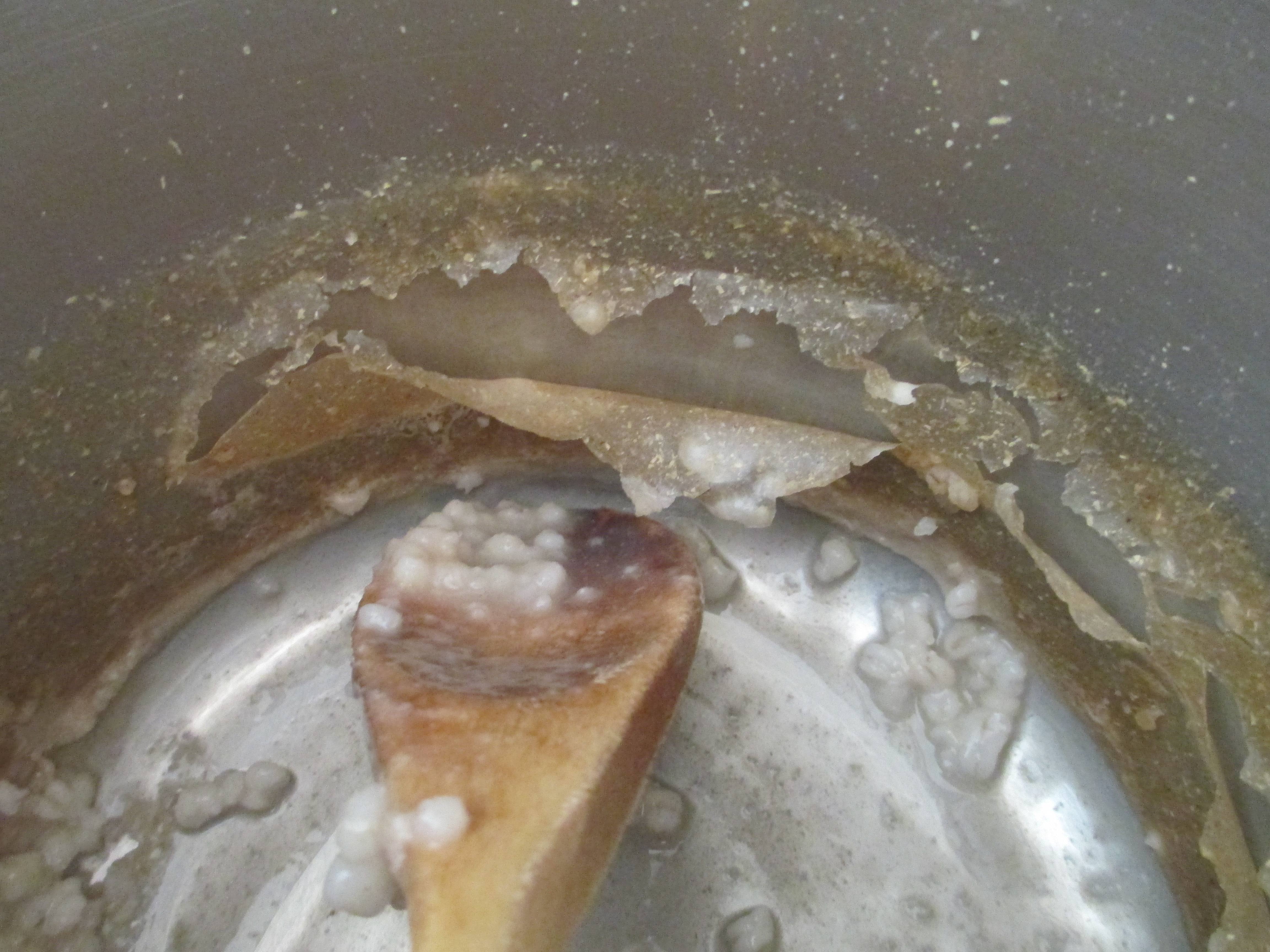
Sticks like glue!

Four hours later, the cooling porridge pot had formed a crusty barley lid.  Who needs plastic wrap?  I lifted the lid, scooped out a bowl, and added a bit of lingon.  The porridge was warm, soothing, and creamy.  Not yummy but definitely an upgrade from my last endeavor…sort of like rising from poor peasant to middling one. However scrubbing the pot later that day was like dissolving adhesives without the fumes.

I can’t say I now feel closer to my kin folk of another time from these experiments into their ancient grain.  I do have a new understanding as to why sweet, sour, and spicy broke true culinary monotony funding industries which changed our world and our diets for better and for worse and made some people extremely wealthy.  For now however I will put all such thoughts aside while I regress into the more recent past and savor a bit of sweet spice.   A cup of hot tea and a plate of pepparkakor call me by name as I watch the snow fall.  Soon it will be January.

Food

Grits, Groats, Grout, and Gruel

Iowa Corn
Iowa Corn

We are having a warm, dry fall here in my small corner of Iowa this year. Dust and leaves blow across the fields even when no one is busy harvesting. Harvest of course makes more dust as the cut corn or beans spread their smells across our yards. For a few weeks tractors and combines own our roads as they travel from farm to farm.  Behemoths, they hold us urban drivers at bay steaming in our misplaced need to hurry life along.

Rolled Oats
Rolled Oats

Fall’s cooler mornings remind me winter is indeed on its way. I itch to leave my summer muesli breakfast behind for hot, steaming bowls of oatmeal covered in maple syrup and topped with tart farm apples dusted in cinnamon.  Like most people now, I often use my microwave speeding the process along. My real day, of course, begins after breakfast is over don’t you know.  But when I have the inclination or need the slowness of the process, I return once again to a pot over the fire.

Oatmeal seems ancient to me, something I am genetically predisposed to and embedded in my DNA. Years ago I learned to soak old fashioned oats a bit before stirring them gently in a pot over my stove fire ever careful of a possible bubble over.  The process of creating a bowl of this steamy stuff feels more like an inherited ritual to me. I imagine my mother, her mother, and the mother before her also stirring pots of porridge over their stoves–electric, gas, wood, or coal– many a morning once upon a time.

Eating oatmeal is old in my lineage. But it’s predecessors, gruel and porridge, are ancient. For my ancestors such a meal was the most common of daily fares. Gruel is “liquid food made from meal”. At least that’s what Skeat’s Etymological Dictionary tells me. The word gruel is related to grout which is a course meal, its plural being grounds and also to groat which is hulled grain. Gruel in Danish is gröd meaning “boiled grouts” .The Swedish word is gröt meaning “thick pap” and the Norwegian word is similar, grøt. 

Barley Groats
Barley Groats

While the grain for gruel or porridge can be oats, corn, or wheat, in the Scandinavian countries, barley was often the grain of choice for my ancestors. In the region of Sweden my ancestors hail from, Västergötland, a pot of porridge was on the table for every meal.  So common and necessary was gruel to the Northern people that it made the journey from one land to the next. In 1838, Norwegian Ole Rynning advised his fellow countrymen “that barley gruel flavored with wine is frequently strengthening and helpful” on the sea journey to the new world.

Many of us with ties to Scandinavian Minnesota grew up eating at least a few of our morning meals of oats or cereal under the praying hands of Eric Enstrom’s photo “Grace”–an older man giving thanks for his daily bread and bowl of gruel. My maternal grandmother placed a copy of this photo over her kitchen table reminding us all of a simple and austere past spanning the old country with the new.

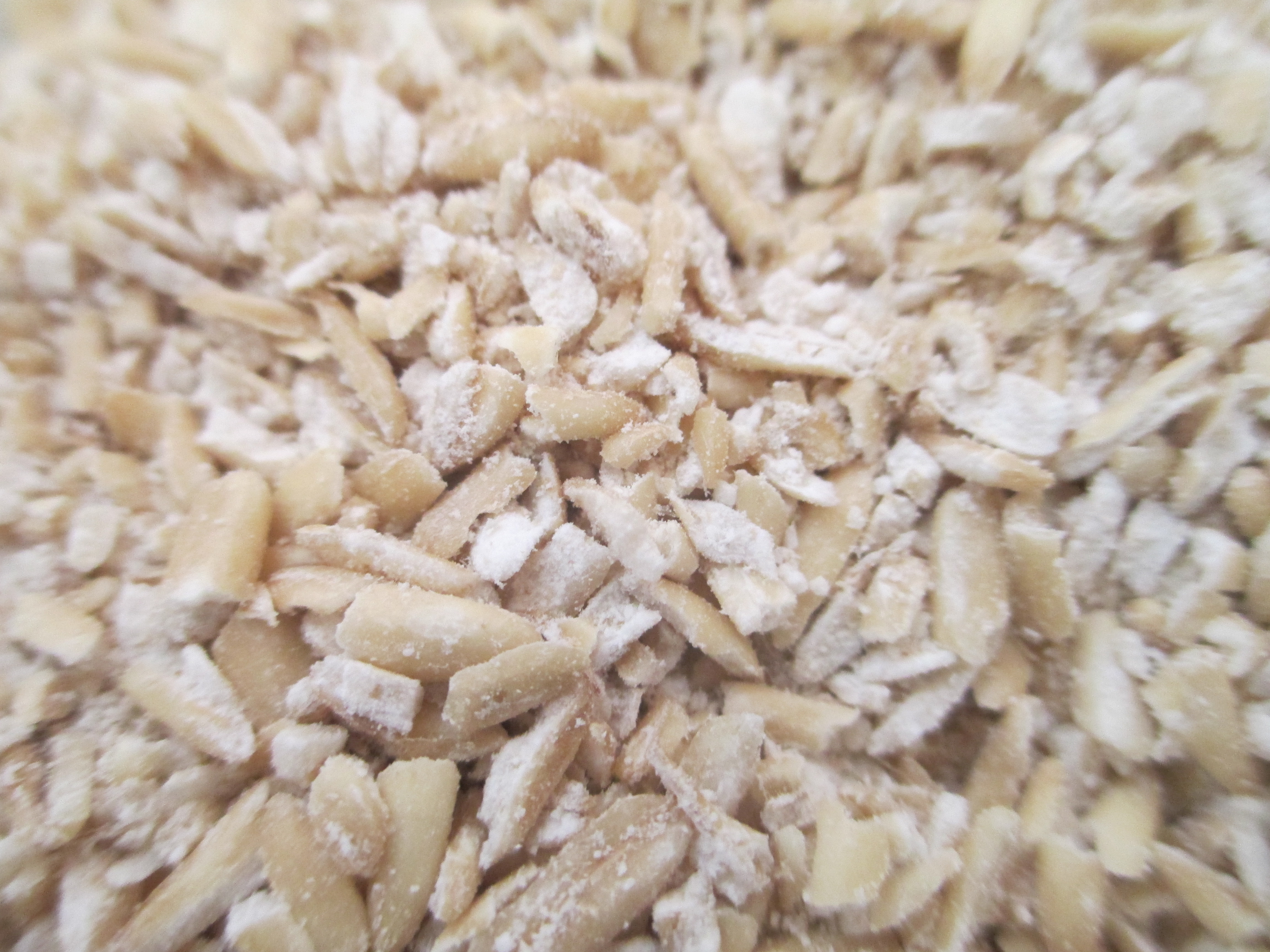
Milled oat groats sometimes called Scottish Oats.
Ground oat groats milled in the old water mill way sometimes called Scottish Oats.

Rolled grains, like my morning oatmeal or even our modern cereal, are a relatively new technology. Oat groats are steamed and then rolled into flakes. Before the invention of the “roller” in 1877 by the Quaker Oats Company, the best a peasant woman might do was to begin with hulled grain (groats). If possible, the grain was ground at a local water mill called a skvaltkvarn in Sweden. But if not, the hulled grain was soaked overnight and cooked for a few hours over the fire. In Sweden, women used a three-legged cast iron pot for gröt which was placed in the open fireplace to cook. The grain was moistened by water and served with maybe a little butter, sour milk, and sweetened with lingon, a tart, wild berry similar to cranberries.

Lingon
Lingon

The dish does not seem dependent on milk or butter however.  Cows, if a peasant family had them, stopped producing milk in late winter/early spring since feeding cattle all winter was often difficult. To this day many people cook their modern day gruel in water some topping it off with milk and others not.

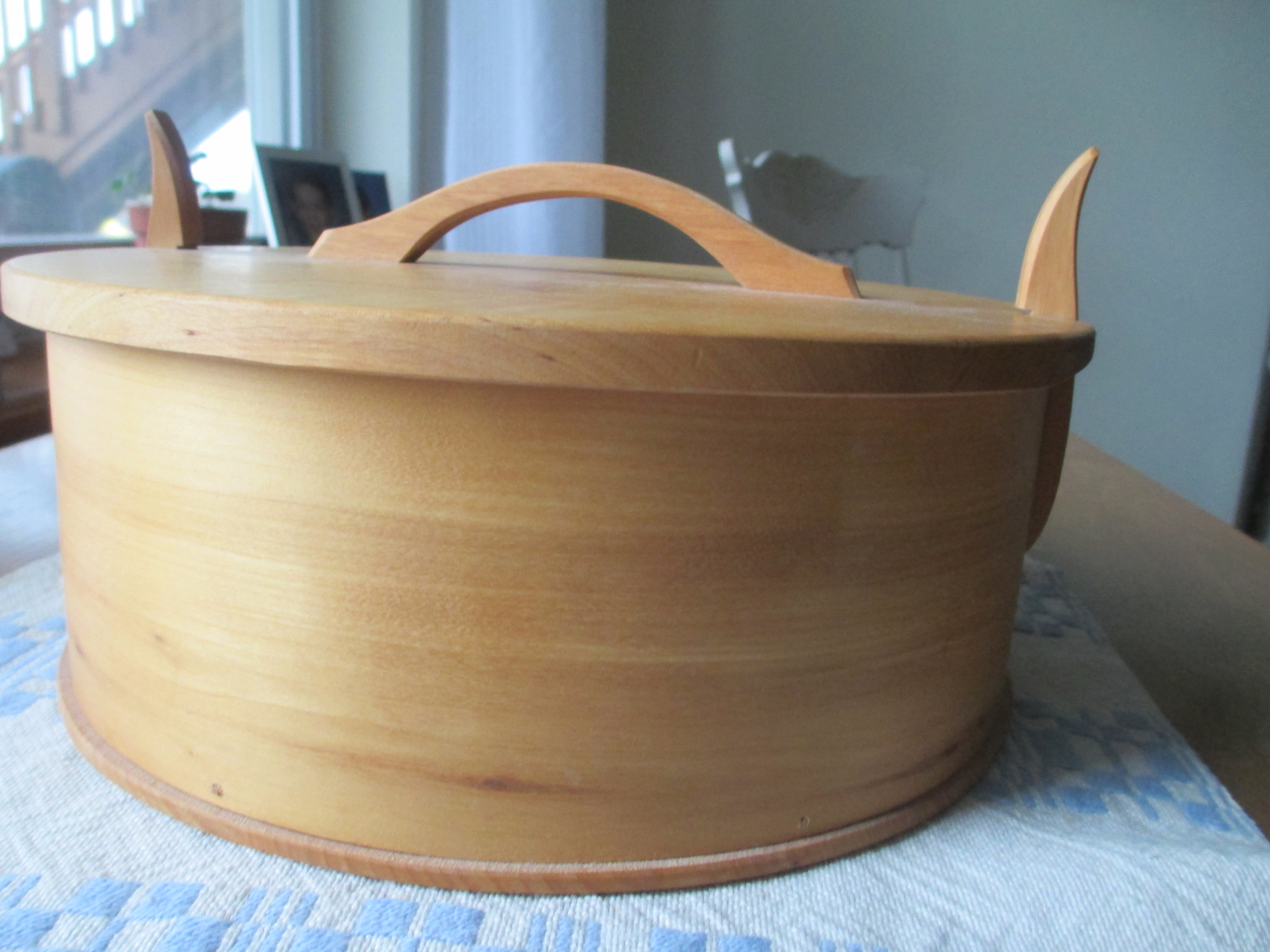
Norwegian Bentwood Box

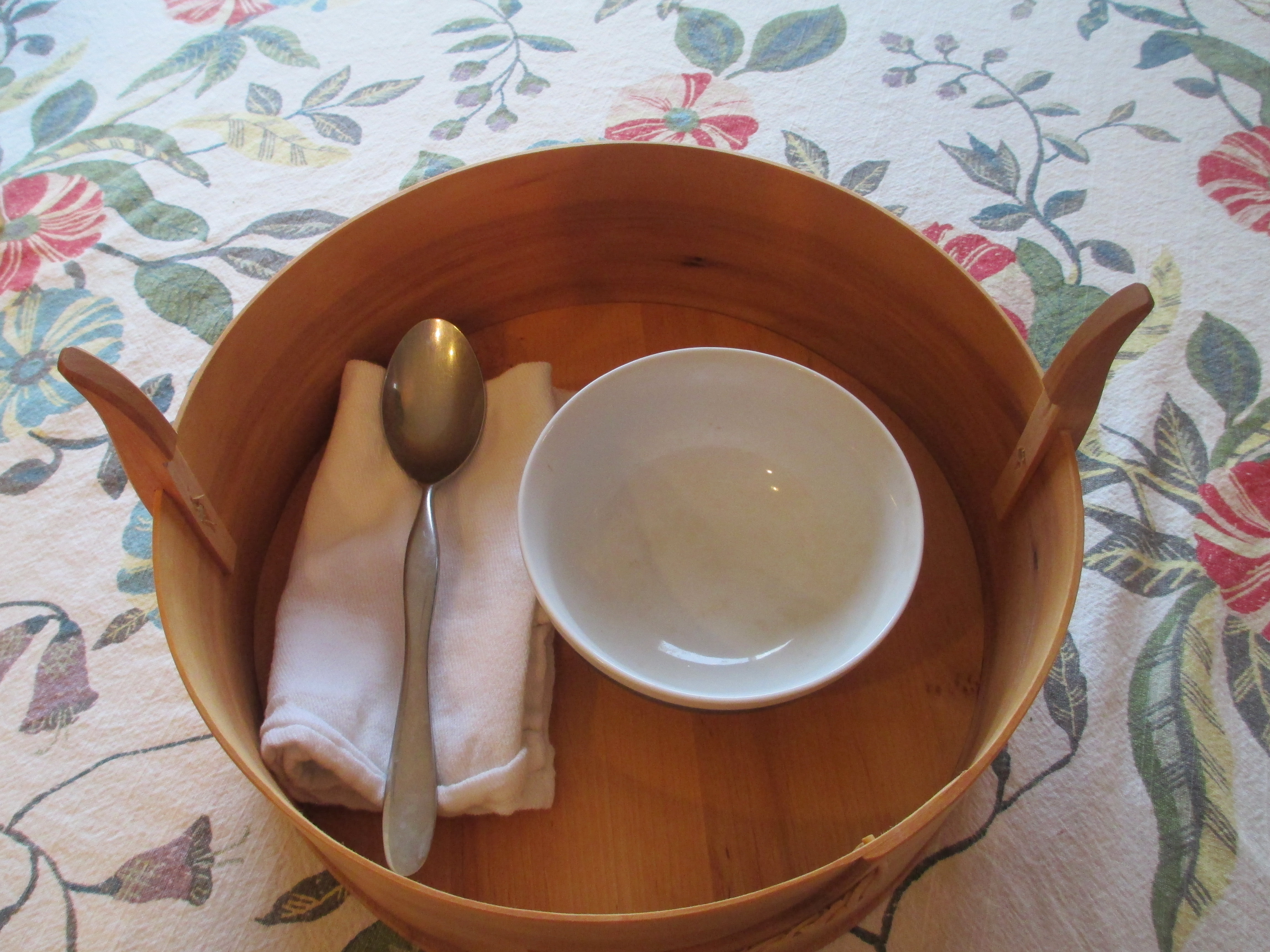
I vaguely remember I scene in the movie Babette’s Feast in which the sisters make a cousin to porridge.  It’s called something like ale bread soup and is made out of dried bread.  The sisters carry bowls of this porridge soup to their ailing neighbors in wooden boxes.  I’m sure these boxes made of bentwood had many uses.  But carrying porridge seems to be one of them.

Porridge Lunch Box
Porridge Lunch Box

I am busy now gathering the ingredients and recipes to make my own Scandinavian porridge from barley.  I hope to share this grand adventure into my ancestors’ (and maybe yours too) peasant past in the very near future. But I also have this recurrent guilty, niggling, nudge that I should for the first time make the traditional Norwegian fest food rømmegrøt  (sour cream porridge) . I’ve never wanted to make it but maybe the ancestors (the Norwegian ones anyway) are whispering in my ear…

SOURCES

Centergran, Ulla and Martenius, Ingela. A Few Notes on Traditional Swedish Food. Accessed on March 23, 2015 at web.comhem.se.

Peters, Charles (ed). The Girl’s Own Indoor Book, pages 405-411. Published by The Religious Tract Society in 1888. I found it at https://books.google.com/books/about/The_girl_s_own_indoor_book_ed_by_C_Peter.html?id=-WIVAAAAQAAJ on October 22, 2015.

The blog My Little Norway: Discover the Kingdom of the North accessed October 22, 2015 at http://mylittlenorway.com/2014/11/traditional-norwegian-grot/; http://mylittlenorway.com/2011/12/old-norwegian-grot-recipe/; and http://mylittlenorway.com/2011/12/hanna-winsnes-the-first-norwegian-cook-book/

Learn all about grains at http://blog.bobsredmill.com/featured-articles/steel-cut-rolled-instant-scottish/ accessed on October 22, 2015.

Rynning, Ole. Ole Rynning’s True Account of America. First published in 1838. Now available at http://collections.mnhs.org/MNHistoryMagazine/articles/2/v02i04p220-269.pdf. Accessed on October 26, 2015.

Johnson, Dennis L. The shot seen ‘round the world: The story of a famous picture. In Swedish American Genealogist. Volume 34. December 2014. Published by the Swenson Swedish Immigration Research Center, Augustana College, Rock Island, Illinois.

For photos of a skvaltkvarn (Swedish water mill), check out http://www.kringla.nu/kringla/objekt?referens=raa/bbr/21000001025135

The Västergötlands Museum accessed almost daily in October and November of 2015 at http://vastergotlandsmuseum.se/sv/Vastarvet/Verksamheter/Vastergotlands-museum/