Like most people I have many identifiers. Currently I call myself writer, author, minister of Word and sacrament in the ELCA, and child development specialist. I am also a mother, widow, wife, sister, and daughter. My pronouns are she/hers.
Cup your hand. Place a small photo of you at any age in your hand. Place your other hand over the photo. Close your eyes. Begin breathing.
With each breath send love to the you in the photo. Love for the child you, the young adult you, the mature you. Fill your cupped hands with love’s breath.
Now bring your cupped hands as close to your heart as you can.
Imagine sending the photo of you into your heart. Allow this image of you to rest there, held by your heart.
Breathe. And when you sense that your heart will take good care of you, open your eyes, lower your hands, and return to your day.
Practice Note: In this self-care minute, we hold ourselves by holding a photo. Please read “hands” as a metaphor for all the ways our bodies can hold something. Please practice in the ways best for you.
This practice is influenced by author and retreat leader Joyce Rupp in her book Boundless Compassion: Creating a Way of Life.
Take a moment to notice where your body is in your space, in your environment.
Notice your feet against the soles of your shoes or your bare feet on the flooring or your heels and legs against the couch. Notice the heat of this meeting between your feet and what they wear and perch upon. Or the coolness. And, notice the gentleness or roughness of the carpet, upholstery, socks, air. Notice.
Notice where your arms are. On the table. Or against your body. What does that feel like? This meeting between your arms and something else?
If sitting, notice your derriere in your seat. Is your seat soft, hard, warm, cool?
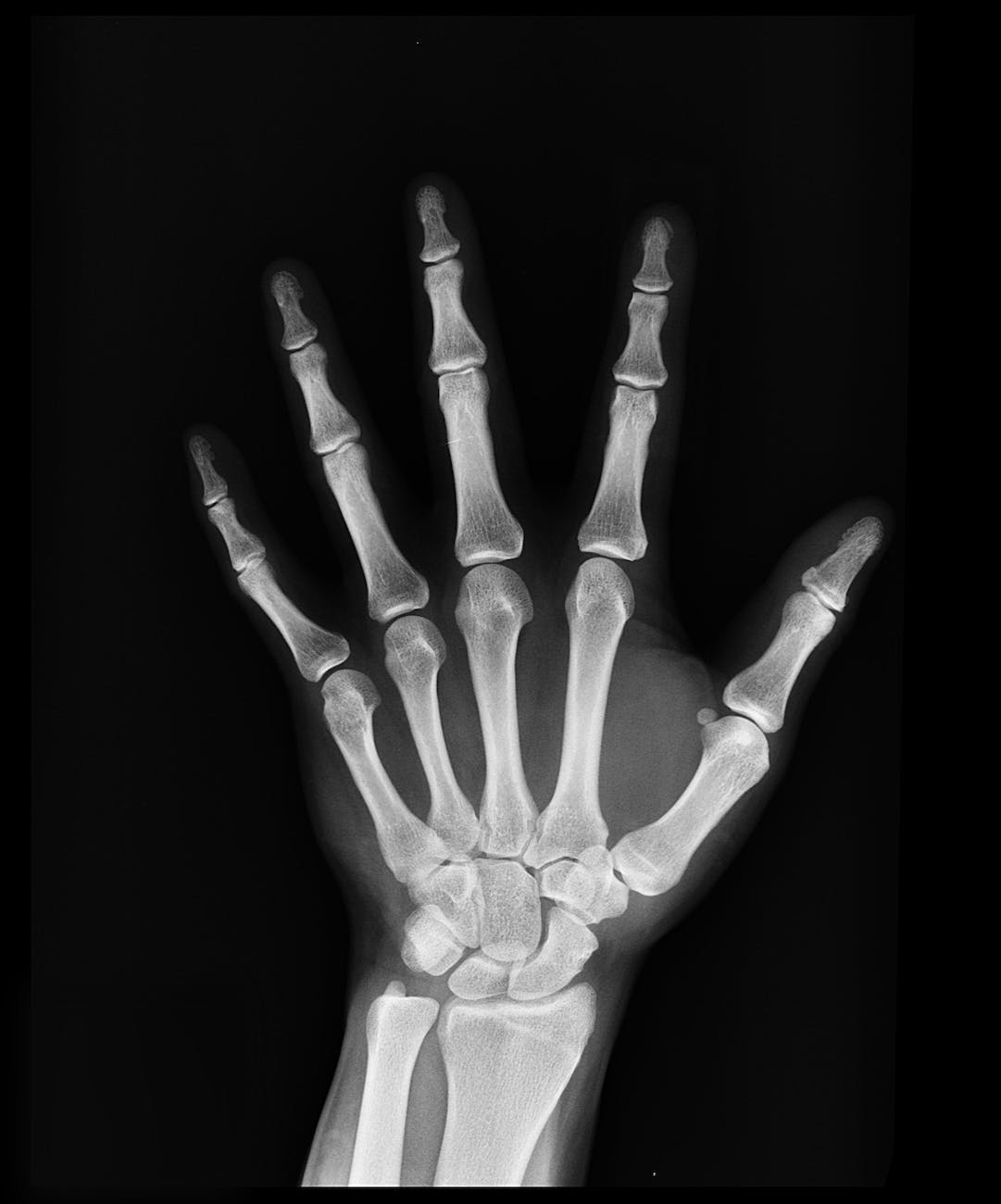
These noticing are through your skin, your largest organ, interacting with the external environment. Now, let’s move our attention inward. I invite you to travel inside your body. To the middle of you, to your bones.
Sense your bones.
Sense the bones in your feet traveling into the bones in your legs.
Sense your hip bones.
Sense your rib cage.
Sense your spine.
Sense the bones in your arms, shoulders, neck, and jaw.
Sensing your bones, I invite you to travel inside your bones. For now, just pick one bone, like your jaw bone or a bone that seems to want your attention. Travel into the living essence of this bone. Into the marrow. Into where blood cells are made.
Describe to yourself what being inside your bones feels like. What looking at your body from inside out is like.
Is there anything you would like to ask your bones? If so, ask.
Listen for a response. A response can be nothing or it can appear in images, felt senses, or words. As you listen, be gentle with yourself. Take note.
And breathe asking the universe or God to remain curious with you about your bones.
Now, slowly move back toward the outside of yourself, out to your skin. To get there, travel through the rest of your body—your organs, tissue, bodily fluids. And when you are back in your skin, so to speak, I invite you to open your eyes and return to the room.
Based on a practice originally written for Wartburg Seminary’s Trauma-Informed Worship class, September 18, 2023.
Please shift this practice to meet the needs of your body.
In seminary, we were asked again and again to tell our call stories as if the retelling would prove our worthiness. Here’s something I wrote in 2017.
My “yes” to ministry constitutes, in traditional ways of thinking, my fourth career. I have been a singing actress, an early childhood teacher, program director, and consultant, and most recently a professional writer. My path or trajectory into “yes” began with a divine encounter experienced while listening to Pachelbel’s Canon in G Major at age seventeen. This chapter of my story, well worthy of exploration, does not belong in this telling.
My current chapter began on a warm, sunny, beautiful day in August when I suddenly lost my husband Tony to a river. One which should have been closed to waders and swimmers that day. But instead swarmed with people and boaters and no safety precautions allowing the river to have its say, taking two lives, and seriously endangering three others–mine and my two sons.
Not part of our plan. Not God’s either.
In the first hours and days grief froze in a truth with no warning. I couldn’t understand how to organize our life: our journey home, Tony’s funeral, and our future. At Tony’s visitation a friend handed me a copy of our current Bishop’s blog post honoring Tony. My husband had served at the ELCA churchwide assembly but was more well known in ELCA circles for his healing work with staff, ushers, and bereaved family members after the Wichita, Kansas shooting of a medical doctor in the narthex of his Lutheran Christian church. The post’s sentiments were nice enough but what woke me up, irked me, and sent me reeling was a mere sentence, written by a man who had never met me, questioning my call’s future.
The question in my head was not if I still felt called to become a pastor but how I could accomplish the coming years of schooling and internship with three of us in grief and trauma recovery and with one of us just beginning his healing journey from Lyme disease. This question, along with the sighs and sobs of grief, were lifted into God, the universe, and the stars in the pain of night or to the air at dawn on our deck overlooking a world which felt full of external objections.
As the days passed, I heard similar rumblings from others. Weeks later my candidacy committee, meeting me for the first time, questioned my call while parading their misplaced pastoral care skills.
I did not question my call.
Ongoing confirmation flowed from other people. My aunt, a survivor of sudden traumatic grief and an ordained pastor herself, acknowledged my pastoral future as we created Tony’s complicated funeral. A former bishop after hearing me eulogize my husband acknowledged my call at the funeral luncheon. My friend who preached at Tony’s funeral shared his congregation’s willingness to help fund my seminary studies. My own pastor, who I temporarily fired in the days after Tony’s death, said “yes” when my candidacy committee said, “hold.” My women’s ministry group assured me of my call during my most pain-filled moments. Friends all over the country did not question but instead declared “of course you are going to seminary.” Long time editors at 1517 Media asked me back to work five weeks after I began grieving. Brought me up to Minneapolis for a two-day meeting. When Dawn, the project developer, met me at the elevators on the first day of meetings I said, “Why did you bring me here? I am so broken.” Dawn merely steered me into the elevator toward the work at hand.
In December of that year, I met my Bishop. During our meeting I shared how I sat in the pew each Sunday and itched, itched to be an active part of conducting worship. Something shifted in his eyes and in his posture and in the room as he also recognized my call although his words could not fully say it yet.
In February my congregation blessed me as I officially began seminary. A sanctuary full of people either with their hands on me or hands stretched toward me meeting me with teary eyes. Weeks later in this same community, a three-year-old child turned to her mother during worship and asked “Where’s Pastor Jennifer? I don’t see her.”
Amazing, ever-present, omnipotent, patient God keeps calling me. And I keep saying “yes” with perseverance despite the obstacles set before my race. I am ever thankful I did not minimize or compartmentalize God during this time in my life. Trusting, as never before, in my journey with God. More tenacious, having walked through the valley of death, knowing there is no evil I need accept. Only abundant love to first receive and then share. My voice, prophetic as I embrace continuing call. Call which does not bypass me in my pain and healing. Knows instead to use me as I publicly proclaim this human experience called grief and trauma recovery.
Seven years ago today, my first husband and father of my sons died in the Wisconsin River. He was not the first person to die in this river. No, Tony was just one of a growing list of preventable deaths. Preventable by proper signage. Preventable by beach closings. Preventable if the state of Wisconsin allowed victims’ families to sue and thereby effect change. But our voices are capped, squashed. And change? Well, people keep dying.
Today I list those people who have died in the year since I last posted names. I am sorry if I have missed a life. They all matter in this world and to God.
September 5, 2022: Jose R. Borbolla Juarez, age 34
How like a widow she has become…she weeps bitterly in the night, with tears on her cheeks. Lamentations 1:1-2
Reflection
Limbs fall limp. Eyes drop focus. Mind escapes into sleep. Allowing a few moments of respite.
Until roused by repeated visions and racing words. Breaking in with images and their clinging emotions. Bringing tears, sighs, tossings, and turnings.
Yet some nights the moon rises high mid-mind race. Light filters through closed window shades. Asking for breathing in of its essence. And a breathing out of sleeplessness’ broken record. Inhaling in and out once, twice, as long as it takes for buttock muscles to loosen. Cascading into other muscles letting go.
Until morning wakes. Sunlight slipping in after moonlight. Opening another day for what is possible in healing. Through a compassionate word here. A challenging one there. A few questions to think about. Not fully healed. Something though. Enough to keep going.
Healing Practice: Breadcrumbs
What keeps you going? Write down who and what gives you enough to want to do the work of healing.
Start just with one something. Add another something. Maybe two. Over the coming hours and days, collect five. Name them breadcrumbs. Follow them on your path into healing and restoration.
Prayer
“Restore us…” God, “that we may be restored.” In our restoration give us hope in you, in our now, in our future. Amen. (Based on Lamentations 5:21)




 Jennifer Ohman-Rodriguez