Uncategorized

CANVAS

all-signs-update-3-7_mens-center

If my life was a canvas would I paint in my pain? Would I draw my disappointments? My failures? My gain?

If my life was a canvas would I paint what I want? What I could be come tomorrow and not what I forgot?

Or would my canvas keep evolving some days dark, some days not with the presence of past remembrances swirling throughout my art.

If my light is rekindled what can my canvas be? Will I dare to paint what’s possible and tell the truth in me?

img_1291Written October 12, 2004 in honor of the early days of The Men’s Center and its creator, a man who dared to follow his heart. Revisited and reworked this month to mark the closing of The Men’s Center and in loving remembrance of Anthony D. Rodriguez.

Dawson

Lillian’s Lace


My friend Jennifer and I like to lunch. When we both lived in Iowa we met in small towns between our two municipalities. We crisscrossed Eastern Iowa looking for interesting eating nooks housed in odd places such as a former funeral home (Le Claire), a pioneer butchery (Anamosa), a historic downtown (Mt. Vernon), and a modern grocery store (Cascade). Homemade pie was an often unmet requirement for getting our luncheon business. Occasionally we did find it and savored each bite between smiles.

IMG_20160721_093421_314
Old Linen

After lunch, which had to be at a minimum two hours in length, we would mosey through the local shops drawn especially to the antiques of our state’s European settlers’ past. Moseying often turned into pawing through piles of handiwork linens and lace and more than one purchase. Giggles accompanied our purchases as we imagined (and rightfully so) our husbands’ bewilderment for our need for old linens and lace.

Lace Dollie
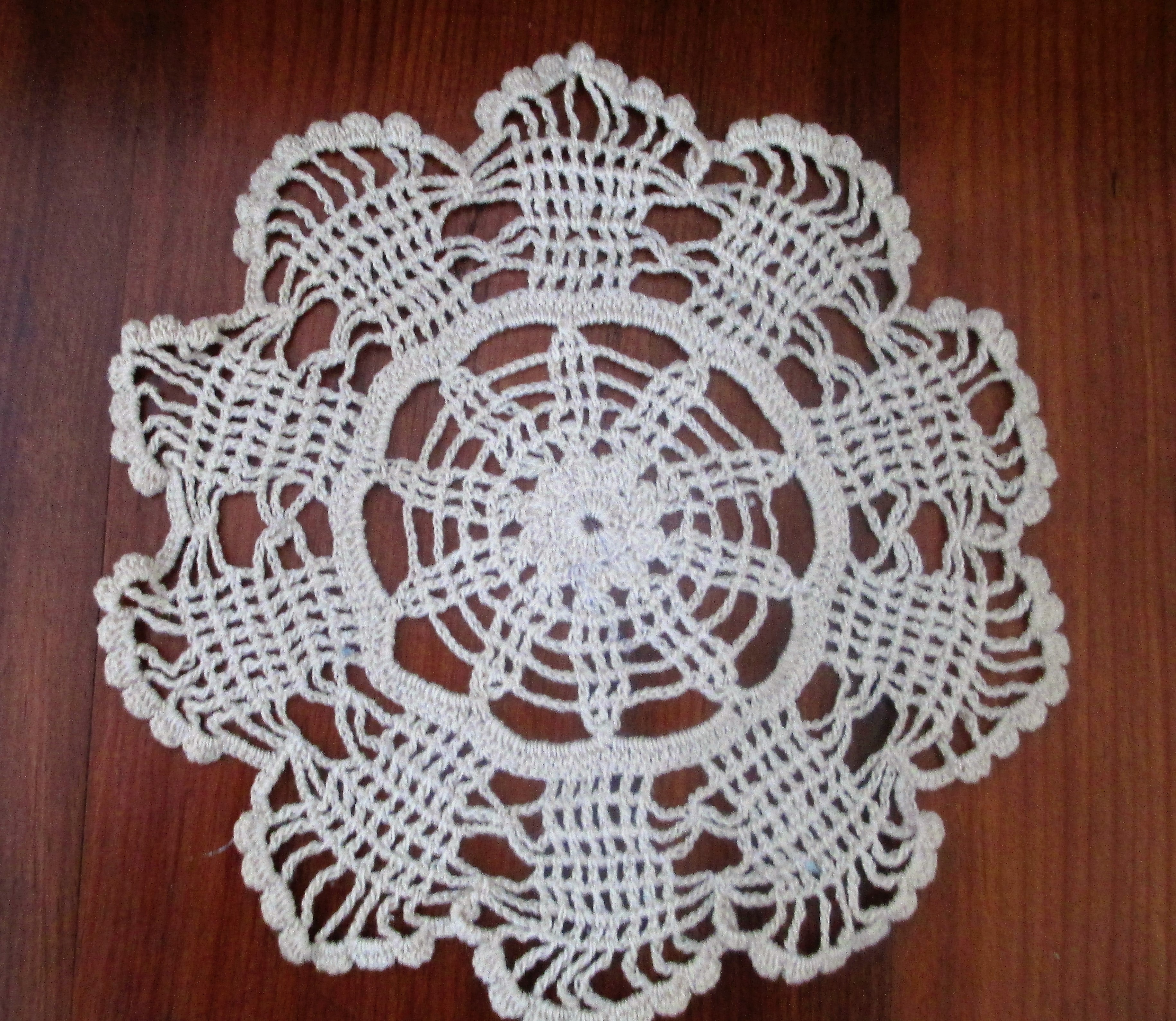
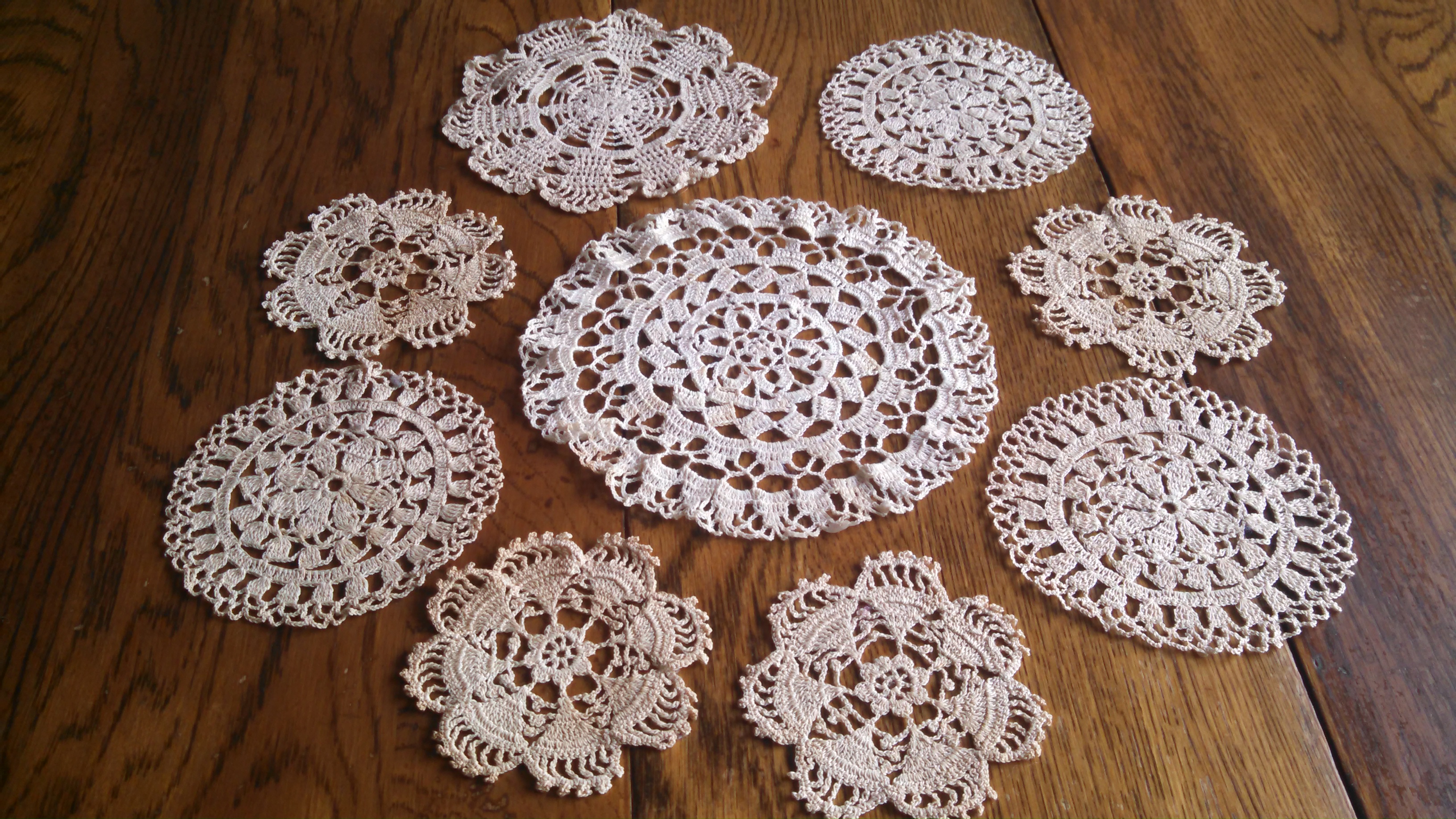
Crocheted Doily

My grandmother Lillian was an avid producer of handiwork. She kept her hands busy with needles and crochet hooks seemingly during every spare moment of her day.  Lillian spent countless hours making sure her five children, eleven living grandchildren, and maybe the first couple of great grandchildren were amply supplied with clothes, quilts, afghans, sweater vests, and an assortment of crocheted lace. To say she was prolific is a gross understatement. At last count I alone own thirty-three pieces of Lillian’s handiwork including:

  • 1 child’s sweater vest

    IMG_20160722_090904_544
    Crocheted Doilies
  • 2 pillows
  • 1 afghan
  • 2 quilts
  • 1 quilted soft turtle
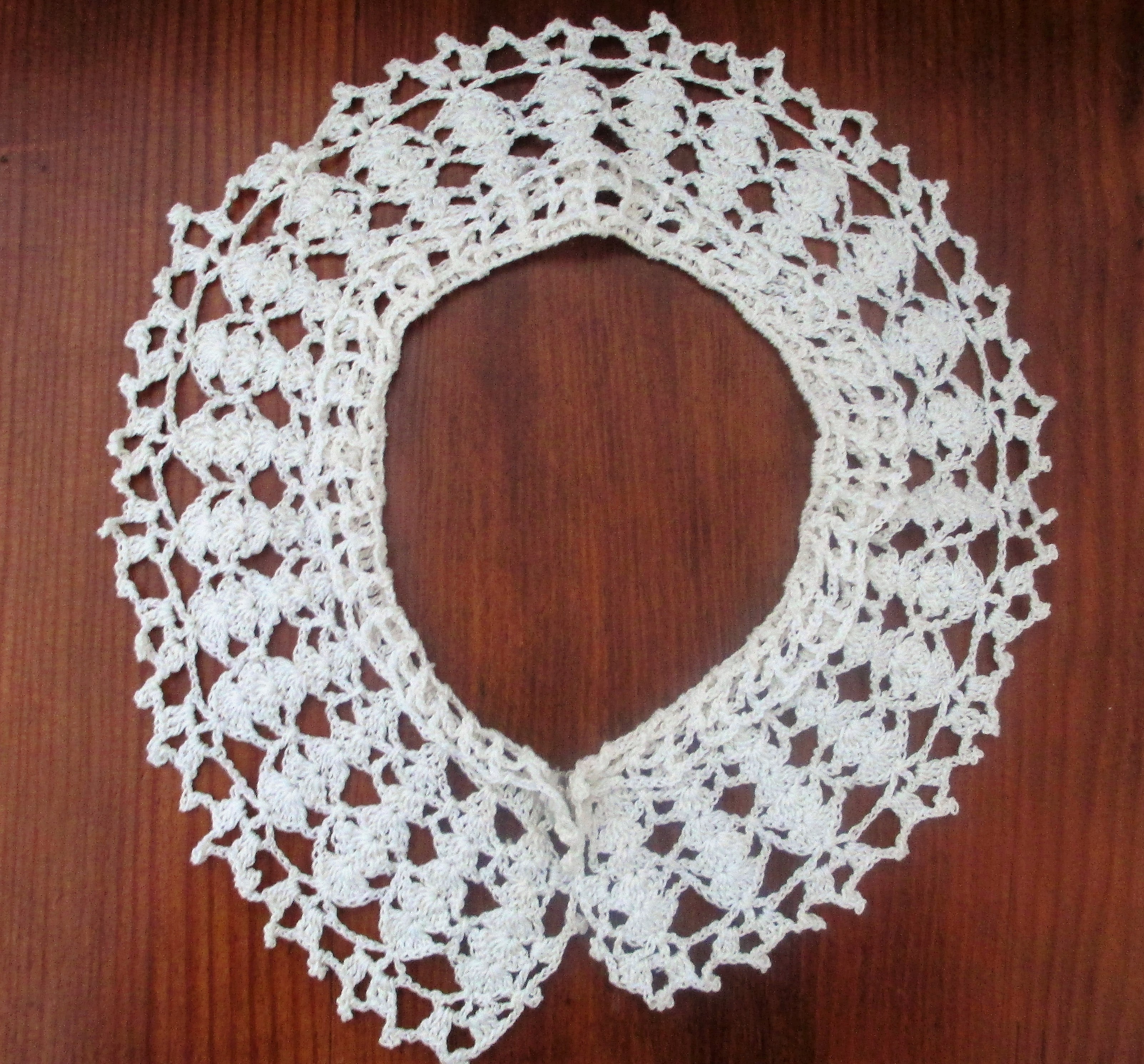
  • 1 lace collar
  • 4 dresser scarves
  • 9 lace doilies
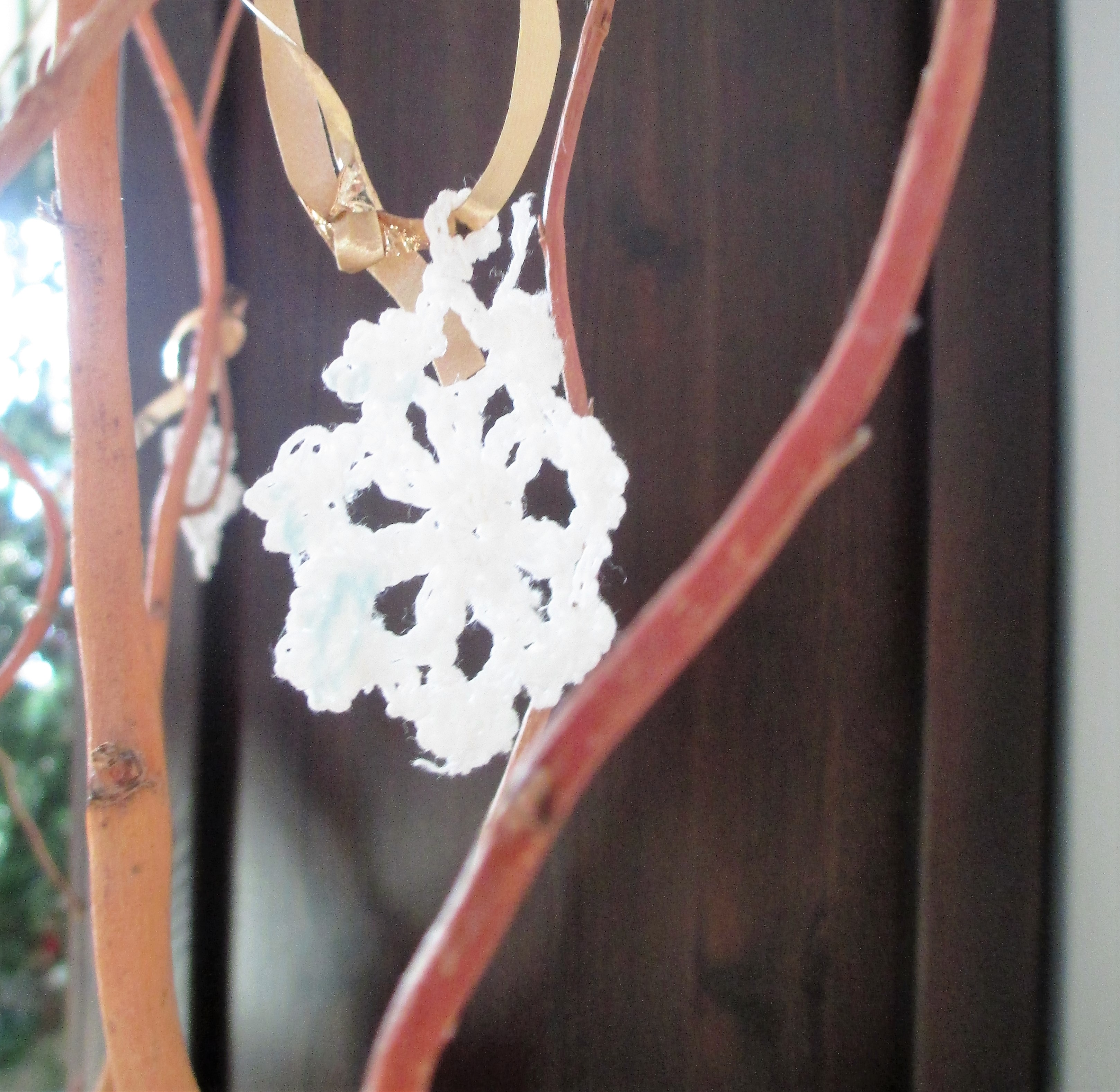
  • 12 snowflake ornaments
Dresser Scarf
Dresser Scarf


It’s hard for me to imagine the life Lillian lived in an era in which making food from scratch every day and often for every meal and washing clothes using a ringer before hanging them on the line to dry was the norm. Her days were filled with manual chores with little time to sit.  Early in her life she faced her mother’s debilitating illness and adulthood brought joy as well as sometimes empty cupboards at dinner time, a loved one’s addiction, her child’s polio and its aftermath, the great depression, World War II, and years of limited resources. Yet Lillian, like so many women of her time and before, seemed to live their joys and sorrows through their hands often in the spare and stolen moments of the day.

IMG_20160720_092213_022
Crochet Hook

When I was about ten or so, Lillian taught me to crochet. We sat on our living room sofa, the one neither of my grandmothers could get up from because it was too soft. She calmly and quietly showed me the basic stiches. First casting on, followed by the slip knot, then the chain stitch, and finally single and double crochet. At the end of a series of lessons, she gave me one of her crotchet hooks which was green and plastic. For a time I happily made potholders for my mother at Christmastime and blankets for my dolls. Eventually however my energies went toward other things as I grew up and away.

IMG_20160720_092033_547
Lillian’s Hooks

Lillian died while I was in college. Years later my mother gave me Grandma Lillian’s bright green, vinyl, homemade case full of crochet hooks as a remembrance. Hooks of all sizes and colors, fourteen in all, fell out of the case when I opened it. Some were plastic and some were the fine metal hooks Lillian used to crochet lace. I added my green plastic beginners hook, a gift from the master, to the bunch wanting to so very much take up crocheting again.

Oh I tried, maybe a decade after Lillian’s death. First I was befuddled, then distracted, and finally quit. I wondered if classes held up the street from my Chicago apartment would help. But life intervened before I committed to getting help. Years later I tried to teach my eldest son one very cold winter evening. He insisted on black yarn making it hard to see the stitches. We were somewhat successful but I was no Lillian in craft or patience that was for sure.

Blue and Bowl
Blue Dresser Scarf

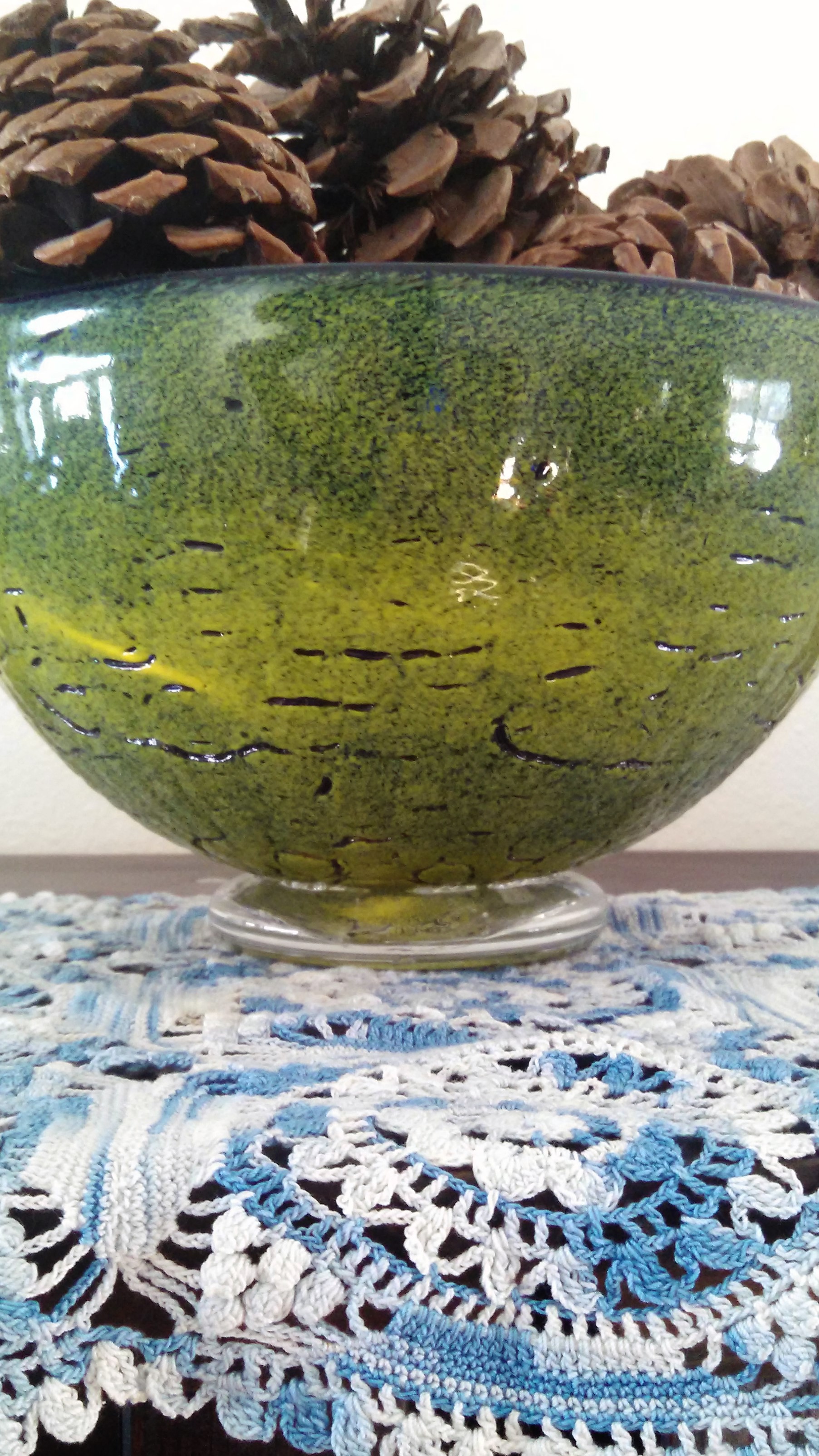
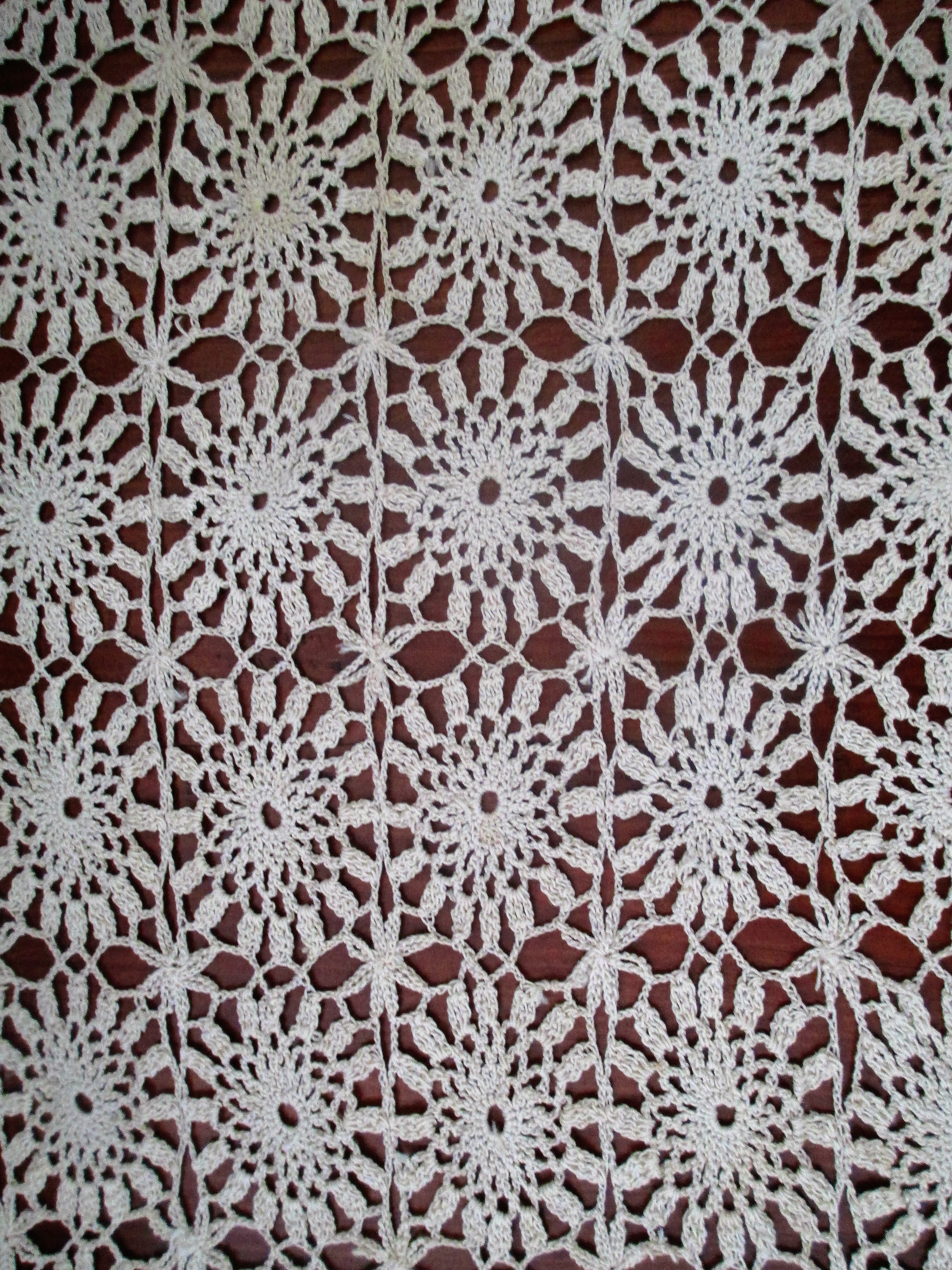
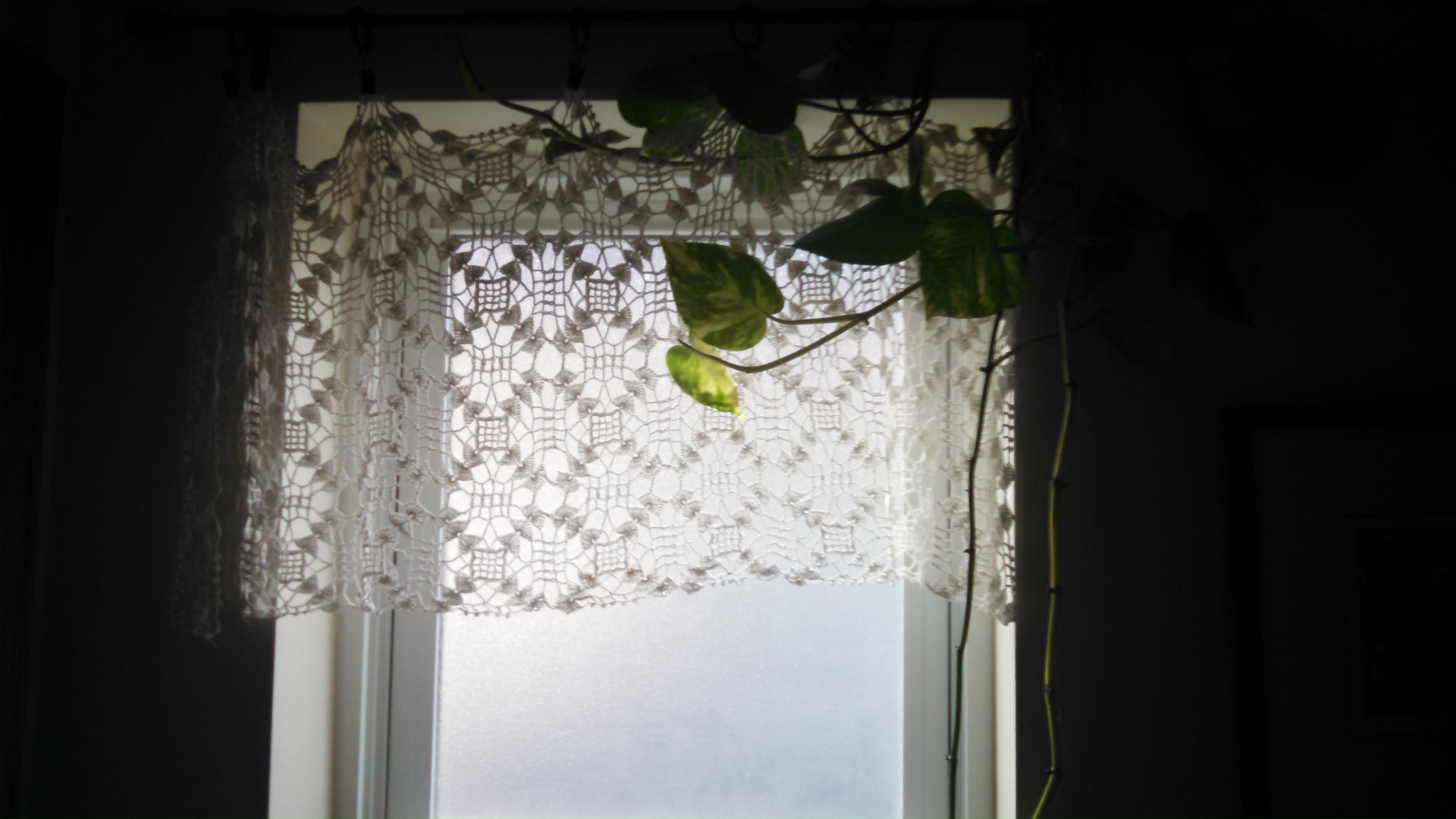
IMG_20160722_091023_832Bits of Lillian’s lace still carpet our home. One of the dresser scarves dances in a window as a valance. Two more dress up a side table and a book shelf. The snowflakes dangle from branches along with twinkling lights during Christmas and Epiphany. The presence of these pieces warm up our living spaces with their beauty and the love in which they were made and given.

IMG_20160722_091102_322
Window Valance
Lace Collar
Lace Collar

 I wonder sometimes if Lillian’s lace could speak, what it would tell me. Would it remind me that skills such as crocheting teach us to attend to the simplicity of each stitch and to count our way through tasks including times of hardship? Maybe the lace would say “pay attention,” reminding me that time slips quickly away just like string slipping into and out of knots with the flick of fingers and wrists. Or maybe the lace would say something quiet such as handiwork is a way to keep breathing stitch by stitch, count by count, and breath by breath when life throws its inevitable punches to our guts.

IMG_20160713_134853_470
Matching Dresses

Jennifer and I lunched last week again after a year’s separation. We met in a historic hotel downtown Dubuque. Afterwards we wandered into a dress shop instead of an antique store. We ended up buying the same dress which I’m sure stumped our husbands even more than the old linens and lace we were formerly known to bring home. We then found homemade peach pie in an old neighborhood bar of all places nestled against one of the many limestone cliffs of this river town. We savored the cinnamon of the sugared peaches while trying not to look at the big screen television.

Snowflake
Snowflake

Later in the afternoon I drove south on Highway 151 toward home.  I passed many towns Jennifer and I had succumbed to the allure of old linens and lace in. I remembered we also bought other trinkets in some of these towns as well. One time we both took home large bunches of curly willow branches that barely fit in our cars. Lillian’s snowflakes now dangle from these same branches in my living room.

My children will never have the images imprinted on their brains of this quiet yet regal woman named Lillian expertly knotting fine thread into lace as if it were as easy as walking. This habit no longer exists in we who follow Lillian in her lineage.  What these pieces of lace will mean to my children as they come into adulthood is yet to be revealed.

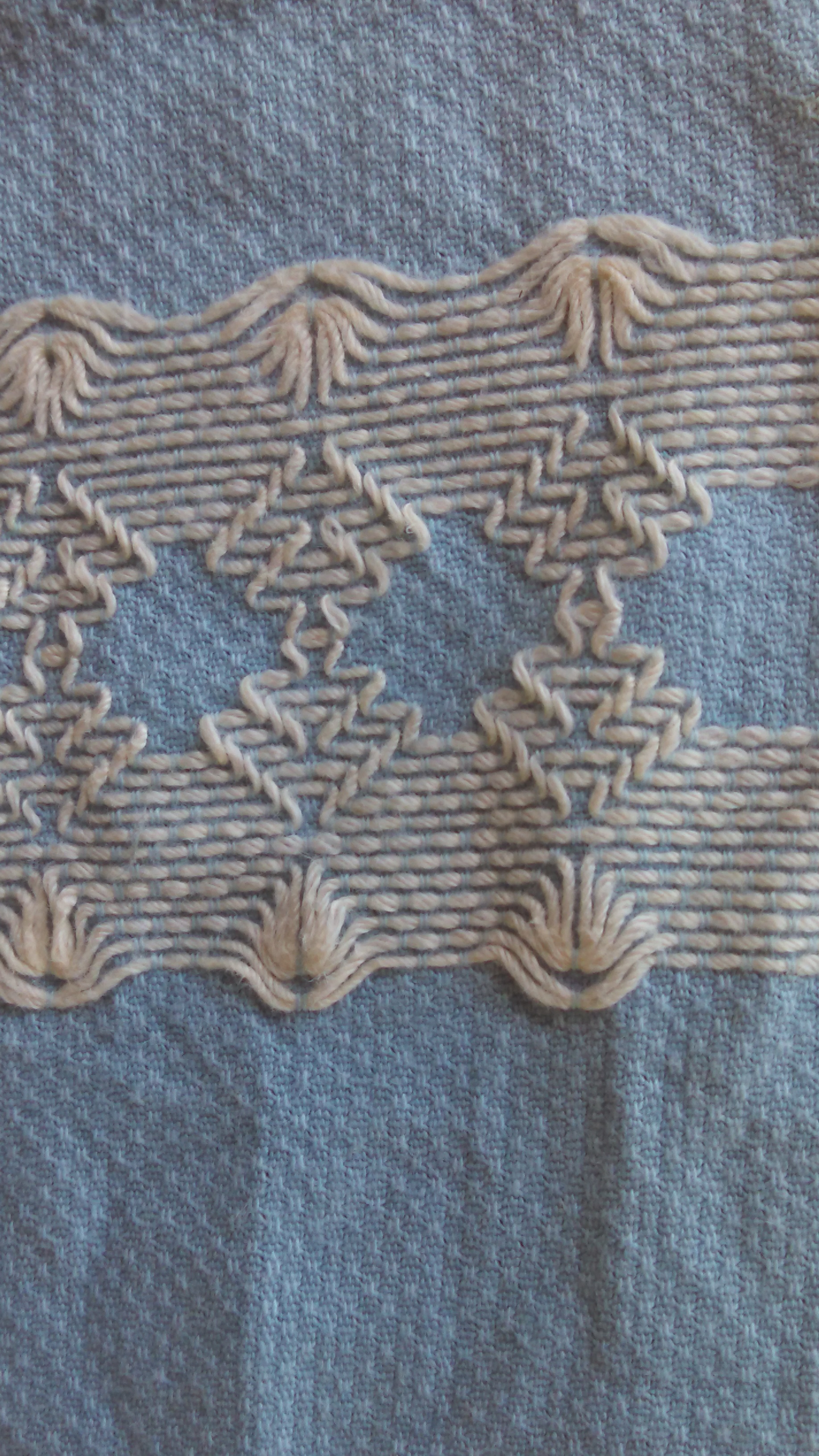
Repeating Pattern
Dresser Scarf

So for now I cherish my pieces of Lillian’s collected work and in these words hope to pass on a bit of something about their meaning. Lillian left me a lot of love and maybe even a bit of cloaked advice. But possibly of even more importance, Lillian left me an amalgamation of her gratitudes, her worries, her prayers, her humanity, and her hopes for the future of her family…one lovely stitch at a time.


Food

AN ANCIENT ANCESTRAL GRAIN

Unhulled Barley Groats
Barley Groats

We are knee deep into the month of gluttony.  Since that second helping of stuffing on Thanksgiving Day to New Year’s Day nibbles, I along with most of my fellow citizens wage war with an onslaught of food.  I wait, bite after bite, for January to arrive with all its culinary dullness when I will have no reason to avoid the inevitable weeks of carbohydrate detoxification.  I may even look forward to the post-holiday withdrawal symptoms; napping at odd moments, frenetic sessions of closet clean out, and drinking copious amount of water (because for some odd reason I can still taste the overabundance of sage in the holiday dressing).  But right now, I just can’t get off the December eating mill.  Spritz, kringla, glögg, and bondost dominate my waking hours calling me back to my ancestral culinary lineage…or so I used to think.

These foods while a part of my heritage are foods of plenty, some from a time not so long ago. The common folk of the past who spent their lives beholden to the Lord of the Manor and the church could rarely if ever afford sugar, wheat flour, or caraway seed. So what did they eat?  The ones who eked out a life of sustenance?  The ones who packed up and sailed to a new land? Such thoughts, if for nothing else, give me pause, a brief respite, between bites.

It turns out my ancestors’ daily bread was not memorable or always appealing especially to our modern pallet.  The fare was simple and repetitious.  Maybe that’s the lure for me during this modern season when nothing, absolutely nothing, seems simple and the only repetition is the ease of frozen pizza.  Yet peasant provisions had to be simple.  These were poor, hard-working people with no time, access, or money for complicated ingredients.  Having enough to last the winter trumped variety and excess.

IMG_1146
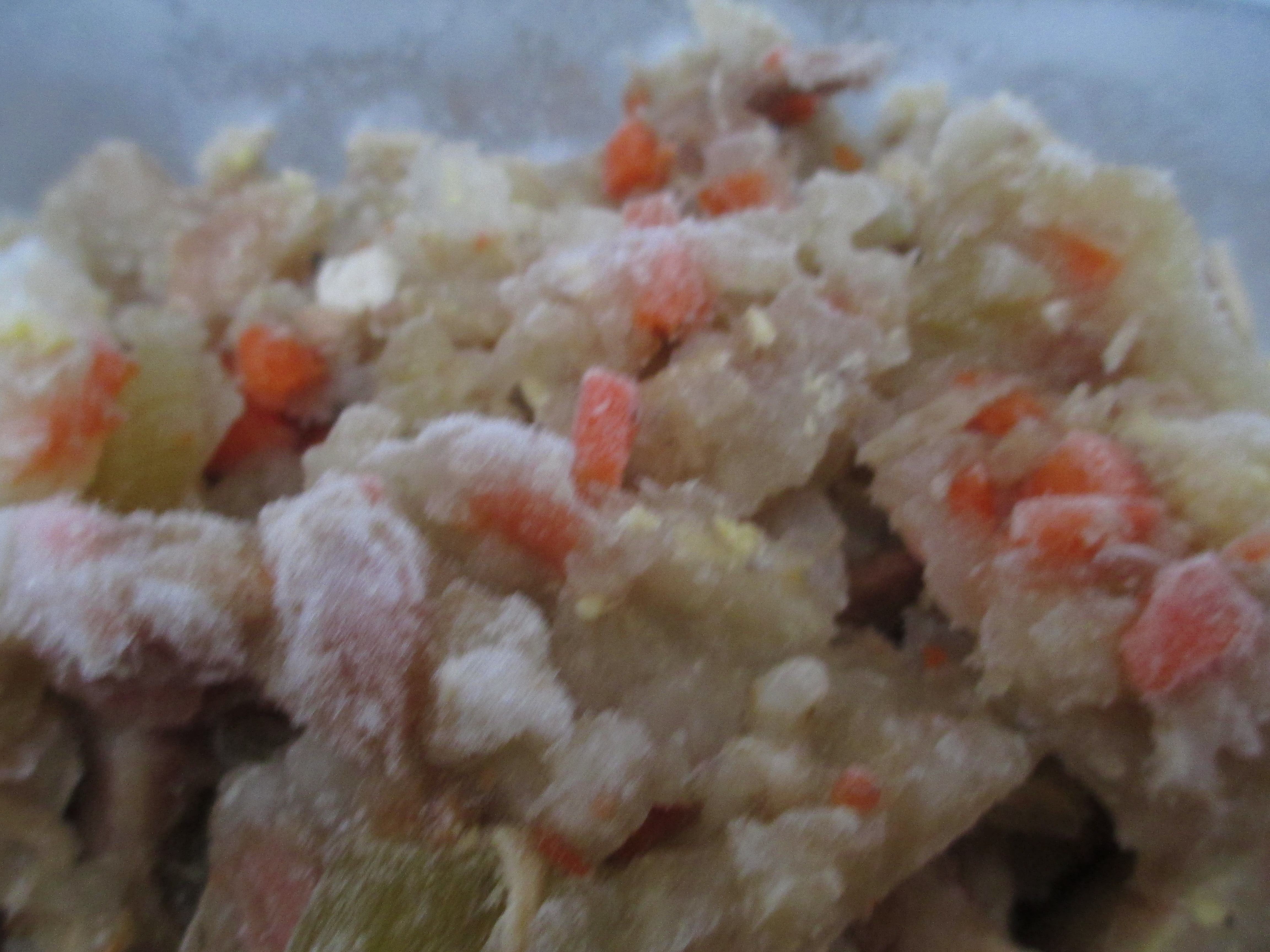
Frozen stew.

The nourishment norm, or so I’m told, for my ancestors was barley.  It seems so utterly uncomplicated for an ancient grain dating back 10,000 years or so. It doesn’t even have a name I cannot pronounce without being corrected or spell without a spell check.  But barley kept my ancestors alive so I figure they thought about this grain, which is so uncomplicated it seems boring, a lot.

Boring or not, I embarked on an ancestral homage to barley this fall beginning with a chicken barley stew which no one in my house ate without complaining.  Most of it is still in my freezer waiting for better days or for its time to come or for just a bit of love and acceptance from the male contingent in my family.  Whenever I see its frozen kernels of barley, carrot, and chicken I think of our dearly departed dog who loved my food with a certain joie de mange…

IMG_1089
Water and ground groats.

A traditional Swedish peasant porridge or gruel was my second barley endeavor. Now smart, I didn’t attempt to serve it up Oliver style to the masses.  Using ½ cup of barley groats I ground and ground and ground the blasted stuff in my food processor for what seemed like ages.  I then dumped the weird floury, steel cut-looking barley groat concoction into a pot and added only two cups of water, nothing else—no salt, no sugar, no nothing. Just water and the somewhat ground groats composed the ingredients.  It seemed a destitution recipe until I remembered adding ground tree bark constituted true deprivation for my ancestors.

IMG_1087
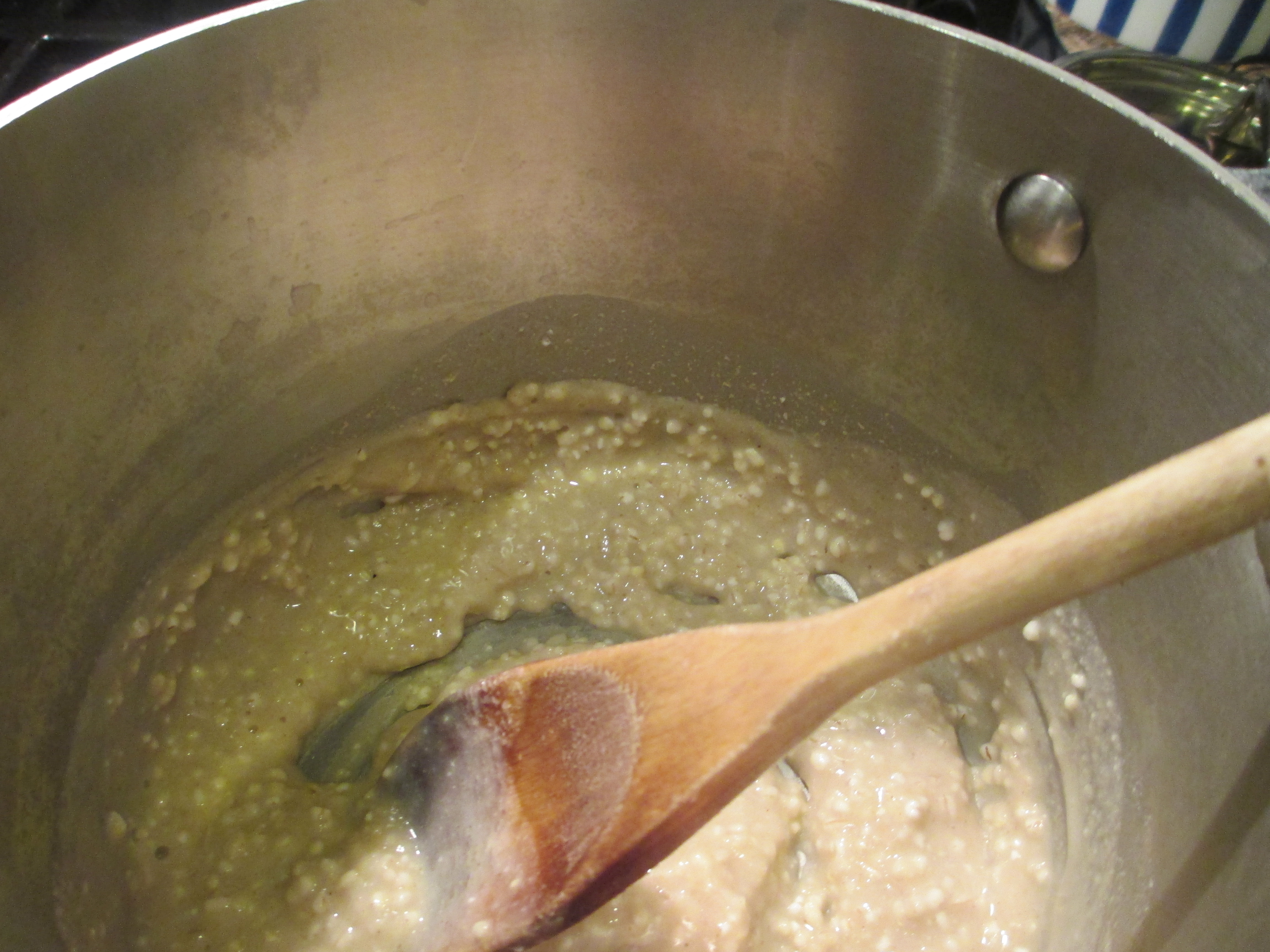
Pulling away from the sides of the pot.

Thirty minutes later and with some stirring the mixture came away from the pot sides and looked something like oatmeal but not really and had an unappetizing orange brownish tinge to it.  The groats crunched in my mouth however so in went another half cup of water followed by more stirring until my gruel boiled and simmered for another fifteen minutes or so. Still the groats required too much munching so in went another half cup of water and more stirring, boiling, and simmering for an additional fifteen minutes.

IMG_1092
Plain gruel.
IMG_1094
Gruel with butter and lingon.

Now one hour and three cups of water later, my porridge again failed the mushy test.  At this point I was way overdue for breaking my morning fast so I elected to eat the stuff because really the rest of life was reminding me that this folly into my DNA was taking way too much time.  I topped the porridge with a tablespoon each of butter and lingon and dug in.

What can I say?  The peasant gruel was filling while being not necessarily comforting.  It gave off a slightly sweet smell which is still stuck in my accumulated olfactory memory.  And it was still too crunchy so I threw the remaining dregs back on the stove with an additional ½ cup of water followed by more stirring, another bubbling boil until thirty minutes later voila!” mushy porridge was mine!  And now it can be yours as well…

IMG_1098
Barley gruel with lingon.

Jen’s Swedish Peasant Porridge Gruel

½ cup ground barley groats

3 ½ cups water

Combine ingredients stirring over medium heat for 1 ½ hours until smooth.  Salt, butter, and sweeten to taste.

A final foray into barley and peasant porridge occurred in early December.  The season was gearing up.  Packages from Cyber Monday arrived daily.  Thoughts of foraging the local farms for an Amish duck or turkey for Christmas dinner occupied my brain.  Finding a time to cut down a real Christmas tree with the entire family drove me to distraction. Painters, who took a year to schedule, painted an entire floor of our house, my paid writing deadlines loomed as I finished off the left-over dressing and lefse.

IMG_1103
Soaking the groats.

This time I began with whole barley groats pouring two cups worth into a big pot filled with water.  The groats soaked for about twenty hours plumping up and looking ready to cook.  Following an online recipe I then added 8 ½ cups of milk heating the mixture over medium heat while stirring.

One hour later I was still stirring.

IMG_1108
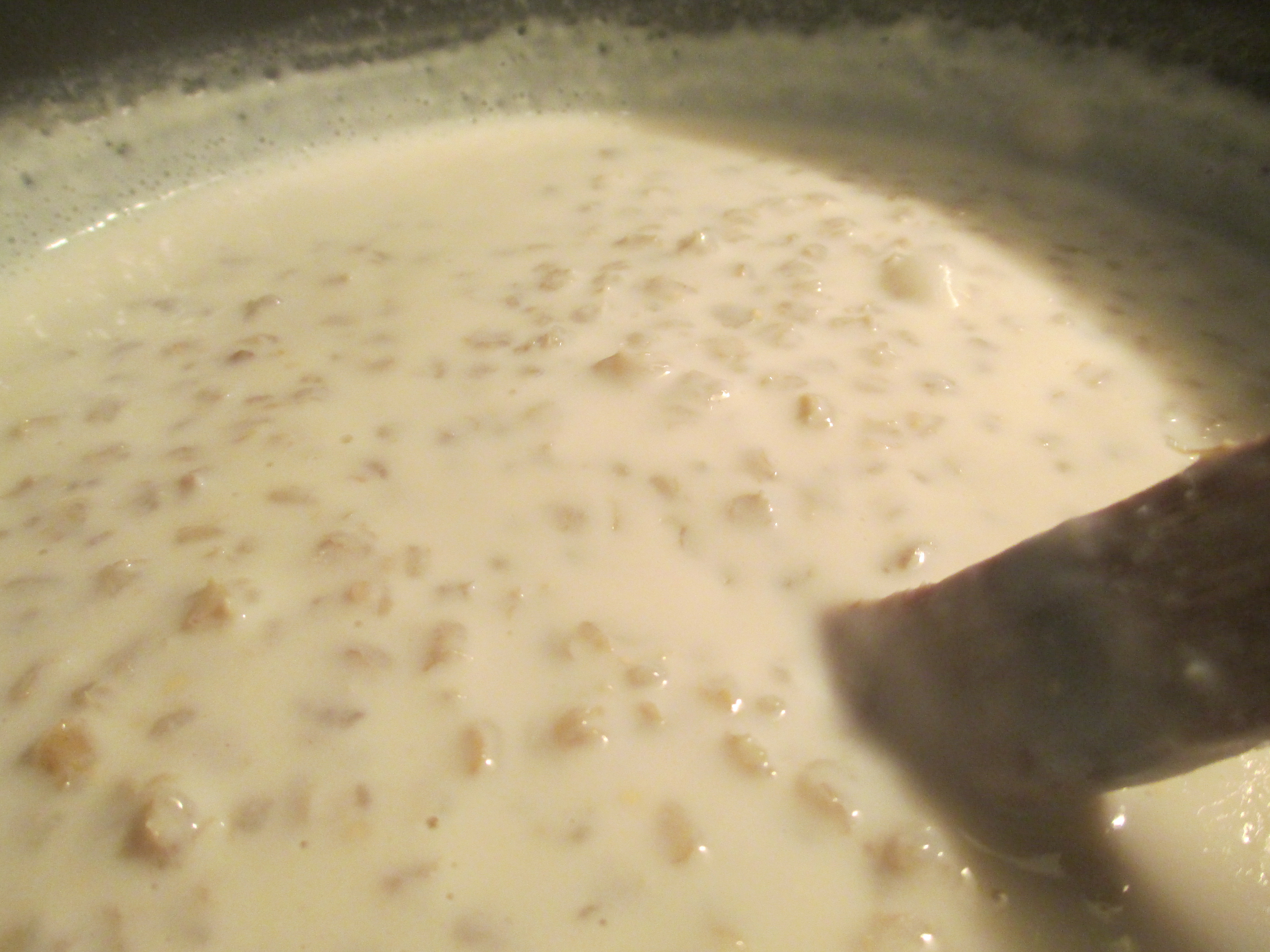
Creamy porridge.

Two hours later I was still stirring although I now was standing over the pot with wooden spoon in one hand while holding the pages down of my book with the other.

Three hours later I had porridge.

IMG_1116
Crust
IMG_1099
Sticks like glue!

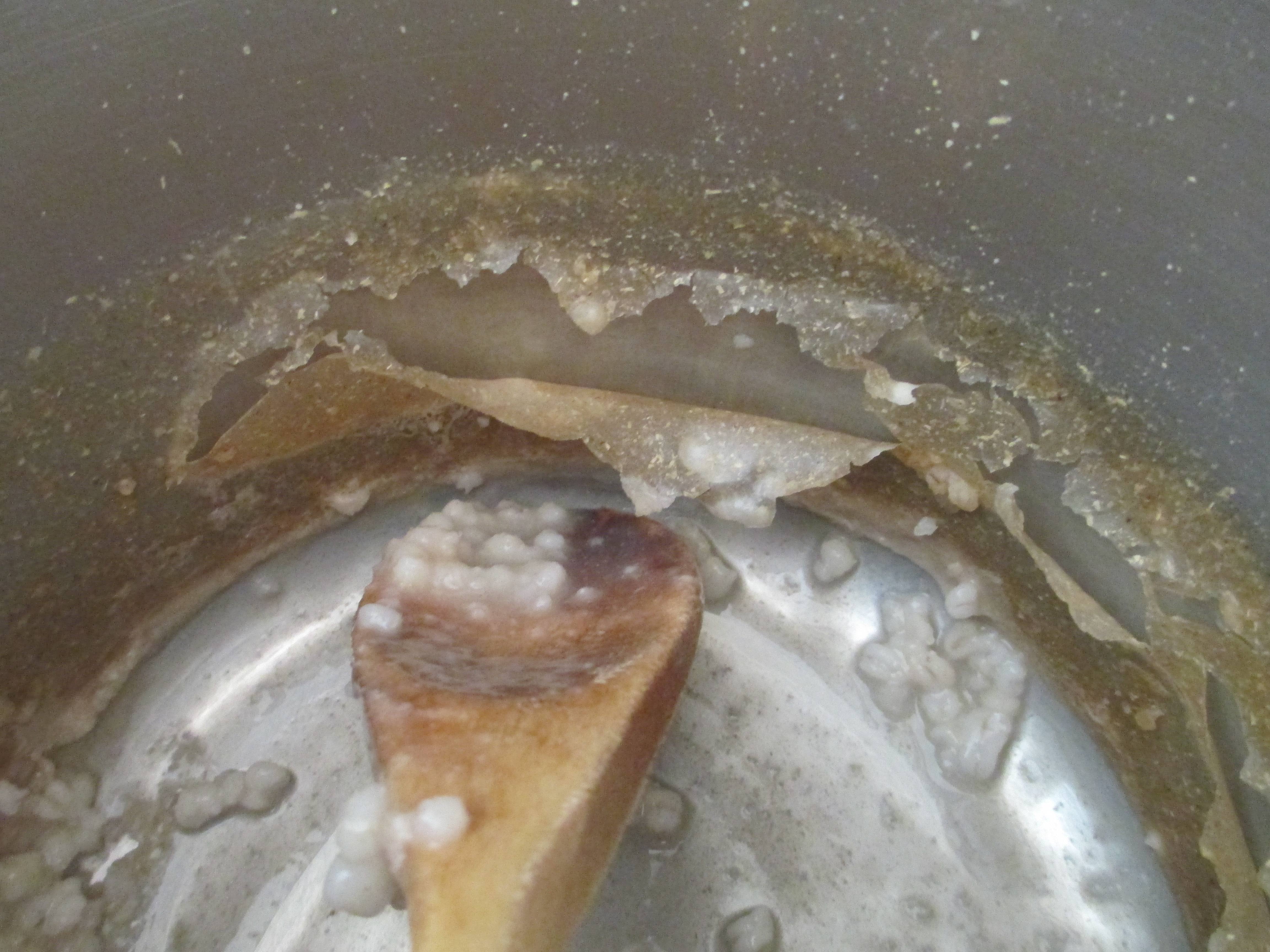
Four hours later, the cooling porridge pot had formed a crusty barley lid.  Who needs plastic wrap?  I lifted the lid, scooped out a bowl, and added a bit of lingon.  The porridge was warm, soothing, and creamy.  Not yummy but definitely an upgrade from my last endeavor…sort of like rising from poor peasant to middling one. However scrubbing the pot later that day was like dissolving adhesives without the fumes.

I can’t say I now feel closer to my kin folk of another time from these experiments into their ancient grain.  I do have a new understanding as to why sweet, sour, and spicy broke true culinary monotony funding industries which changed our world and our diets for better and for worse and made some people extremely wealthy.  For now however I will put all such thoughts aside while I regress into the more recent past and savor a bit of sweet spice.   A cup of hot tea and a plate of pepparkakor call me by name as I watch the snow fall.  Soon it will be January.

Food

Grits, Groats, Grout, and Gruel

Iowa Corn
Iowa Corn

We are having a warm, dry fall here in my small corner of Iowa this year. Dust and leaves blow across the fields even when no one is busy harvesting. Harvest of course makes more dust as the cut corn or beans spread their smells across our yards. For a few weeks tractors and combines own our roads as they travel from farm to farm.  Behemoths, they hold us urban drivers at bay steaming in our misplaced need to hurry life along.

Rolled Oats
Rolled Oats

Fall’s cooler mornings remind me winter is indeed on its way. I itch to leave my summer muesli breakfast behind for hot, steaming bowls of oatmeal covered in maple syrup and topped with tart farm apples dusted in cinnamon.  Like most people now, I often use my microwave speeding the process along. My real day, of course, begins after breakfast is over don’t you know.  But when I have the inclination or need the slowness of the process, I return once again to a pot over the fire.

Oatmeal seems ancient to me, something I am genetically predisposed to and embedded in my DNA. Years ago I learned to soak old fashioned oats a bit before stirring them gently in a pot over my stove fire ever careful of a possible bubble over.  The process of creating a bowl of this steamy stuff feels more like an inherited ritual to me. I imagine my mother, her mother, and the mother before her also stirring pots of porridge over their stoves–electric, gas, wood, or coal– many a morning once upon a time.

Eating oatmeal is old in my lineage. But it’s predecessors, gruel and porridge, are ancient. For my ancestors such a meal was the most common of daily fares. Gruel is “liquid food made from meal”. At least that’s what Skeat’s Etymological Dictionary tells me. The word gruel is related to grout which is a course meal, its plural being grounds and also to groat which is hulled grain. Gruel in Danish is gröd meaning “boiled grouts” .The Swedish word is gröt meaning “thick pap” and the Norwegian word is similar, grøt. 

Barley Groats
Barley Groats

While the grain for gruel or porridge can be oats, corn, or wheat, in the Scandinavian countries, barley was often the grain of choice for my ancestors. In the region of Sweden my ancestors hail from, Västergötland, a pot of porridge was on the table for every meal.  So common and necessary was gruel to the Northern people that it made the journey from one land to the next. In 1838, Norwegian Ole Rynning advised his fellow countrymen “that barley gruel flavored with wine is frequently strengthening and helpful” on the sea journey to the new world.

Many of us with ties to Scandinavian Minnesota grew up eating at least a few of our morning meals of oats or cereal under the praying hands of Eric Enstrom’s photo “Grace”–an older man giving thanks for his daily bread and bowl of gruel. My maternal grandmother placed a copy of this photo over her kitchen table reminding us all of a simple and austere past spanning the old country with the new.

Milled oat groats sometimes called Scottish Oats.
Ground oat groats milled in the old water mill way sometimes called Scottish Oats.

Rolled grains, like my morning oatmeal or even our modern cereal, are a relatively new technology. Oat groats are steamed and then rolled into flakes. Before the invention of the “roller” in 1877 by the Quaker Oats Company, the best a peasant woman might do was to begin with hulled grain (groats). If possible, the grain was ground at a local water mill called a skvaltkvarn in Sweden. But if not, the hulled grain was soaked overnight and cooked for a few hours over the fire. In Sweden, women used a three-legged cast iron pot for gröt which was placed in the open fireplace to cook. The grain was moistened by water and served with maybe a little butter, sour milk, and sweetened with lingon, a tart, wild berry similar to cranberries.

Lingon
Lingon

The dish does not seem dependent on milk or butter however.  Cows, if a peasant family had them, stopped producing milk in late winter/early spring since feeding cattle all winter was often difficult. To this day many people cook their modern day gruel in water some topping it off with milk and others not.

Norwegian Bentwood Box

I vaguely remember I scene in the movie Babette’s Feast in which the sisters make a cousin to porridge.  It’s called something like ale bread soup and is made out of dried bread.  The sisters carry bowls of this porridge soup to their ailing neighbors in wooden boxes.  I’m sure these boxes made of bentwood had many uses.  But carrying porridge seems to be one of them.

Porridge Lunch Box
Porridge Lunch Box

I am busy now gathering the ingredients and recipes to make my own Scandinavian porridge from barley.  I hope to share this grand adventure into my ancestors’ (and maybe yours too) peasant past in the very near future. But I also have this recurrent guilty, niggling, nudge that I should for the first time make the traditional Norwegian fest food rømmegrøt  (sour cream porridge) . I’ve never wanted to make it but maybe the ancestors (the Norwegian ones anyway) are whispering in my ear…

SOURCES

Centergran, Ulla and Martenius, Ingela. A Few Notes on Traditional Swedish Food. Accessed on March 23, 2015 at web.comhem.se.

Peters, Charles (ed). The Girl’s Own Indoor Book, pages 405-411. Published by The Religious Tract Society in 1888. I found it at https://books.google.com/books/about/The_girl_s_own_indoor_book_ed_by_C_Peter.html?id=-WIVAAAAQAAJ on October 22, 2015.

The blog My Little Norway: Discover the Kingdom of the North accessed October 22, 2015 at http://mylittlenorway.com/2014/11/traditional-norwegian-grot/; http://mylittlenorway.com/2011/12/old-norwegian-grot-recipe/; and http://mylittlenorway.com/2011/12/hanna-winsnes-the-first-norwegian-cook-book/

Learn all about grains at http://blog.bobsredmill.com/featured-articles/steel-cut-rolled-instant-scottish/ accessed on October 22, 2015.

Rynning, Ole. Ole Rynning’s True Account of America. First published in 1838. Now available at http://collections.mnhs.org/MNHistoryMagazine/articles/2/v02i04p220-269.pdf. Accessed on October 26, 2015.

Johnson, Dennis L. The shot seen ‘round the world: The story of a famous picture. In Swedish American Genealogist. Volume 34. December 2014. Published by the Swenson Swedish Immigration Research Center, Augustana College, Rock Island, Illinois.

For photos of a skvaltkvarn (Swedish water mill), check out http://www.kringla.nu/kringla/objekt?referens=raa/bbr/21000001025135

The Västergötlands Museum accessed almost daily in October and November of 2015 at http://vastergotlandsmuseum.se/sv/Vastarvet/Verksamheter/Vastergotlands-museum/

Minnesota

COMMON CURSING: WORDS FROM WAY BACK WHEN

At about the age of ten, I made an enlightening discovery:  The world is populated with people other than Scandinavian Lutherans.

Surrounded as I was by typical Scandinavian surnames–Johnson, Anderson, Arneson, Carlson, Erikson, Swanson, and many variations of Leaf—how could I think otherwise? These names dotted the local mailboxes, filled our telephone book, and populated my classes at school. Many men and boys still had first names which also served as part of their last names—Arne Arneson, Erik Erikson, John Johnson, Knut Knutson, and Pete Peterson. These combinations were easy to remember and fun to say when using the inherent ethnic lilt.

IMG_1798 (2)As for Lutheranism, my father used to joke that there was a Lutheran church on every corner around our stretch of Illinois. First Lutheran, Faith Lutheran, Emmanual Lutheran, Calvary Lutheran, Trinity, St. John, St. Matthew, St. Paul, St. This, and St. That. These churches spouted even more surnames ending in either “son” or “sen” such as Monsen, Gunderson, and Gustafson. The endings typically depended on the original ancestors’ origins but sometimes had been changed during the process of emigration. Literacy levels and standardized spelling were different way back when than today. However, I knew at a young age that typically “son” at the end of a name meant a Swede and “sen” meant a Norseman or Dane.

Regardless of where the boat sailed from all the members of my childhood cultural clan drank weak coffee morning, noon, and night and ate many variations of kringle, lefse, herring, and lutfisk especially at holiday time. Our Lutheran congregation hosted a typical Scandinavian first Sunday in Advent vespers service and a number of smorgasbords throughout the year instead of potlucks. These bords boasted plates of potato sausage, spritz cookies in every shape possible, potatoes mashed, creamed, and scalloped along with the now famous Lutheran molded, jiggling salads which I believe were not a practice imported from the old countries.

Trips to Minnesota served to further imprint my family’s origins in me. As our car headed West and North along two lane highways, the language spoken at each stop took on even more of a lilt reaching a peak once we sat down to visit the relatives. The words, in English, bobbed up and down like music accompanied by chuckles, head nods, tongue tucking, and decorated here and there with words and phrases from Norway or Sweden—leftovers from my older relatives languages of infancy.

Then there was this way of not speaking more prominent on the farm than in town. The lilting language often silenced or replaced by the wind rustling through the crops or the wind chimes dancing on the breeze. These were people who knew how to be quiet. Many a sentence hung in the air before anyone bothered to respond since contemplation of the spoken word was something still of value.

Now the Scandinavian lilt of my childhood languishes a bit, being not so prominent anymore. Oh it still remains but it is not refueled by an older generation now mostly gone or newly arrived immigrants learning English. New immigrants now are quite fluent in English and their accents a bit more modern having been exposed to the whole world via the screen. And the silences? Well I suppose they can still be found tucked in here or there. Maybe though they have just been replaced by needing to check one’s cellphone for messages.

IMG_1019
Norwegian Language Textbook

Recently and quite by accident, I began collecting bits and pieces of this way of speaking. Sitting around my mother’s table visiting relatives fell into remembrances of growing up in a Minnesota small town populated by Norwegians. Snakker du Norsk? (Do you speak Norwegian?) transported them quickly to the words and sayings that children love to collect and say when grown-ups are otherwise occupied. Whether my grandmothers labeled these words and sayings true cursing is debatable. They are however mostly negative utterances which for adults at the time constituted culturally acceptable ways of, if not cursing, letting off some steam.

Here’s my collection, thus far.

Uff da

IMG_1018
Homemade Wallhanging

Possibly the most used, beloved, and recognizable Norwegian negative utterance in the United States. Fodder for coffee mugs, t-shirts, dish towels, and other items used as membership proof of entrance into the unofficial Norwegian-American club, the actual term uff-da stems from the Norwegian word huff which is an emotional interjection akin to “ugh”. Da literally means then or indeed but can also just make the first word stronger more like a double ugh. Type uff-da into Google Translate and it comes up with whoops. Listen to my relatives and understand it also means, “I don’t believe it”, “that’s too bad”, “yuck” or even “that was a bad joke”. Uff-da, in its variety of uses, still to this day is a wonderful substitute for the now overly common curse word, sh_ _.

Uff da, nei da, takk nei takk

Initially, my mother thought my Swedish-American father was making fun of his Norwegian-American in-laws with this saying. But after a full-fledged linguistic search, I am of the opinion that my father was merely listening and mimicking his in-laws in a loving yet slightly jesting way.

Uff da and nei da are both negative expressions. Nei is Norwegian for no. Da gives the word it is attached to more strength. Strung together, Uff da, nei da seems to imply really bad stuff. The later part of this saying gave me a bit of trouble because my father’s pronunciation sounded more like tuck-i-tuck. But I am wondering if in fact tuck is really takk, the Norwegian word for thanks. Takk I takk literally means thanks to thanks but may imply a further negative if perchance it was instead takk nei takk which could mean thanks but no thanks. My current non-expert interpretation of Uff da nei da takk nei takk is Ugh, Yuck, thanks but no thanks!

Tongue Tisking and Tucking

Tucking and tisking are non-verbal communicative devices used by the older Swedish American women in my family most of who have passed on now.  But back in the day instead of saying “it’s a shame” or “what’s the world coming to?”, these women would  click their tongues right behind their teeth once or twice followed by brief silence and often accompanied by a shake of the head. I have strong memories of my paternal grandmother tisking her teeth. She often did so when she appeared to be thinking. So who knows what her meaning was or what she was thinking about.

Ish da fy da fanda

This saying comes from my Aunt Linda who writes.

I only remember that we said it when something was really icky!  Not sure it was even a real word, but we said it. We thought it was kind of a cool word–maybe even a little risqué! That made us say it even more!!

I have no recollection of this saying. But it is fun to say! I did come across the Norwegian saying fy da which is an utterance similar to uff da only infused with more disgust as the breath bristles through teeth on its way to making the sound for the letter “f”. The “da’s” in the saying mean then or indeed or serve to make the saying more emphatic. Imagine putting the emphasis on the da. Ish DA! Fy DA! And fanda, if you can believe it, fanda is a form of the Norwegian noun which means “devil”. So this leaves us with a loose translation of “Icky, disgusting, devils!”

No wonder Aunt Linda had so much fun saying it. 

Ish Kabibble

I’m sorry to disappoint. Ish Kabibble is not a saying native to Norway or Sweden or even Minnesota. I believe it’s a bit of popular American culture that was adopted by my relatives along the way and delivered with some sort of Scandinavian accent making it sound as if it sailed in from the old country.

As far as I can figure out Ish Kabibble may either have its origin in Yiddish meaning something like “don’t worry”. Or, it could come from Shakespeare’s term bibble, babble. At any rate the comedian Merwyn Bogue took it as his stage name and made it hugely popular back in another era and before my time. Whatever its true origin, Ish Kabibble is fun to say. Even more fun if the hands go up while saying it in a gesture of defeat. But a saying accompanied by movement may be too much to ask of any Scandinavian American.

Soda Bisca

My mother recalls Soda bisca as one of my father’s curse words of Swedish origin. I think perhaps she is incorrect. Soda bisca could however be the incantation of a native Swede trying to say soda biscuit which could sound more like soda bisca. Soda bisca, of course, is more acceptable to say if needed when the pastor visits than a Swedish curse word after all. So it seems to me the phrase could have come in handy. I imagine my father as a youngster hitting his thumb with a hammer inadvertently. Instead of cursing and receiving a slap from his mother, my father used SODA BISCA instead. I further fully suspect that he would not have known that the phrase wasn’t truly Swedish because all the old Swedes in the neighborhood probably used it. Perhaps the original pioneers thought it was cool to use an American way of pretend swearing instead of the old hum-drum Swedish ways. To further the issue of origin no old Swede in their quiet and retiring ways would think to explain the saying to a curious and growing boy.

Ish

If you’ve spent any time in Minnesota, you may have come across this little gem. Cousin Tiffany has the best ish West of the Mississippi always delivered with a descending pitch sliding into and extending the “sh”. It’s the precursor to “gross”, “nasty”, and “icky”. So instead of saying “this lutefisk tastes nasty” or “it tastes like sh—“, the Norwegian side of my family might instead screw up their faces and say ish. Only once mind you. Ish ish is not acceptable unless you are under three years of age. However ish da is acceptable as a more emphatic elicitation. But really, never once would one utter ish to a plate of lutefisk. My example is a poor one because there is no forgiveness for such a showing of non-ethnic support to the national dish of all Norwegian Americans. Even if grace is free and not just for Lutherans.

The Swedish Half-Smile

Now this is a tough one which lay dormant in my memory until recently. My husband’s colleague is of Swedish derivation. She is a big half-smiler, a mannerism my Filipino husband could not read and asked me to explain. Well explaining a non-verbal Swedish mannerism is like dragging the sailboat rudder up from the bottom of the lake. I knew exactly what it meant but had an awful time defining the darn thing to my bewildered husband. Sure Filipinos have their own non-verbal mannerisms. The upward moving chin is a classic affirmation. But the half-smile, well it’s no smile and that’s the first thing to understand about it.

My father used it when speaking to someone he clearly thought was wrong or inept or if he was receiving information he did not believe or did not want to hear. The Swedish half-smile contains sarcasm, triumph, contempt, awkwardness, or resignation, shown in what amounts to be the blink of an eye. It’s a quick communication. So quick you might miss it if you don’t happen to looking… which may be the point of it in the first place.

Sources

Tusen takk to:

Mom

Dad (in absentia and memory)

My sons’ creative use of language

Tony

Aunt Linda

Uncle Lee

Cousin Tiffany

Cousin Mary Beth

Cousin Nancy Jean

First Cousin Once Removed Kayla

Stokker and Haddal’s Norsk Nordmenn og Norge published by the University of Wisconsin Press. 1981.

Various internet sources which may or may not be substantiated with fact

World Wide Words accessed on July 23, 2015 at http://www.worldwidewords.org/weirdwords/ww-ish1.htm

http://archiver.rootsweb.ancestry.com/th/read/NORWAY/2007-12/1198186236 accessed on July 29, 2015