
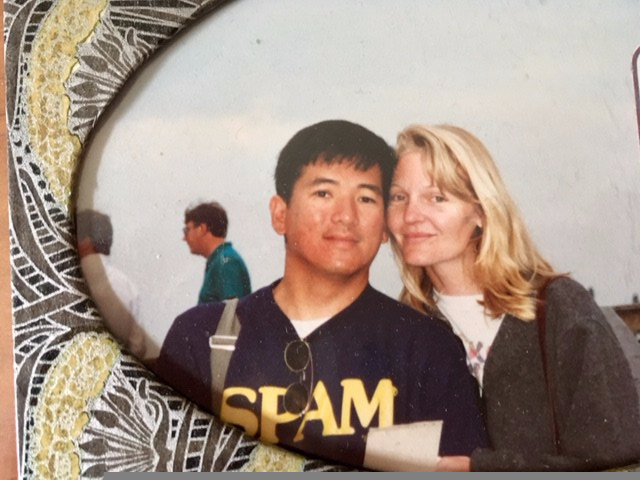
We were naive or maybe it was just me. Living as we did in Chicago among many. In a neighborhood full of old Swedes, lesbians, and Lebanese merchants. Working in a neighborhood populated by Palestinians, Latin Americans, and Lithuanians. African-American, Puerto Rican, Jewish, and Polish co-workers. Our inter-cultural, inter-ethnic, inter-racial relationship was not a big concern heading into marriage. Student loans and a honeymoon destination were.
The next state we lived in was a different story, far different. All of a sudden we had to demand tables away from the kitchen door. People made comments on how dark baby Ricky was compared to my fairness. Along with dead deer hanging from trucks in the fall was a growing number of confederate flags.
I began to understand a few things. Things not comfortable. Things we needed to be careful of. Things I wanted to run away from. Most of all my own naiveté.
My true education into our country’s reality began with my marriage to a man not white. An immigrant. A Pacific Islander with a Spanish last name. Sure my many experiences working with people from all over the world both in New York City and Chicago helped. But working with those who are different than ourselves is far, far, far different than living on the other side of truth. Alone in public I was still white with all that comes with being so in this country. With Tony I darkened.
I hyphenated my last name because I understood this reality. I told people it was because I was thirty and career-wise already known by my maiden name. And there was verity in my words. But the other truth, the ugly one, was I knew now. I understood. Even if my understanding could not compare to Tony’s or his family’s. I understood more than my white family and friends. And this information about how things are in our country shaped my decision.
In between my name change and Tony’s death, many other large and small incidences occurred to Tony and to us. Happenings I began not sharing because explaining these realities to white friends and family became work, their disbeliefs needing comforting I was and am still unwilling to provide.
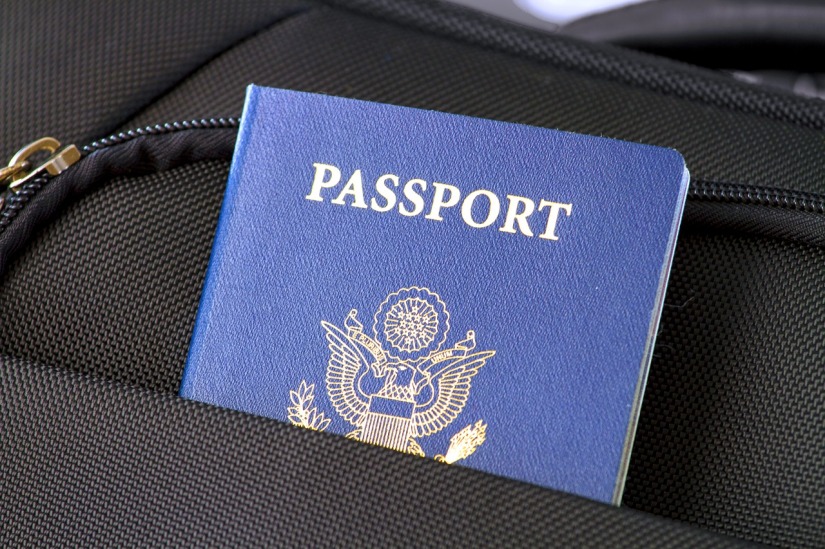
But I will share one recent occurrence here. A couple of weeks ago the boys and I reentered our country, the United States of America, after sojourning in Europe. We went to new countries, visited family, and escaped a bit of our grief. Now we waited in the customs line first for the check-in kiosk and then for an officer.
The customs officer was dark, maybe Latino, not-white. He looked at us in the eyes. He said pointing to the large black X on our customs tickets, Xs’ I had not noticed in the rush and fatigue of traveling, Xs’ never before appearing on our customs tickets when reentering our country.
“From now on you will get this mark. We have to check everyone with the last name Rodriguez.”
We remain a family of color. Meaning we also continue to be seen as suspicious by others. Worth extra attention because of our country’s shared historical story heightened now by a spinning, ill-informed ideology that continues to dictate who is possibly dangerous and who is not.
And we as a family continue to be suspicious of others when we are treated differently or with mistrust. Because suspicion works both ways. Because I’ve learned having watched loved ones suffer in ways I do not. Because I have to go there, to that dark truth that is all of ours to own.
The cruel discriminatory legacy of color, of differences, of bias, of religion, and of fear continues in this country. In big demonstrations, tragic political stances, and heightened paranoia. But also our collective story of discrimination continues through the many seemingly small actions and occurrences encompassing a day. Small actions many of us who are white do not see or do not comprehend or do not speak up against. Our ignorance bliss in its unearned freedoms. Until for some reason we too are marked in someway, maybe with a large black X. And then our true education as to what it means to be an American begins or my case continues.
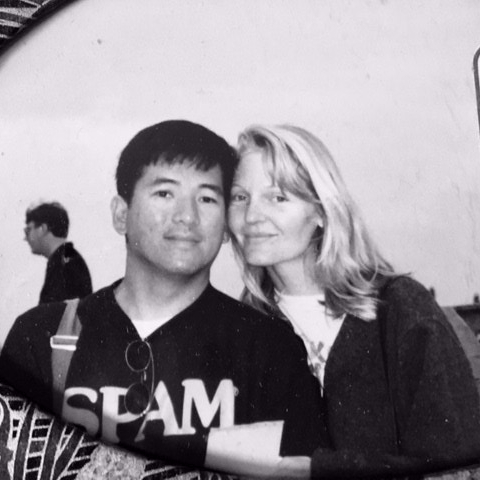



 A friend reminds me of Erik Erikson’s famous and lovely and ringing true Eight Stages. Death flings me back into the adolescent stage of identity versus role confusion. I struggle again and with great emotion figuring out who I am alone. No longer attached on every living level possible to another person except in memory and in two tall, young almost men sleeping soundly right now. Moving differently in grief, my body betraying my state. One not associated with a partner. Alone. Misplaced. Confused.
 Every week a widowed or divorced, middle-aged man with a car, boat, or home who is always caucasian asks to befriend me on social media. These men have names like David Smith, Mark David, and David Mark. Each request comes with an oddly empty profile page. These people have no family or friends. If they perchance have one or two friends the friends tend to be (for the lack of a better term) booby younger women in scant clothing. The men also have no work history, no history at all really. And their written English syntax reads like a foreign tongue.

 If you get us all in a room, those of us who earned the unasked for title of widow, you might hear uncomplimentary commentary about non-widows or even of other more seasoned widows. Commentary born out of the ravages of early widowhood experienced when we were most vulnerable and most likely according to research to even die ourselves. Yet forced in our angst to ward off words, some more hurtful than healing hurled our way filling the bereft air with sound. Sound we could barely listen to but somehow made the speakers feel better.
 Jennifer Ohman-Rodriguez