Posts

Compton Township, Minnesota, Ohman homestead

A CURIOUS CONFIRMATION IN COMPTON

Old Swedish Bible
Old Swedish Bible

The Johnson twins, Swan and Pete, did not take advantage of being confirmed with their fifteen year old sister Emma in 1880 when the first Lutheran confirmation occurred  in Compton Township, Minnesota. They didn’t budge the next year either when Swan’s future wife, Beda at age fourteen, was confirmed.

Now one might think these two had been confirmed at an earlier date. The custom in pioneer Swedish communities was to confirm around the age of fourteen or so.  But in 1880 Swan and Pete were twenty years of age—men by the standards of their day.

In 1874 when the twins were of the confirming age, the family was farming in Dakota County near Rosemount, Minnesota.  In 1875 they show up in the Minnesota Census as a part of a small group of forty-four Swedes mixed in among a lot of Irish immigrants, a few Germans, and maybe a couple of Norwegians.

Bible Book Binding
Bible Book Binding

Now there wasn’t a Lutheran church in sight of Rosemount at the time. One popped up in Hastings in 1871. But Hasting was about fifteen to twenty miles from their whereabouts in Dakota County and not a trip to make very often on poor roads and in certain types of weather.

Sweden at the time only allowed one Christian denomination by law. You were either Lutheran or risking incarceration. The twins’ parents, Peter Johnson and Johanna Anderson, were both confirmed Lutheran Christians. Their confirmations were duly noted in the Swedish household examination records of the time along with other particulars such as birth dates and small pox vaccinations.

Once in the new land many Swedish immigrants chartered new Lutheran congregations or joined existing ones. Others however went in search of something novel and now legal. Swedes seeking spiritual change account for the Swedish Baptist, Swedish Methodist, and Swedish Covenant churches throughout Minnesota. Still some Swedes sought some spiritual peace opting to leave faith matters of any kind behind them in the hills of their homeland.

There was a Methodist Church near the family in Dakota County. It was incorporated in 1868 and the building was being built in 1874. The church is on the 1879 plat map of Rosemount way over in the Western corner of section 30. I’m not sure the family had pietistic leanings though. There’s no mention in the family legend of anything of this sort. And being it was a German Methodist congregation (and not a Swedish Methodist congregation) makes me think the family may have shied away from it.

Swan and Pete however as well as their older brother Johan Gustaf and their younger sister Betsey all came of confirming age while living in Dakota County. With few choices, what did the family do? Travel to Hastings? Confirm in the Methodist Church? Or chose to do nothing?

Born February 15th, 1860 in Carver County, Minnesota,  Andrew Peter and Svante would have had plenty of opportunity to be baptized. Carver County was an active Swedish community boasting two Swedish Lutheran churches within five miles of each other and within the area the Johnson family was living at the time with another family from home.  The twins were born twenty months after their parents landed in Boston, Massachusetts and nineteen months after their brother, Johan Gustaf, was born. Surrounded by family and friends from home, life in Carver County was most likely full of past traditions.

Church records for the East Union Lutheran Church in Carver County are messy and difficult to decipher. However, while not stellar, the church records of the Compton Swedish Evangelical Lutheran Church prove legible. The records note the twins were baptized in 1860 in Carver County. Reading on, a small and somewhat messy notation in Swenglish written in these same church records indicate that 1909 was a big year for the twins. At forty-nine years of age Swan, Pete, and Swan’s son Fredie (age fourteen or so) where all confirmed in the Compton Church.


Psalmboken
Psalmboken

We may never know what prompted this late confirmation. One thought is that their mother’s death the year prior caused the twins to do some thinking on spiritual matters. Perhaps they knew Johanna regretted not finding a way to have her children confirmed in Dakota County. Maybe the twins’ confirmation was fulfillment of their mother’s final wish.

Well that is one thought. My other thought lies within the power of Beda Anderson Johnson.

Beda, according to legend, spoke her mind. She could have nagged Swan at precisely the most aggravating yet effective moment about this confirmation thing. The couple already had one child confirmed in 1907 and now another one was ready to go. Yet here was the father still unconfirmed and living just down the road from the church!

Slowly over time, Swan could have weakened. Can’t a man get any peace in his own home? Maybe not.  So Swan could have trudged across the fields over to Pete’s house one evening seeking some brotherly solace. As was their custom, the twins could settled into shooting the breeze around the table at twilight. Eventually after a few Swedish silences, Swan could have raised  the topic of confirmation. A few silences later Pete could have nodded and said, “Yah. I tink I vill be yoining you, Svaney.”

Like music I can hear a roll of Compton chuckles spill out over the table, the children listening and Emma smiling as she finishes up the dishes. Then I imagine Swan and Pete sighing in surrender to the matrimonial fates conceding without words that the power of two women in cahoots is not to be reckoned with.

And I think I’ll just leave it at that—a few interesting facts about the cloud of witnesses who came before me rolled into a whole lot of conjecture about another time and another place that makes for somewhat of a passable story to tell.

The Swedish language of the Minnesota pioneers.


SOURCES

Federal Census of 1860 for Carver County, Minnesota.

Minnesota State Census of 1875 for Rosemount in Dakota County, Minnesota.

Records for the bark, Minona, accessed at the the Swenson Swedish Immigration Center at Augustana College, Rock Island, Illinois.

Rosemount Plat Map of 1879. Courtesy of the Dakota County Historical Society. Accessed 9/28/2012.

Rosemount United Methodist Church at http://www.rosemountumc.org/about/our-church-history/ Accessed on April 15, 2015.

Swedes in Minnesota by Anne Gillespie Lewis. Published by Minnesota Historical Society Press. 2004.

Swedish-American Church Records: Swenson Swedish Immigration Center at Augustana College, Rock Island, Illinois. http://www.augustana.edu/general-information/swenson-center-/genealogy/church-records/minnesota. Accessed on April 17, 2015.

Swedish Household Record for Petter Johansson and Johanna Andreasdottor. Algutstorp B: 2 (1851-1971) Image 95 (Source: Arkiv Digital AD AB)

Swedish New Testament Bible found in the Ohman homestead.
Gustafva Swedish Lutheran Church & Cemetery

A CHURCH AT THE PRAIRIE CEMETERY

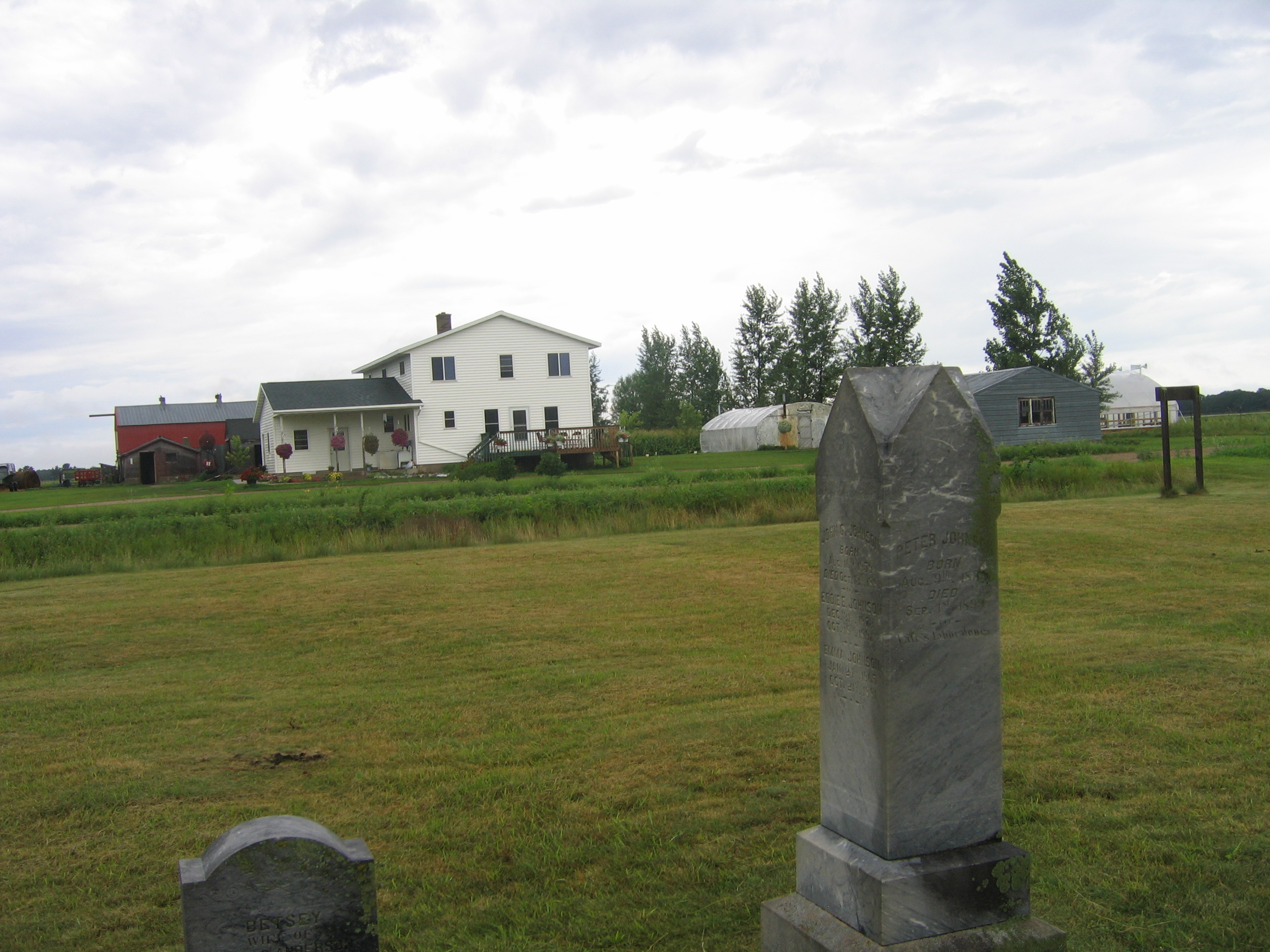
If you left the Prairie Cemetery, take a trip back in your mind. Wander around the grounds looking for archeological clues—clues as to where the church building—Den Swenska Evangeliska Lutherska Gustafwa stood from 1885 to 1931.

Maybe the church stood here?
Land over looking County Highway 77.

Oh it was there alright at one time. Gustafva was one of two Swedish Lutheran churches the early Swedish pioneers built in Compton Township, Otter Tail County, Minnesota. There was a bit of a disagreement as to the whereabouts of the new church and that’s why the community ended up with two—Gustafva in section ten and Svenska Evangeliska Lutherska i Compton in section twenty.

Travel from section twenty, where a number of Swedish families were homesteading, up to section ten for church would have been by my calculations four to six miles. Now given that the roads were rough, the weather often bad, and South Bluff Creek had to be crossed the mere act of getting to church was most likely difficult most of time. Having a church nearby would be an eventual necessity for the section twenty families. Much easier to move one pastor between two churches than to move a whole group of people.

The Compton church dilemma reminds  me of the story my friend Marilyn at the Carver County Historical Society told me about the East Union Lutheran Church and the West Union Lutheran Church. The congregations are a little over five miles apart but five miles during pioneer times was nothing like the bike ride it is now. No paved roads. No bridges. No snow removal. The early pioneers in West Union had trouble crossing Beven’s Creek when it was high.  A group broke off from East Union to form a congregation closer and safer to home.

Back in Compton Township, early Scottish pioneer Mrs. James Strang writes about crossing Oak Creek from section ten to get into Wadena on Fourth of July some time in the 1870’s. She writes,

The country was flooded with so much rain. We had the oxen…when we got to the creek, it was up over the fields. We had to wade into the poles across the creek, the men carrying the children over first. The creek was rampant…the men tackled the oxen but they got caught by the horns of the second team and they had a hard time getting them out. The wagon was swept down the creek; lunches and all got wet through (page 180 Compton Township History).

Although Scottish, Mrs. Strang has a connection to Gustafva.  According to her recollections, she and her husband arrived in Compton Township in June of 1873 staying their first night with Nels Rolen.  Nels was a Swede and the man along with his wife Ingard who sold a bit of land –about two acres for $5 in 1880—for what would become the Gustafva church and cemetery.

Now also in 1880, a man of the Lutheran cloth, one J.P. Lundblad out of Parker’s Prairie, enters into the story. Hard to know what came first—the missionary or the land.  But at some point Lundblad began a confirmation class in the Robb School House at the lower end of section 11 near section 14. The schoolhouse was built in 1877 on what looks like James Robb’s land but it could have been Thomas Robb’s land. At any rate, the Robbs came from Scotland too and were neighbors to the Strangs.

The Johnson twins down in section twenty, Swan and Peter, had a younger sister Emma who was confirmed in this first class with J.P. Lundblad. The next year Swan’s future wife and my great grandmother, Beda Anderson, was confirmed. Swan and Pete didn’t seem to make it into either class.

E.E.J. Marker
Cemetery Stones

At any rate after Nels Rolen sold the land, the community needed it first for a cemetery times being what they were. So by the time Charles Veden of section four was keeping his church building dairy in 1885, the cemetery had sixteen graves in it. The cemetery alone appears on the 1884 Plat Map of Compton Township.

Veden writes, which in itself is interesting because most Swedes at this time did not, about the “very cold Northwest winds” he encountered during the early days of the church which makes the grove of trees in the cemetery sensible even if they look to be too young to have seen the early days of this place . At any rate, the church structure was 12 by 20 feet and made out of log and sat “along the current highway 29” (page 31 Compton Township History). I found a pole tarp on the internet measuring 12 by 20. It looked like something you might park your car or fishing boat under. Not a big structure by our standards by any means.

Cemetery Stones
Trees and Stones

Charles Veden reports the first meeting at the church occurred on August 21, 1885 with a Pastor Olson preaching. Who knows how many Swedes squeezed into the church on a possibly hot and humid Minnesota August day. Twenty-six years later in April of 1911, the congregation (församling in Swedish) filed with the State of Minnesota to transfer the Gustafva property to the Compton church and the two congregations merged. The log church structure was moved in 1931 and no more is known about its history. What remains is the cemetery with all its secrets and stories and a primitive monument to the early Swedish pioneers.

SOURCES

Compton Township History Ottertail County Minnesota: 1875-2001.

U.S. Federal Census of 1880/Minnesota/OtterTail County/Compton Township. Accessed through Heritage Quest on April 15, 2015.

Kyrko Bok fon Svenska Evangeliska Lutherska Compton Forsamlingen. Swedish American Church Archives, 3-240.

U.S. Department of the Interior, Bureau of Land Management General Land Office Records. www.glorecords.blm.gov. Assessed on April 1, 2015.

Swedish Pioneer Monument
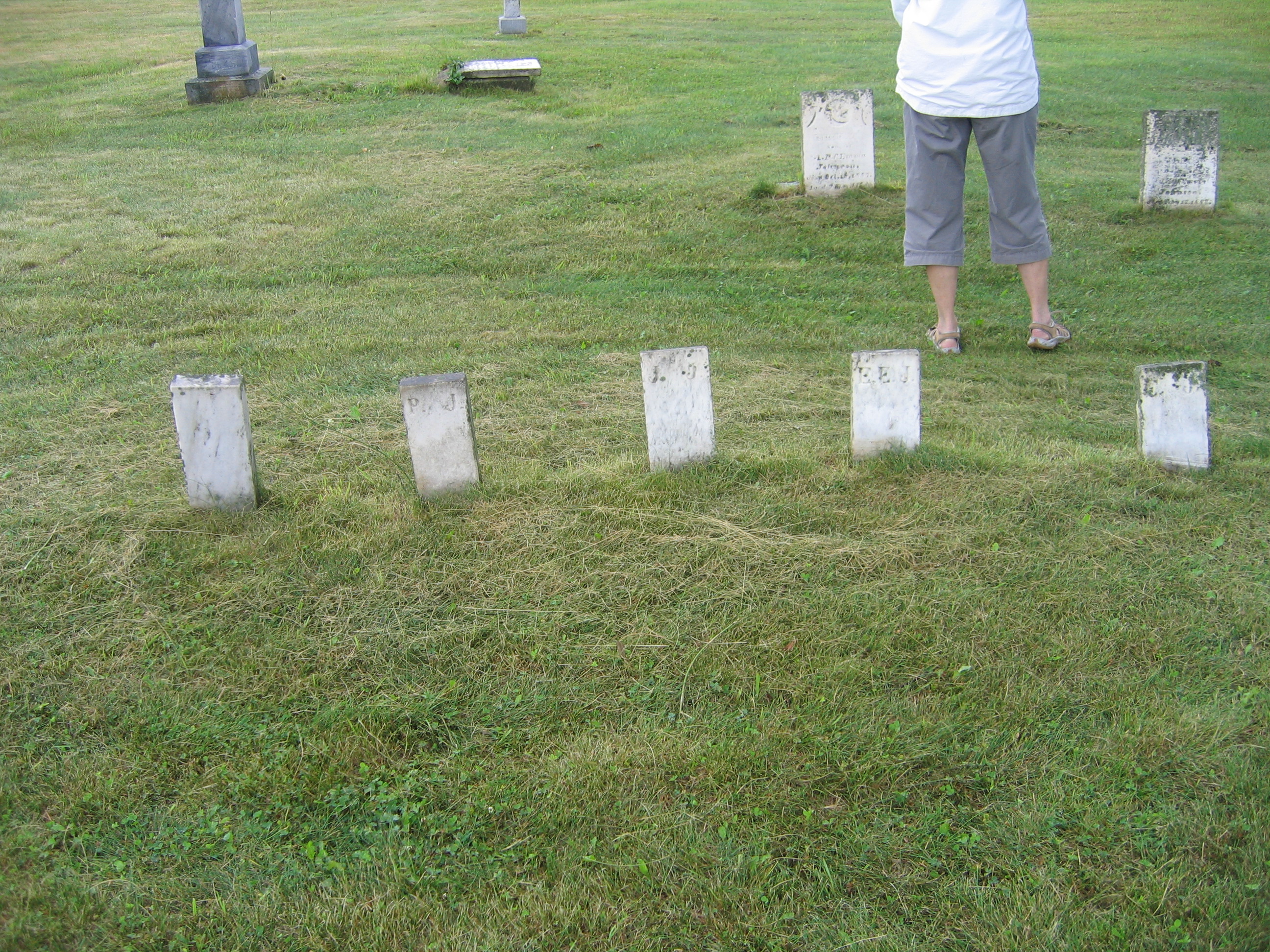
Row of Children's Graves
Children’s Graves
Gustafva Swedish Lutheran Church & Cemetery

The Prairie Cemetery: Discovery

Rain through the wind shield
Rain falls on the windshield.

Drive West out of Wadena, Minnesota on State Highway 29 into Compton Township. Turn left onto County Road 77 at the edge of section 10. Take another left about a quarter mile in onto a two rut lane of sand and gravel across from an Amish farm. Drive through the horse dung, set the car in park, and look left.

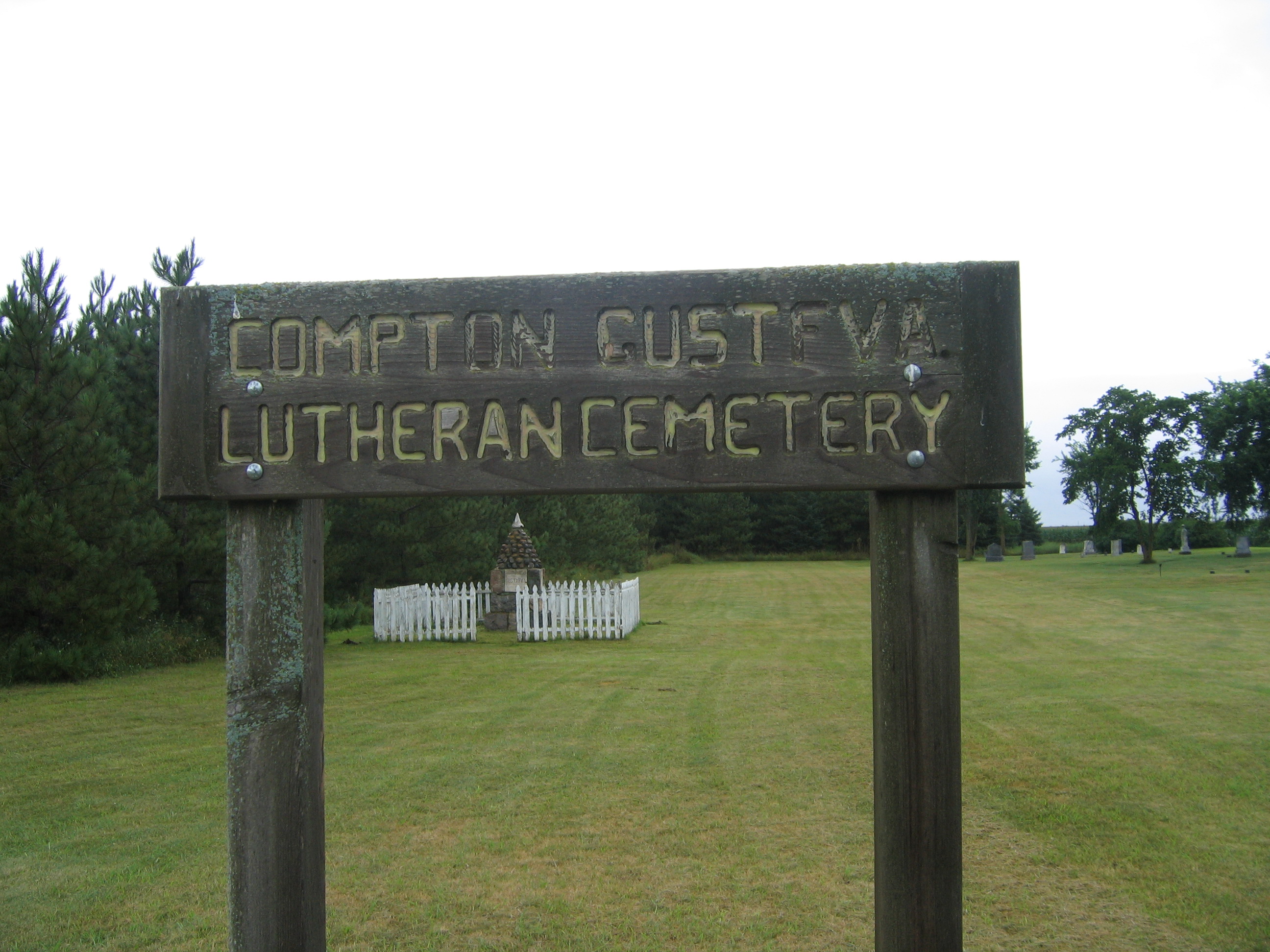
The older folks in my family call it the Prairie Cemetery. It’s prairie all right. Grass is plentiful and so are fields of corn one year, soybeans probably the next. A large grove of fir trees to the North and a bit to the East break the winds. A small wood sign marks the place.

Signage
The sign marking this place as Compton Gustfva Lutheran Cemetery.

It was raining the day we stopped by four years ago on a bit of whim. The clouds hung low in the sky which is typical weather for this northern inland place. August is preparation for winter after all.

The Sky
The Sky

Rain spat on the car windows before finding a steady rhythm as I drove south on U.S. Highway 71. We had just come off the lake near Bemidji and had a long day of driving before us. My husband had the worst case of “lake itch” I had ever seen. One of the boys had it too and the other one was just knee deep into his fourteenth year which meant he ate all the time and when he wasn’t eating he was complaining or suffering from glossy-eyed screen syndrome.

But we were so close to this place which had haunted me for seventeen years that I tensed and ached and just had to plow through the push back to stop by for a visit, my second visit. Thankfully my mother was game for the adventure.

My first visit out to the Prairie Cemetery had been late September of 1994. I was up for Great Aunt Mabel’s last picnic and had not been in these parts for years, maybe even a decade. Dad was in a rambling mood that weekend and we rambled all over the county eventually ending up at this ghost of a cemetery.

The place immediately confused and intrigued me. The Prairie Cemetery was not “the” cemetery—the one a few miles away down in section twenty near the farm where Dad grew up and in which it seemed I was somehow related to every tombstone at least once if not twice. Now I was learning the Prairie Cemetery (called that because really who now can pronounce ““Gustfva” with any air of authority even if descended from Swedes) was somehow connected to us as well at least according to Dad. The connection for me though was as buried as the graves.

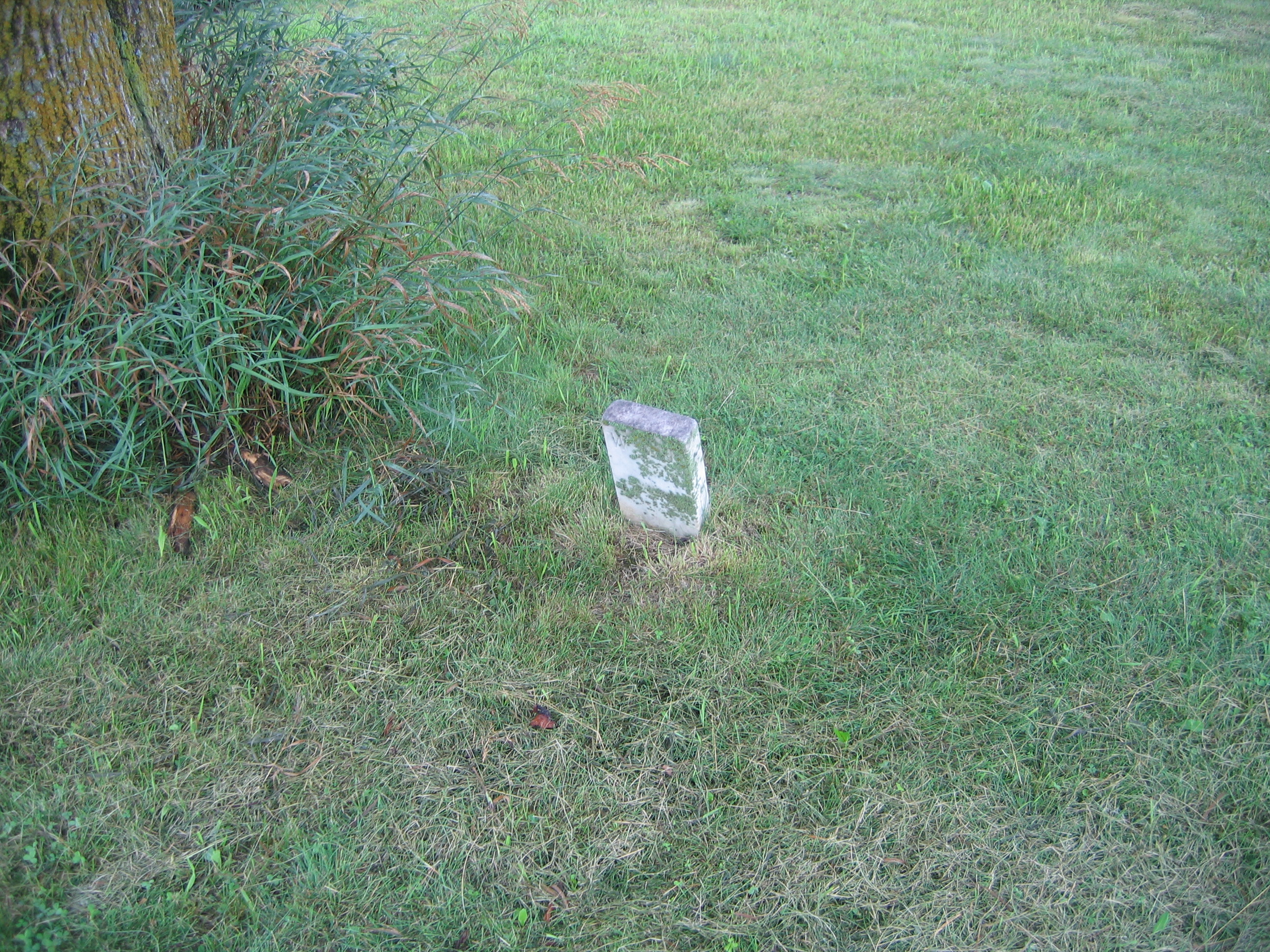
A solitary grave underneath a tree.

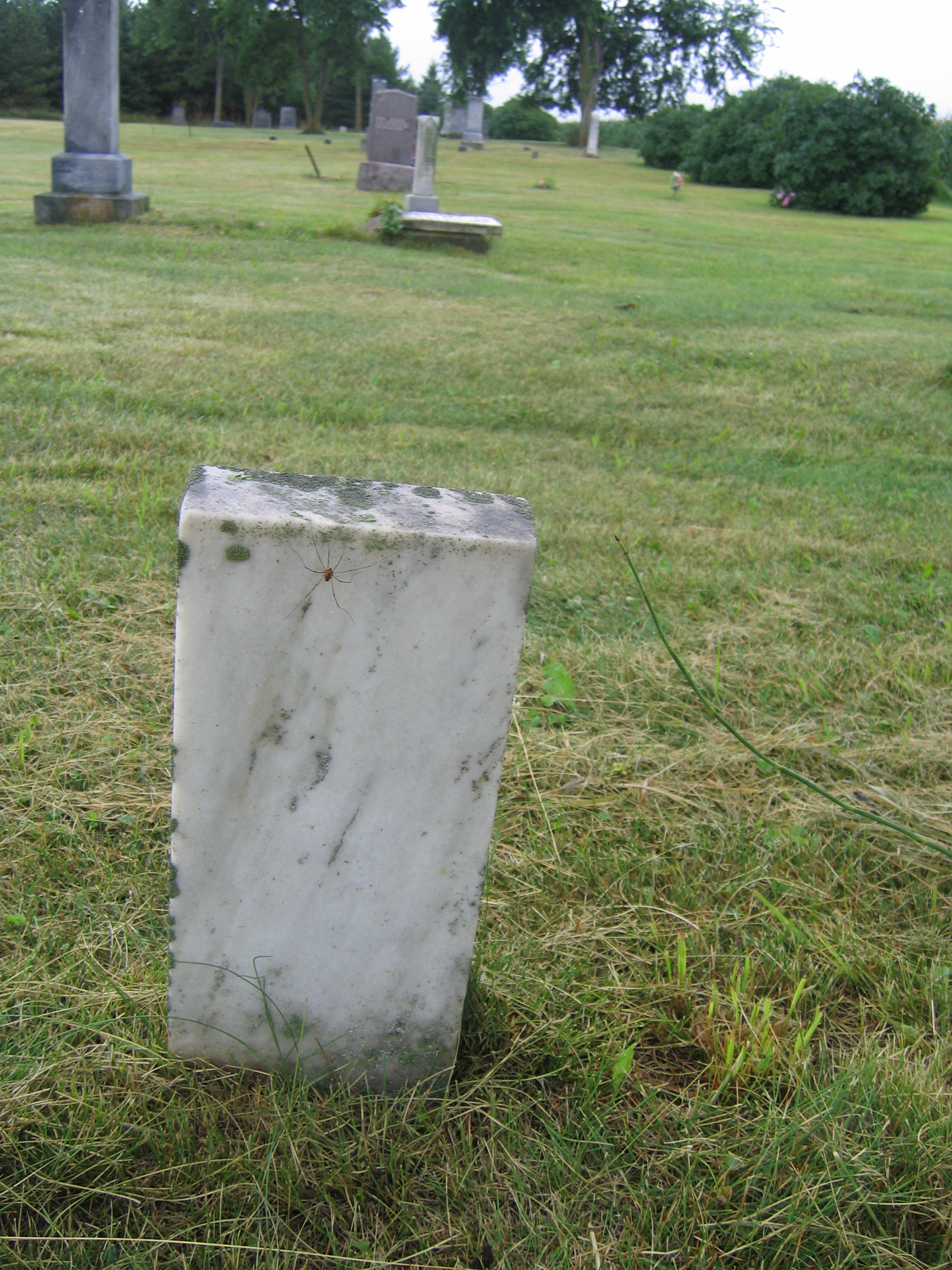
The cemetery reeked of age. The stones were primitive and the writing worn. Thin small stones dotted the green tipping slightly to one side or the other, not like the heavy markers we now plant in such places. The ground was swallowing some of the oldest stones bit by bit as if they were no longer necessary or made better use of as organic material for a graveyard compost.

E.E.J. Marker
Thin stone with fading script.

Maybe there had been an order to the place back in its day but now the stones seemed scattered and mostly forgotten. I wondered if some graves were now unmarked given the large spaces between groups of stones or the occasional solitary one. Obviously the place was old, the dates on the stones confirming this.

Now dodging raindrops and snapping pictures—something I had not thought to do on my first visit—I was struck by how my memory twisted many of my first impressions. These impressions had been visceral like an ancient connection to previously unknown kin warping my sense of reality. I now saw the monument was not a grave. The white pillar was not a monument. The names where not just strangers.

On this second visit I had a purpose. I sought tangibles: facts, truth if possible, and maybe even some wisdom.  I clicked photos of each piece of interest and scribbled notes feeling like anthropologist discovering an ancient people.

  • Proverbs 3: 1-18 
  • Compton Gusteva Lutheran Cemetery 
  • Ottertail County 77 and Minn 29 
  • Wadena Historical Society 
  • Text on monument?
  • 5 children
  • 4 October 1881= disease
  • 1 September 1882=TB
  • 1875
  • Gravel/sand road
  • How long had the family been in the area?
  • Had they come down from Carver?
  • Ages of children?
  • Ages of parents

Four years later I have put facts to some of these notes, family legends to others. Some notes I continue to puzzle out as questions create more questions along with frustrations. I am certain of one thing though–this place waits to tell its stories.

Ohman homestead

An Old Ugly Rocker

Rocker.3

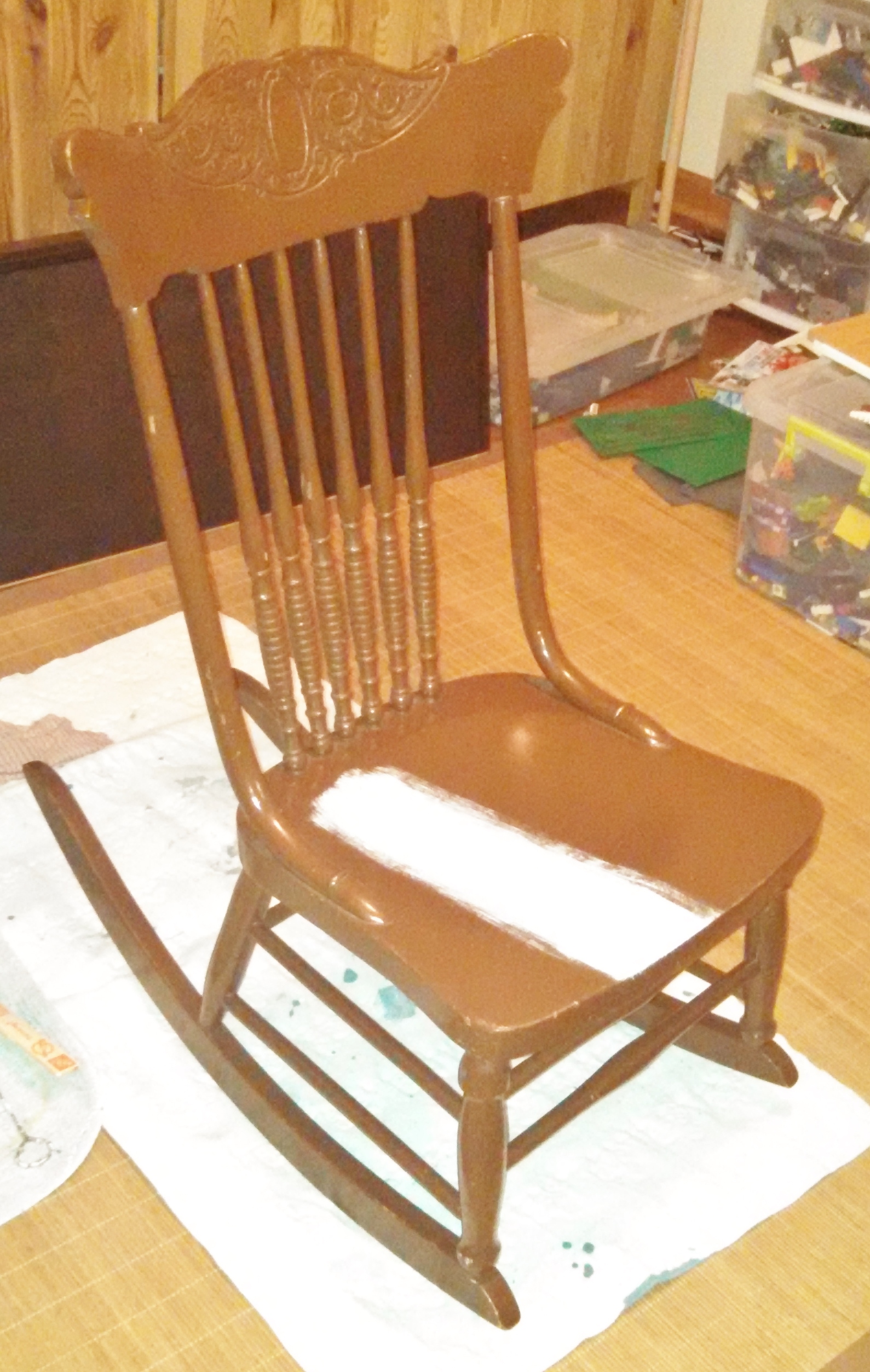
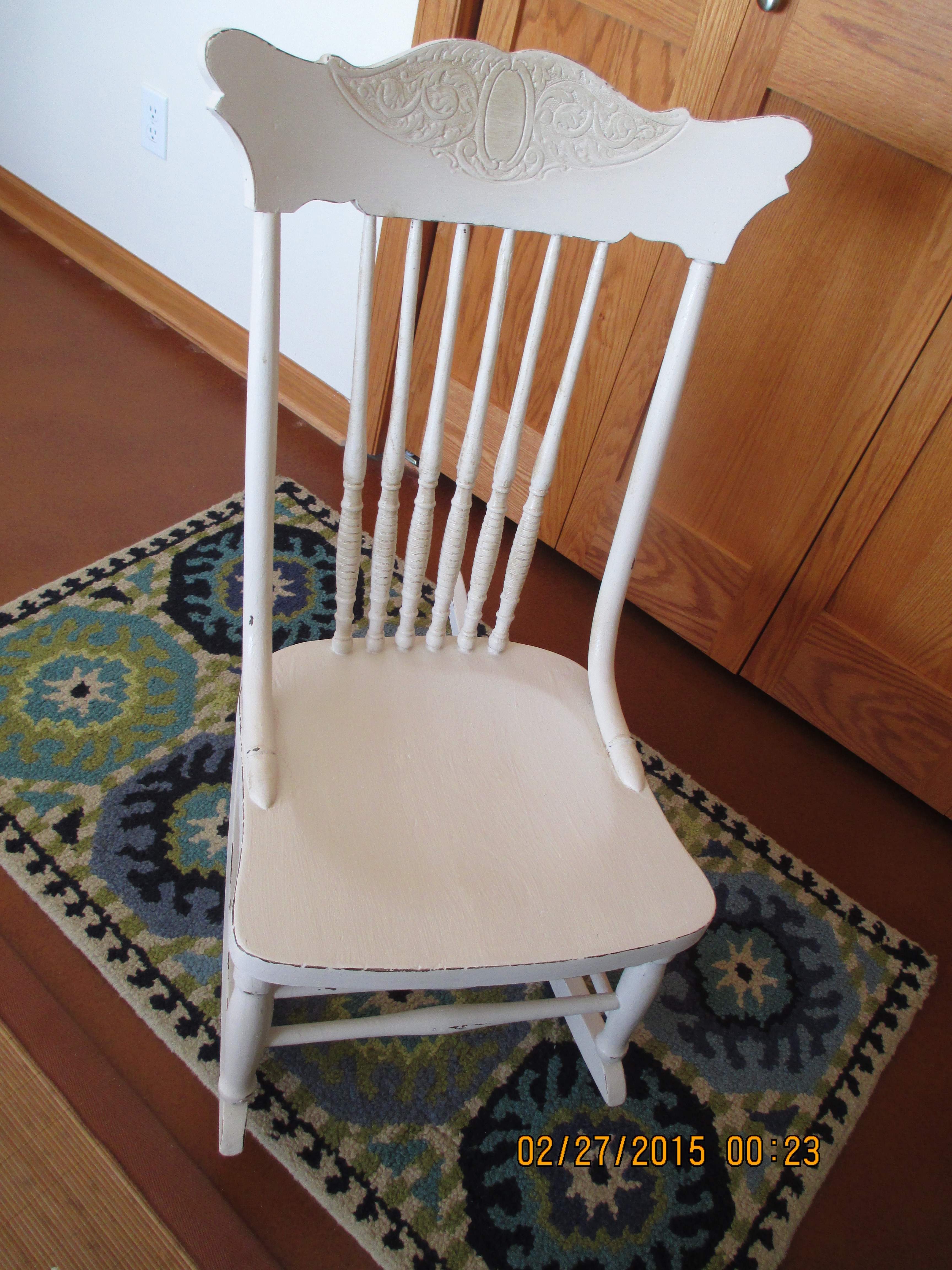
It’s an old ugly rocker sitting low to the ground for people with short legs. The head board sports some fancy filigree reminding me of old cowboy movies. It’s brown and easily shrugged off as useless. Most people would think of it as storage room material or perhaps kindling for a summer bonfire.

We think the thing came from the John Ohman farm in Compton Township of Otter Tail County, Minnesota. John Ohman, formally known in Sweden as Johan Johannson, emigrated in 1882 to Carver County, Minnesota and moved to the farm by 1883. My guess (and this is just a guess) is that the rocker was acquired up there in Compton to rock my grandfather, Carl Johan, when he was a baby. Grandpa Carl was the last child of nine to be born to Johan and Johanna Johannson and the only child to be born in Amerika. Carl was born August 10, 1883.

On this 1912 plat map of the area (courtesy of the Minnesota Historical Society) the farm of eighty acres is in the Southeast corner of section 20.

http://collections.mnhs.org/cms/largerimage.php?irn=10174682&catirn=11008288

Grandma Emma Johnson’s family farmed just south of the Ohman farm. The story goes Emma came home from teaching in the Iron Range to nurse her dying mother. Carl was now farming the land and Emma ended up marrying him and moving across the road to the Ohman farm in March of 1920.

According to my Dad, Grandma liked to repaint the Ohman kitchen now and again.  I guess after a cold Minnesota winter cooped up in about 600 square feet with little children, in-laws, and farm hands about, everything got painted as a form of emotional survival.

Layer upon layer of paint came off other items from the farm. The rocker had just as many layers. Except for some reason, the paint just didn’t want to let loose. Dad tried to strip it like he had the old kitchen table. But he gave up, overwhelmed by its stubbornness. Instead he painted the rocker a glossy and ugly brown.

I discovered the rocker when I was a teenager. Finding the thing “retro” and cooler than my parents, I moved it to my bedroom. It’s been with me on and off ever since.

Grandma Emma’s DNA must have been coursing through my veins this past winter. One day I looked at that rocker and the next day I was painting it with some sort of post-Christmas, January, winter fervor, writer’s agony.

Worn paint on the underside showed the rocker to be made of cheap pine. Cheap or not, my brush dripping in linen white chalk paint, unmasked curves and crevices and curly-cues previously hidden under the ugly brown paint. Waxes and sand paper scrapes added highlights and even more interest.

006

Images of the rocker’s life up north in that old cabin flashed in my mind’s eye. I saw women running their fingers across the carved wood and young children learning to rock themselves in it before their feet could touch the floor. I imagined Johanna darning socks and mending trousers as the kerosene lamp burned its wick down or nursing a fussy baby Carl at midnight. And I imagined Grandma Emma as a new bride possibly thinking the rocker as old and ugly even then.

I don’t know if I will ever view the old ugly rocker as beautiful. But it is wearing its new coat of paint well. And I, its keeper, am tossing possible repainting plans about for the next time I am struck with a DNA fit. I’m thinking this time of a Swedish peasant green in honor of all the peasants who came before me with furniture left about to be discovered.

Rocker.1Rocker.2

Dawson

February Furniture: A Blacksmith’s Desk

February first found me still in Minnesota unable to drive home through the ice and snow of Iowa. I was on deadline so I wrote through my Aunt Linda’s superbowl party feeling a bit ungracious and unsocial.

But eureka! There was an old story to unearth at Aunt Linda’s! She too has been the recipient of many family furniture treasures which are waiting to tell their stories. One such piece sits in the corner of Linda’s garage. It’s a stripped antique fold down desk maybe from the late nineteenth century with some Scandinavian carved vines with berries on the folding front.

The story goes–according to Aunt Linda– that the desk was the business desk in my great granddad’s blacksmith shop in Dawson, Minnesota. My Grandpa Bing acquired the desk and stripped it, or tried to strip it, of its blackened blacksmith grit and dust. He also repaired the desk, adding some sections broken with time and use.

My mother remembers the family blacksmith shop, sold before my Aunt Linda’s time. The shop and the outhouse sat away from the house. My mother was not allowed in the shop she supposes because of the fire danger. But maybe also because the liquor was stored there for use during Sunday family picnics. She remembers passing the shop on the way to the outhouse knowing the men where inside drinking.

Aunt Linda, like all of us entrusted with family memories, did not know what to do with the desk. I suggested, only because my friend Cynthia has taught me this, that she wax the desk front and hang it up.

So she did. Now the old desk is better poised to speak of those who came before us embodying a chapter in the constant collection of our family story.

Check out these before and after photos! Aunt Linda thinks the blackness in the crevices are blacksmith remains… which of course seasons the story…

Door Before WaxDoor after wax